The Senate of the University of Ibadan, has approved online lectures for the commencement of first semester of 2020/2021 Academic session, while the Senate also cancelled 2019/2021 Academic Session
“In approving the Calendar, Senate noted the prevailing circumstances occasioned by the second wave of the COVID-19 pandemic and the need to comply with the protocols established for the control of the spread of the pandemic.
“It, therefore, agreed that the 2020/2021 First Semester lectures will be delivered online. In this regard, students will not be accommodated on campus.
“Senate also approved the cancellation of the 2019/2020 session. The next session is, therefore, renamed 2020/2021 Academic Session. Consequently, students who have been admitted for the 2019/2020 session will now be regarded as the 2020/2021 intakes,”
The President of Federal Republic of Nigeria, Muhammadu Buhari participates at the Wreath Laying Ceremony of the 2021 Armed Forces Remembrance Day.
The Ceremony which held at the National Arcade, Eagle Square Abuja on 15th Jan 2021. The event is an annual programme of the Armed Forces to remember and honour past warriors who laid their lives for the protection of the Nation.
The Oyo State Security Network Agency, Amotekun, has revealed the identity of its member, Kazeem Afolabi, who allegedly fired the shot that killed a commercial motorcyclist, Tosin Thomas in Ibadan on Wednesday.
The Commandant of Amotekun, retired Colonel Olayinka Olayanju, in a statement by the media officer of the agency, Mrs Ayolola Adedoja, said Afolabi acted outside the guideline of the security outfit and had been dismissed and handed over to the police for prosecution.
The security outfit said it will not condone any unprofessional conduct of its members.
Amotekun hereby appealed to members of the public to support the outfit in its bid comb the state from any criminal activity.
Oduduwa News has just gathered that the Lagos State University College of Medicine has shut down the college following the spread of COVID-19 among the students and officials. Details later.
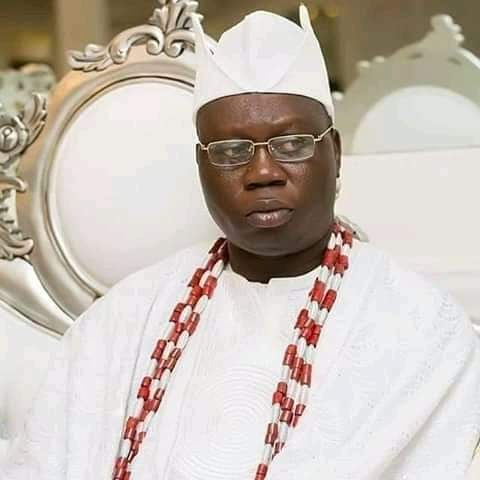
Governor Adegboyega Oyetola of the State of Osun has congratulated the Alaafin of Oyo, Oba Lamidi Olayiwola Adeyemi III, on the occasion of his 50th anniversary on the throne, describing him as an extraordinary traditional ruler who belongs to a class of his own.
Oyetola in a statement by his Chief Press Secretary, Ismail Omipidan, said he was delighted to join indigenes of Oyo, Government and the people of Oyo State as well as millions of Yoruba sons and daughters across the world to celebrate the milestone reached by the monarch.
He lauded him for being a symbol of peace, unity and development, for not only his subjects but the entire Yoruba race.
The governor who also extolled the leadership qualities of the monarch, commended him for upholding the rich culture and tradition of the Yoruba, saying that sons and daughters of Yoruba are proud of his intellectual prowess and commitment to the cause of the Yoruba.
“On behalf of the Government and the good people of the State of Osun, I am delighted to join indigenes of Oyo town, the Government and the people of Oyo State as well as millions of Yoruba sons and daughters all over the world to congratulate his Imperial Majesty, Oba Lamidi Olayiwola Adeyemi III, the Alaafin of of Oyo, on the occasion of his 50th anniversary on the throne of his forefathers.
“It is my prayer that Allah Almighty continue to bless Iku Baba Yeye and grant him more years of fruitful and peaceful reign on the throne,” Oyetola said.
The Arole Oduduwa & Ooni of Ife, Ooni Adeyeye Enitan Ogunwusi Ojaja II, on Thursday congratulated the Alaafin of Oyo, Oba Lamidi ADEYEMI on his 50th coronation anniversary.
In a statement by the Director of Media & Public Affairs at the Ooni’s Palace, , Comrade Moses Olafare, Ooni Adeyeye described the Alaafin as a unique descendant of Oduduwa and great Nigerian who lives a life of service to humanity.
Ooni Ogunwusi who described Oba Adeyemi as a revered Nigerian monarch who has always dignified the cultural values of the Yoruba people with great passion, thanking God for blessing him with gift of long reign on the throne of his forefathers, adding that the monarch has seen it all for the country.
“Long life is a gift and those favoured by God in his infinite mercy to receive this gift should be celebrated and admired by all, such a person is Oba Lamidi Adeyemi who is among Nigeria’s elder statesmen and great Ooduan who saw this nation through post-colonial, military and democratic eras during his 50 years of reign as the Alaafin.
“I am proud of the frontline Yoruba monarch whose contributions to the growth and stabilization of the ancient town of Oyo as well as Yorubaland and Nigeria in general. He is a very responsible elder whose main concern is the promotion of the Yoruba’s prestigious culture, people and tradition in general.” The Ooni appraised.
Ooni Ogunwusi who explained that efforts of foremost nationalists like Oba Adeyemi cannot be overemphasized, wishing him more healthy long life filled with prosperity on the throne of Oyo kingdom.
The Ooni who is the Co-Chairman of the National Council of Traditional Rulers of Nigeria, urged the Alaafin to continue his usual efforts towards ensuring a better society noting that the country and the entire citizenry have a lot to benefit from Oba Adeyemi’s wealth of experience as and elderly man and a long reigning Nigerian monarch.
• Oba Lamidi Adeyemi was born in October 15th 1938
• He was a successor to Oba Gbadegesin Ladigbolu II • His Father, Oba Lamidi Adeyemi II was disposed in 1954 • He was a boxer before ascending the throne • Colonel Robert Adeyinka Adebayo, Former Military Governor of Old Oyo State presented his Staff of Office on Jan. 14, 1971 • He the longest serving Alaafin in history • He hold many honorary Doctorate degrees from different countries across the world. • Olori Abibat Adeyemi remains his senior wife.
It was another awesome afternoon on Wednesday 13th of January,2021 when Honourable Dapo Lam Adesina,handed over a brand new sewing machine and a cash prize of Fifty thousand Naira (#50,000) to a female entrepreneur, courtesy of his Omo Oloore Foundation.
The foundation through its social media page ‘IG: @omooloorefoundation’ had requested that a fashion designer who truly needs a sewing machine signify after which a winner was carefully picked.
You would recall that Honourable Dapo Lam Adesina launched the foundation in October, 2020 and vowed to make the medium an avenue to reach more people who truly needs help.
While chatting with the beneficiary yesterday during the presentation,Omo Oloore as he is fondly called requested that she show evidence to back up the fact that she is truly a fashion designer which she did by showing her certificate.
“During empowerment, recipients do have different mindsets but here, the only thing we want is to see you thrive with what has been given to you.We frown at those who sell items given to them”……He said
Omowumi who became emotional while showing appreciation said “I just started my fashion business this year but I have no shop, so I manage with my boss.This is a huge one for me, I didn’t see it coming.Thank you for this wonderful opportunity, for choosing me without knowing me, for the cash to get a shop. I’m grateful sir”…..She concluded
Omo Oloore Foundation is a one set up by the founder to support young entrepreneurs and also come to the aid of the less privileged in the society.
The Speaker of the House of Representatives, Hon. Femi Gbajabiamila has felicitates with his Imperial Majesty, Oba Lamidi Adeyemi III, the Alaafin of Oyo, has the First class monarch clocks 50years on Throne.
In a statement released on Wednesday, the Speaker also rejoice with the Monarch, as the 50years on throne comes with a sound 82nd Birthday Anniversary.
“Kabiyesi Oba Lamidi Adeyemi III is one man that believes in the unity of his people and the entire nation. This much he has guided his people to achieve in the last 50 years.
“I am particularly delighted that the 50th anniversary of the Alaafin of Oyo is happening during my lifetime.
“I believe every Yoruba son and daughter, irrespective of where they are, should be proud of the Alaafin for the kind of leadership he has been providing in the past 50 years.
“We cannot forget in a hurry how the Alaafin used his good office and leadership style to make the Oyo kingdom a reference point. He is indeed a man blessed with abundant wisdom.
“To think that the Alaafin is marking his 50 years on the throne at the age of 82 in sound health is another source of joy.
“I join millions of Nigerians, especially the sons and daughters of Yoruba land, in wishing the Alaafin God’s protection, blessings and wisdom,” Hon Gbajabiamila said
Mr Ismael who was the Guest Speaker at the event organized by National Association of Science Education Students’, Emmanuel Alayande College of Education, stressed the need to invest more in Digital Economy if the Nation is to attain true development. In his opening address, he said “The developed nations; United States US, United Kingdom UK, Germany and Japan were able to attain present level of development through the deployment of high technology.”
While explaining the values of Digital Economy, especially in regards to expanding businesses and creating more opportunities, he said “The expansion of the digital economy creates many new economic opportunities. Digital data can be used for development purposes and for solving societal problems, including those related to the SDGs. It can thus help improve economic and social outcomes, and be a force for innovation and productivity growth. Platforms facilitate transactions and networking as well as information exchange.”
Read full lecture below.
BEING THE LECTURE DELIVERED BY COMR. ISMAEL TAIWO MNIM, ECONOMIST, DIGITAL MARKETER, AND A FORMER STUDENT LEADER, AT THE 1ST ANNUAL DAY LECTURE OF NATIONAL ASSOCIATION OF SCIENCE EDUCATION STUDENTS (NASES) HELD AT EMMANUEL ALAYANDE COLLEGE OF EDUCATION AFFILIATED WITH EKITI STATE UNIVERSITY, OYO, OYO STATE TODAY 13TH JANUARY, 2021 TOPIC: DIGITAL ECONOMY AND NATIONAL DEVELOPMENT
All protocols are duly observed.
BACKGROUND
DIGITAL ECONOMY This topic is timely, particularly this time the world is being ravaged by COVID-19 pandemic where some countries that had earlier prepared for digital inclusion are not caught in the web of stagnancy. As the world is shifting towards knowledge-driven economy, Nigeria and some African countries cannot be left out in the drive towards digital inclusion. Globally, awareness is on the rise about the usefulness of Information Technology to promote and enhance growth and development. Business and economic experts have realized that no nation can have competitive advantage in terms of trade, industry, manufacturing, and services without utilizing ICT.
The developed nations; United States US, United Kingdom UK, Germany and Japan were able to attain present level of development through the deployment of high technology. In addition, Brazil, China, Russia, India and other Asian tigers’ economies are rising due to integration in innovative technology. Consequently, developing nations are beginning to realize that any development that is not technologically based is likely to fail.
What do we understand by digital economy? Without much ado, the coinage is two words joined together, digital and economy. This is a linkage of economic development with digital inclusion by using advancement in computing, internet and other information technology to drive general development. Lexicon defines it as an economy which functions primarily by means of digital technology, especially electronic transactions made using the internet .
THE VALUE IN DIGITAL ECONOMY The expansion of the digital economy creates many new economic opportunities. Digital data can be used for development purposes and for solving societal problems, including those related to the SDGs. It can thus help improve economic and social outcomes, and be a force for innovation and productivity growth. Platforms facilitate transactions and networking as well as information exchange.
From a business perspective, the transformation of all sectors and markets through digitalization can foster the production of higher quality goods and services at reduced costs. Furthermore, digitalization is transforming value chains in different ways, and opening up new channels for value addition and broader structural change.
Within the ICT sector, computer services are the largest component, with a 40 per cent share of total value added. The global computer services industry is dominated by the United States; its share of that industry’s value added is almost as big as that of the combined total of the next nine largest economies. India has the largest share among developing countries in this context. Computer service, which is the only subsector that is growing across all regions, is one of the main drivers of employment in the sector. Value added in ICT manufacturing is highly concentrated in East Asia (led by China), and the scope for more developing countries to extract value from this sector is likely to be limited.
In the past decade, global exports of ICT services that can be delivered digitally grew considerably faster than overall services exports, reflecting the increasing digitalization of the world economy. In 2018, digitally deliverable service exports amounted to $2.9 trillion, or 50 per cent of global services exports. In LDCs, such services accounted for an estimated 16 per cent of total services exports, and they are more than tripled from 2005 to 2021.
NIGERIAN DEVELOPMENT IN PERSPECTIVE Today, Nigeria is lagging behind in innovative-driven-economy, while the LDCs which Nigeria is part of cannot boast of higher concentration of digital economy. There is lack of adequate ICT infrastructure (computers, internet and broadband) in Nigeria. UN Online Service Index (OSI) and e-government development index (EGDI), ranks Nigeria below top ten in Africa. In addition, Nigeria ranks 75th in Global Connection Index (GCI). It is a known fact that Nigeria does not have a competing tech giant, Africa as a whole has been put behind the desk in the world of global digital competition as can be seen in the following statistics. US and China contribute to 90% of market capitalization of the world’s largest digital platform. US accounts for 68%, Asia (China) 27%, Latin 0.2%, Africa 1.3%, and Europe 3.8%. However despite infrastructural deficiencies, there are several opportunities for the teeming youths in digital world. Solving digital problem requires creativity and monumental investment in youths. It must be noted that digital platforms are increasingly important in the world economy. The combined value of the platform companies with a market capitalization of more than $100 million was estimated at more than $7 trillion in 2020 – 67 per cent higher than in 2015. Some global digital platforms have achieved very strong market positions in certain areas. For example, Google has some 90 per cent of the market for Internet searches. Facebook accounts for two thirds of the global social media market, and is the top social media platform in more than 90 per cent of the world’s economies.
Amazon boasts of almost 40 per cent share of the world’s online retail activity, and Amazon Web Services accounts for a similar share of the global cloud infrastructure services market. In China, WeChat (owned by Tencent) has more than one billion active users and, together with Alipay (Alibaba), its payment solution has captured virtually the entire Chinese market for mobile payments. Meanwhile, Alibaba has been estimated to have close to 60 per cent of the Chinese e-commerce market.
Harnessing potentials in digital economy for national development While we discuss national development which is the outlook of general wellbeing of the citizens, we must be specific and conceptualize our discourse on human capital development that is directly related to knowledge-driven economy as this topic set to explain. Nigerian economy before recession was slumbering around 2% far below the population growth of 2.5%. The implication of this is that the population grows geometrically while the resources are growing arithmetically. The population growth could be a blessing to us if we tap from it and launch ourselves into the globally competitive digital economy. Here, the emphasis shall be laid on Nigerian youths that contribute larger percentage of African youth population.
The general expectation is that rising youth population relative to other age group stimulates economic development as could be seen in Asian continent. This is based on the assumption that young people are more productive. However, this is not automatic. Infact, rather than being a facilitator of economic development, a youth bulge in Nigeria could present major problems if key challenges facing young population are not addressed.
Despite several challenges confronting young population, a serious minded youth must define his mission before and after school. Life after school is not that rosy and that is the reason why you must prepare ahead of challenges posed by saturated labour market. There are several opportunities in digital world that could be a major source of revenue. While I was an economics undergraduate in IFE, we used to ruminate on how we could weather the storm of saturated labour market after graduation but I always remember one thing one of our professors of development economics used to tell us – ‘RESIDUAL INCOME’. As small these two words are, very loaded! They drive creativity, passion and determination for survival.
Do not let anybody tell you that you cannot make ends meet with investment in digital economy, Nigeria has huge gap in digital inclusion and this is an avenue for Nigerian youths to take over the digital space for their economic advantage. There are many young Nigerians that are successful in digital economy. The multimillionaire CEO of Nigerian leading social interactive space, NAIRALAND, Seun Osenwa was an undergraduate in IFE before he dropped out and focused on digital invention. I have always been asking a question, why is it that dropping out of school or half education is common to virtually all richest men in the world. Bill Gates of Microsoft, Mark Zuckerberg of Facebook and others? Although, it might be a coincidence because we have several billionaires who ensured the completion of their higher education. Example is the current richest man in the world who had two degrees in Economics and Physics, the CEO of Tesler, Elon Musk.
Young Nigerians are now building Apps relative for local consumption and they making cool money, you can tap from the growing e-commerce, coding, programming, digital marketing, SEO management, and website and graphics designs. Young population contributes immensely to development of software and mobile apps in Indian, China and other Asian countries. There are several phone apps that can create graphics designs. Seek for knowledge, go back to the RESIDUAL INCOME I said earlier. Even, if u see opportunity in white collar job, always make it as primary source of income. The secondary source which is knowledge driven and investment drive can only catapult you into rich.
Several investments you can make on social media, there are some people that blog for money, they create a better SEO and they are getting paid in dollars. Always have penchant for knowledge. Our generation does not have excuse to be jobless, we have internet at the tips of our fingers, opportunity most of our fathers did not enjoy. While still in school, don’t be a lone ranger, be versatile and develop additional skills.
Conclusion No doubt, ICT can be a strong drive for economic growth and development. However, transforming vision into reality that fits Nigeria local context is not an easy task. Since, there is no even level of economic and social development within Nigeria, there is need to have realistic Nigeria’s e-readiness to participate in the digital economy.
Emphasis on certificate must be reduced in engaging labour force, focus should be shifted to skills if the nation must catch up with development. Many developed and developing countries such as China, United States and Morocco are paying more attention to skills rather than certificate, many of them had established skills centres that have contributed immensely to national growth. This is not to say certificate is not important but secondary to skill and that is why we must pay attention to skills in our journey to digital economy.
The digital literacy and skills pillar recognizes the fact that citizens are the greatest assets in any economy, including the digital economy.
Nigerian government should develop a policy framework that enables Nigerians receive training in diverse digital skills as this will support the development of a large pool of digitally literate and digitally skilled citizens. There should be paradigm change that lays emphasis on skills, in preference to merely having degrees without skills”.