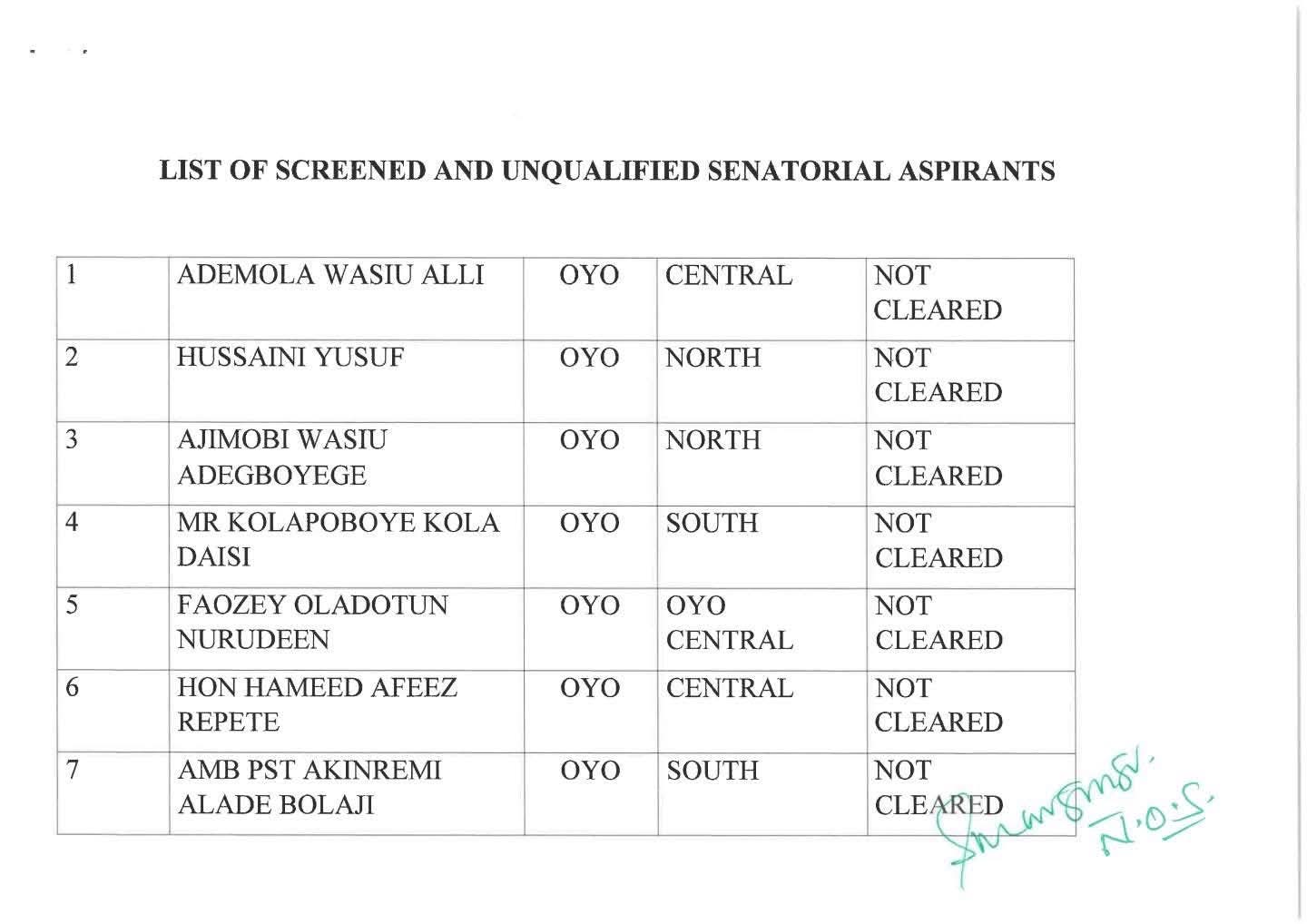
Fresh controversy has erupted within the Oyo State chapter of the All Progressives Congress (APC) following the reported disqualification of several aspirants, including Kolapo Kola-Daisi, son-in-law of late former Governor Abiola Ajimobi, from the party’s ongoing senatorial primary process.
The development, which has stirred reactions among party members and supporters, comes as the APC intensifies preparations for its senatorial primaries across the state. Kola-Daisi, who had recently met with party leaders and publicly declared his intention to contest, was said to be among aspirants screened out by the party’s internal vetting committee, alongside other unnamed hopefuls.
Although the APC has yet to issue a detailed public explanation regarding the specific reasons for the disqualifications, party insiders suggest that the decision may be linked to internal eligibility requirements, documentation issues, and strategic political considerations aimed at streamlining the contest ahead of Monday’s primary election.
The disqualification of Kola-Daisi has drawn particular attention due to his political profile and family ties. The businessman and politician, married to one of the daughters of the late former governor, had been actively consulting party stakeholders and expressing confidence in securing the APC ticket. His political ambition had been viewed by many as an attempt to continue the Ajimobi political legacy within Oyo politics.

Sources within the party say the move has triggered fresh tension among some APC loyalists, especially supporters who believe the screening process should be transparent and free from internal manipulation. Some members have reportedly called for clarification from the party leadership to prevent grievances from escalating into wider discontent.
Political analysts warn that the development could deepen existing cracks within the Oyo APC, where factional disagreements and candidate selection disputes have recently become more pronounced. Concerns are mounting that unresolved disputes could weaken party unity ahead of the general elections.
Despite the setback, there are indications that some affected aspirants may challenge the decision through the party’s appeal mechanisms, hoping for reconsideration before the final candidate list is ratified.
As the APC moves closer to its senatorial primaries, attention now shifts to how party leaders will manage the fallout and reassure members of a credible, inclusive process capable of preserving unity within the fold.