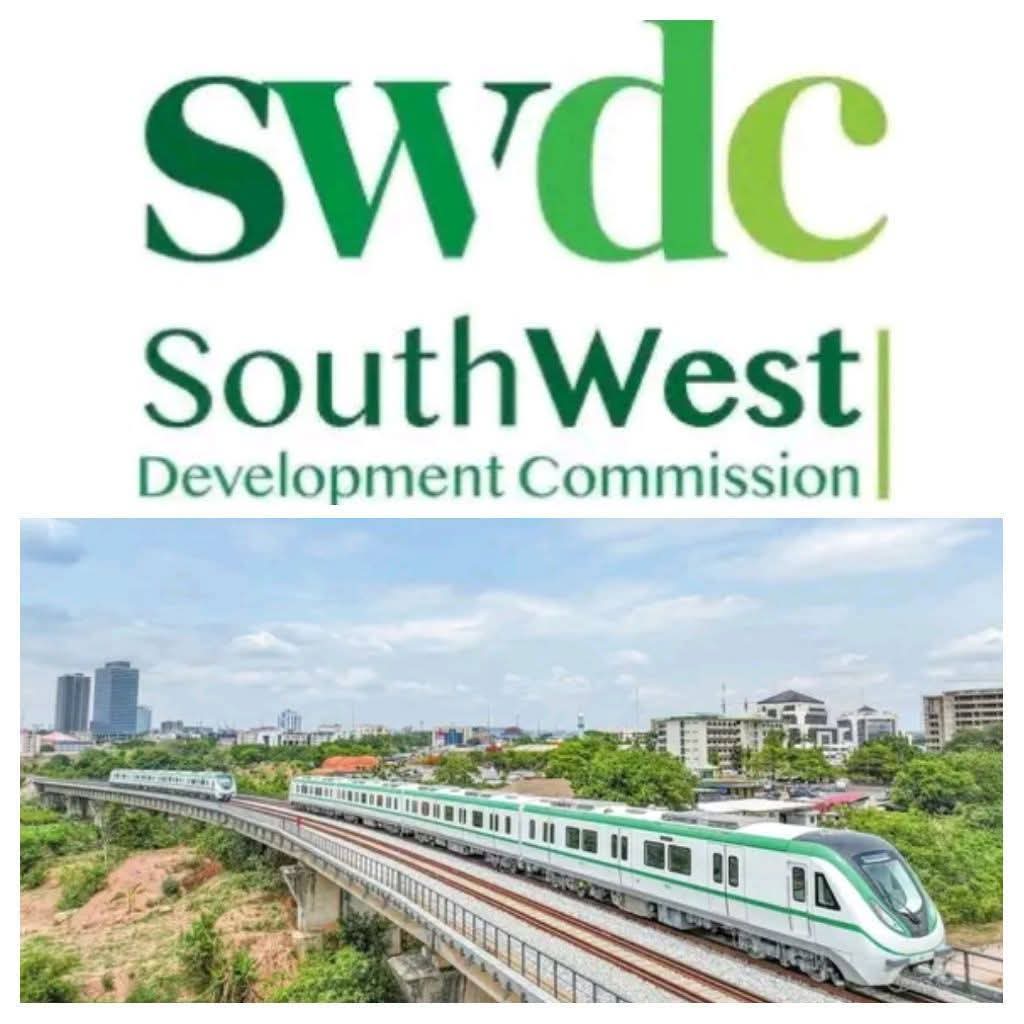
In a landmark move aimed at transforming transportation and economic integration across Nigeria’s Southwest, the Southwest Development Commission (SWDC) has secured a provisional Rail Operating and Track License from the , paving the way for the development of an expansive regional rail system connecting all six states in the zone.
The groundbreaking initiative is expected to revive several abandoned and unserved railway corridors while establishing a modern 44-city rail network that will link Lagos, Ogun, Oyo, Osun, Ondo, and Ekiti States. The project is being described by stakeholders as one of the most ambitious regional infrastructure undertakings in recent years, with the potential to significantly boost commerce, industrial productivity, and regional Gross Domestic Product (GDP).

According to officials familiar with the development, the provisional license grants the Southwest Development Commission authority to begin preliminary planning, route mapping, technical assessments, and stakeholder consultations necessary for the commencement of rail operations. The proposed network is expected to connect major commercial hubs, agricultural belts, educational centers, and industrial corridors across the region, thereby improving mobility for millions of residents and businesses.
Economic analysts have welcomed the move, noting that an interconnected Southwest rail system could reduce pressure on overstretched road networks, lower transportation costs, enhance supply chain efficiency, and stimulate investments in manufacturing, tourism, and real estate. The rail project is also expected to create thousands of direct and indirect jobs during both construction and operational phases.
The revival of dormant rail routes is seen as particularly significant, as many communities in the Southwest have remained disconnected from Nigeria’s modern transportation reforms despite their strategic economic importance. By bringing these communities back into active transport circulation, the Commission hopes to unlock new opportunities for trade and rural development.
Observers say the development reflects the growing importance of regional development commissions as instruments for targeted growth and localized economic planning. There have been increasing calls for all geopolitical zones in Nigeria to activate and strengthen their respective development commissions, with a focus on infrastructure, innovation, and sustainable economic expansion tailored to their unique regional needs.
If successfully implemented, the Southwest rail initiative could serve as a model for other regional commissions across the country, demonstrating how coordinated sub-national development efforts can complement federal infrastructure policies and accelerate national progress.
Further details on project timelines, funding mechanisms, and implementation phases are expected to be unveiled by the Southwest Development Commission in the coming weeks.