
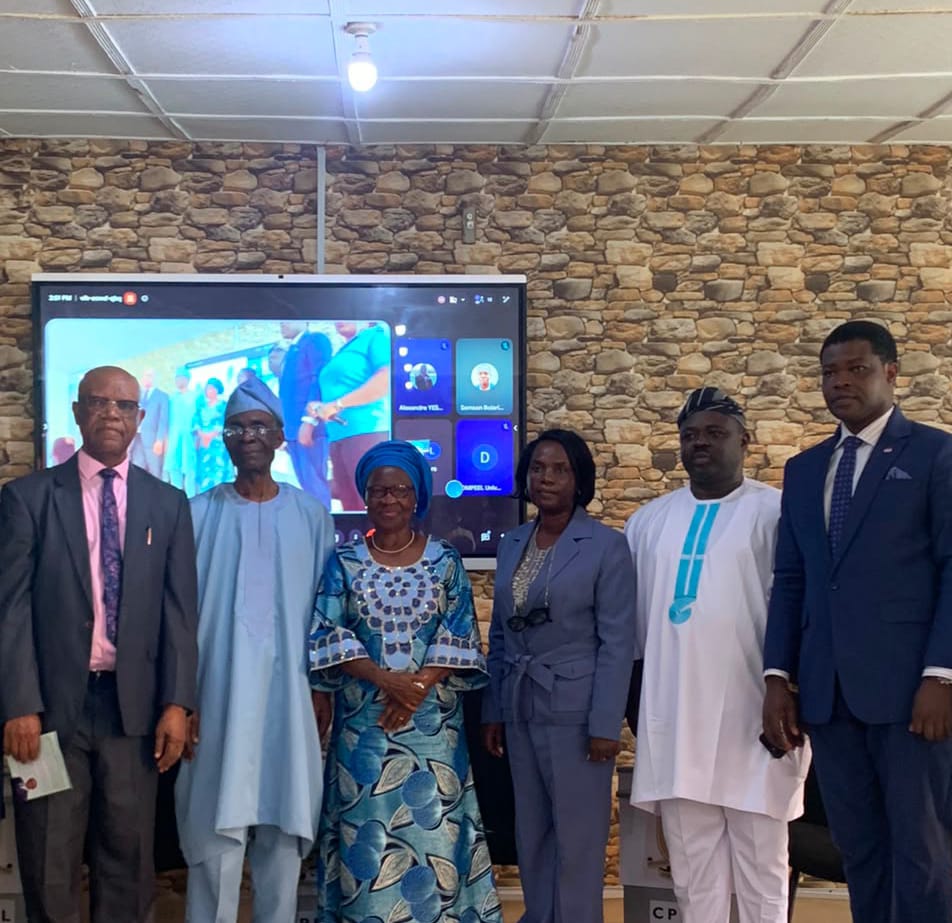
Former Oyo State Commissioner for Works and Transport, Professor Rahman Raphael Afonja, has called for stronger collaboration between academia and industry to generate groundbreaking research capable of advancing Nigeria’s energy sector and driving national development.
Professor Afonja made the call today while delivering remarks at the 3rd Annual Personality Lecture in honour of Professor Akin Iwayemi, organised by the Centre for Petroleum, Energy Economics and Law CPEEL at the University of Ibadan.

The lecture, which coincided with Professor Iwayemi’s birthday celebration, was themed “Nigeria’s Transition to Competitive Energy Markets: Lessons from Reform and the Road Ahead.”
Speaking on the importance of evidence-based policymaking, Afonja stressed that meaningful collaboration between universities, research institutions, government agencies and private sector players is essential to producing innovative solutions to Nigeria’s energy challenges.
He lamented what he described as the long-standing neglect of the academic community, noting that researchers and institutions have continued to grapple with inadequate funding, a situation he said has limited the country’s capacity to produce high-impact research capable of informing policy and industrial development.
According to him, sustained investment in academic research is critical, particularly in the energy sector, where Nigeria is undergoing far-reaching reforms aimed at liberalising and decentralising the electricity market.
Afonja noted that with the ongoing implementation of electricity sector reforms, which empower sub-national governments to establish and regulate their own electricity markets, there is an urgent need for research that will guide states in developing efficient, competitive and sustainable power systems.
He maintained that robust funding for energy research would provide policymakers with reliable data and practical recommendations needed to ensure the success of the reforms and accelerate economic growth.

The former commissioner urged governments, development partners and private investors to prioritise research funding and deepen partnerships with higher institutions, saying such collaborations would not only strengthen innovation but also enhance Nigeria’s capacity to achieve a secure, reliable and competitive energy future.
The annual personality lecture attracted academics, energy experts, policymakers, students and other stakeholders, who examined the progress of Nigeria’s ongoing energy market reforms and explored strategies for ensuring a more competitive and resilient energy sector.