

The ongoing Olojo day ̣ is a communal festival attached to the worship of Ogun in Ile -Ife where people across the globe troop into the ancient town in commemoration of the historic event.
The festival is meant to commemorate Ogun, the god of iron, and Oranmíyan, said to be the son of Ògún and Oduduwa. Oduduwa was recognised as the mythical ancestor of the Yoruba race and is one of the gods of the land that is significant to Yoruba history and traditions.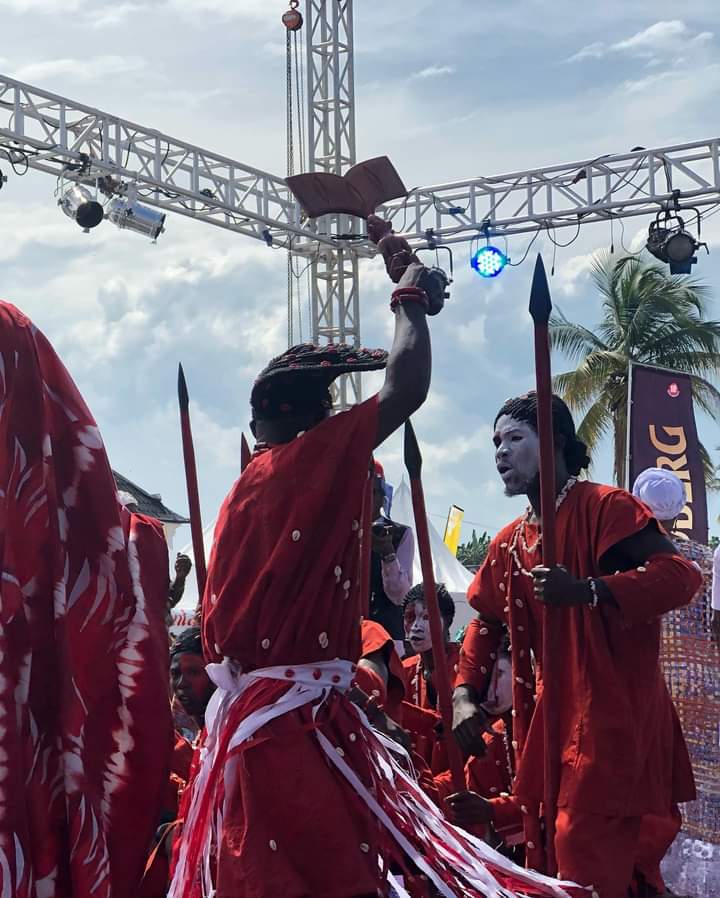
From oral traditions, it was noted that Ogun is the Yoruba oríṣa of war. He is one of the earliest divinities. He was a hunter; and before the earth was formed, he used to descend by a spider’s web upon the primordial marshy waste for the purpose of hunting (Idowu, 1996:84). He was said to be one of the immemorial beings (Oòyè) who descended from Olodumare along with other divinities like Ọbatala and other òrìṣà (Oladapo, 1980:104).
He was a warrior designated to pave the way for the other, less war-like deities who followed. His invaluable services and commitments to humanity compelled the Yoruba to remember, and memorialize him though ritual at least once a year until this very day. His service therefore led Ògún to be given the honorific title of “Owner of the Day” (Ọlojo ̣) as he was the one that paved the way for other ‘oríṣas’ or gods.
Oranmíyan was an Ile-Ife prince and a warlord who later founded the Oyo and Benin Kingdoms. He was said to have been conceived through a cross-sex meeting of two deities over a slave woman known as Lakange Anihunka (a slave captured by Ogun in one of his war expeditions). The deities involved were Oduduwa and Ogun himself. Ogun slept with the woman upon returning from his war trip to Ile -Ife ̣, but unbeknownst to him, the woman was already betrothed to Odùduwà. When Ògún came to confess to what he had done, it was too late to stop Oduduwa from marrying her.
The woman later gave birth to a child who had one side of his body fair and the other dark. The fair skin was Oduduwa’s and the dark skin was Ògún’s. This image of the child then gave rise the saying òrò ̣-ló-yàn which may mean “the child is very unusual” or ‘the child has become explicitly unnatural or “my prayers have been answered”. This saying then depicts the name of the deity Oranmíyan until today, and at the same time reveals the cultural model of gift of a child in an extraordinary way (ìfà lọ̀mọ̀) which is always emphasised in Yoruba parlance. This parlance identifies the belief that people live out the meanings of their names. The philosophy of naming among the Yoruba is expressed in common saying that “ ilé ni à ń wò kíi átó sò òmò lórúkò”( one must consider the tradition and history of a child’s relatives when choosing a name). This tradition of naming is a long standing tradition and practice among Yoruba families and such customs often reference their sacred stories, beliefs and the vocations associated with the family.
This model therefore indicates the symbolic importance of Ogun and Oduduwa in the creation of Oranmiyan, most importantly that the child represented a gain for Oduduwa, who outsmarted Ogun through his authority as king. The Olojo festival has a display of colour symbols which brings to mind this mythical story that connects Oranmiyan with Ogun and Oduduwa. The image of fair and black colours which Oranmiyan was born with is also reflected in the ritual dress of the Lokolokos every year during the festival. The image also symbolises the reminiscence of the picture of Oranmiyan in every Olojo festival.
When Oranmíyan grew up as a prince, the festival of Ọlojo ̣ was inaugurated by him to venerate Ògún. He himself also became associated with the festival because he was as warlike as Ògún, his partial father. The festival thus also served as an annual festival for every king enthroned in Ile -Ife ̣ from the time of Oranmíyan to the present day. The Ọlojo ̣ festival occurs annually in the month of October.