
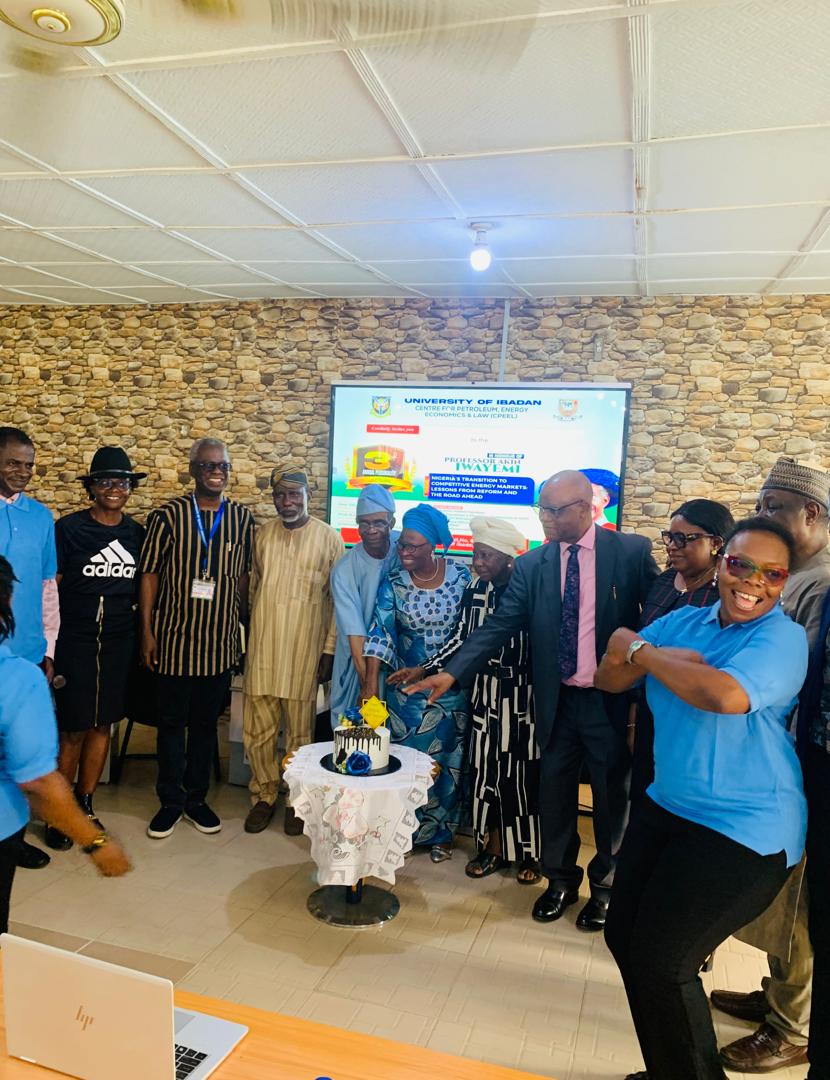
Nigeria’s transition to a competitive energy market will remain slow unless government policies are backed by deliberate implementation, energy experts and key stakeholders have said.
The consensus emerged at the Annual Personality Lecture organised by the Centre for Petroleum, Energy Economics and Law (CPEEL), University of Ibadan, in honour of distinguished energy economist, Professor Akin Iwayemi. The lecture examined the theme, “Nigeria’s Transition to Competitive Energy Markets: Lessons from Reform and the Road Ahead.”

Setting the tone for the event, Director of CPEEL, Professor Olugbenga Falode, said the institution established the annual lecture to celebrate individuals whose contributions have shaped scholarship and national development. He described Professor Iwayemi as a globally respected academic whose work has influenced generations of researchers and energy professionals.
Falode observed that despite Nigeria’s huge oil and gas reserves, millions of citizens still contend with unreliable electricity and widespread energy poverty. He maintained that addressing these challenges requires stronger collaboration among economists, engineers, legal practitioners, policymakers and private investors to produce practical, research-driven solutions.
Delivering the keynote lecture, the Chief Financial Officer of Seplat Energy Plc, Mrs Eleanor Adaralegbe, argued that the country has reached a stage where effective implementation of reforms is more important than introducing fresh policies.
According to her, sustainable growth in the energy sector depends on sound governance, regulatory certainty and policies that inspire investor confidence. She noted that while reforms create opportunities, only disciplined execution can unlock their full economic value.
Adaralegbe identified Nigeria’s abundant natural gas reserves as a major catalyst for industrialisation, improved electricity supply and inclusive economic growth. She added that with its growing population, expanding capital market and strategic African position, Nigeria possesses the ingredients to become a major energy investment destination.
She further called for increased crude oil production, stronger investment incentives and full implementation of the Federal Government’s Decade of Gas initiative, stressing that closer cooperation between government and the private sector is essential to accelerate development across the oil, gas and power industries.
Speaking on behalf of the Vice-Chancellor of the University of Ibadan, Professor Kayode Adebowale, the Dean of the Faculty of Multidisciplinary Studies, Professor Peter Obutte, described the lecture as an important platform for generating ideas capable of influencing national energy policies and reforms.
Chairman of the occasion, Emeritus Professor Uche Isiugo-Abanihe, expressed concern that Nigeria’s enormous natural and human resources have not translated into stable electricity supply. He urged government authorities to ensure that recommendations from academic and industry engagements are implemented rather than left as policy documents.

Isiugo-Abanihe also warned that Nigeria could face deeper socio-economic challenges if it fails to harness the potential of its youthful population through sustainable development and inclusive economic opportunities.