Oyo Lawmaker, Dele Adeola Backs Innovation Drive, Says Youth Empowerment Key to Oyo’s Sustainable Future

Hon. Dele Adeola, member of the Oyo State House of Assembly, has reaffirmed his commitment to youth-centered innovation while expressing strong support for initiatives that prepare young Nigerians for the future of automotive technology and advanced manufacturing.

Speaking to newsmen through his respresentative, Comrade Ismael Taiwo at the programme titled “Driving the Future: Empowering Nigerian Youth through Automotive Innovation,” Hon. Adeola noted that the initiative reflects the broader vision of Oyo State Governor, Engr. Seyi Makinde, whose administration continues to invest in skills development, technology adoption, and economic opportunities for young people across the state.

He highlighted that Governor Makinde’s roadmap for sustainable development places youth empowerment at its core, emphasizing technical education, digital readiness, and industrial capacity-building. According to Hon. Adeola, programmes that expose young people to modern automotive design, electric mobility, mechatronics, and innovation ecosystems complement the Governor’s ongoing reforms in education, infrastructure, and job creation.

Hon. Adeola stressed that the global automotive industry is undergoing rapid transformation, and Nigeria must position its youth to take advantage of these emerging opportunities. He stated that empowering young people with practical skills and innovation-driven training aligns with Oyo State’s long-term economic growth strategy under the Omi-Titun 2.0 agenda.

He further assured that the Oyo State House of Assembly will continue to support legislative frameworks that promote technology, entrepreneurship, and youth-focused industrial development. According to him, the state is committed to nurturing a generation of creators and problem-solvers who can drive both local and national competitiveness.

Hon. Adeola encouraged participants to embrace the knowledge offered through the programme, adding that the future belongs to those who are equipped, innovative, and willing to lead in a technology-driven world.

Inspector of Police Stabbed To Death In Ondo State

An inspector of police attached to the B-Division Police Station in Akure, Ondo State, has reportedly been stabbed to death by an alleged thug with links to local cult groups.

The officer, who was recently transferred from the Anti-Cultism Unit to B-Division, was killed at Oke Arata, beside Arakale, in the state capital.

Eyewitnesses identified the suspects as Oladapo Oluwaseun, also known as “Choko Milo,” a member of the Eiye Confraternity, alongside Shina and Y2K, who are reportedly affiliated with the Aye Confraternity.

The trio reportedly attacked the officer during a disturbance in the area.

Meanwhile, Choko Milo is both an appointee and a loyalist of Governor Lucky Ayedatiwa.

The motive behind the attack remains unclear, and authorities are yet to release official details regarding the confrontation.

Oduduwa News also learned that “Choco Milo” was among those who attacked protesters, including human rights activist Omoyele Sowore, during the June 12 demonstration in Akure, the Ondo State capital.

On June 12, Sowore accused Ondo State Police Command of collaborating with thugs to attack peaceful pro-democracy protesters in the state as demonstrations against bad governance, economic hardship, and other national issues swept across several states.

“We just witnessed a disturbing incident here in Ondo State; thugs and policemen working together to attack pro-democracy activists during a peaceful protest. We saw them with our own eyes. The police were clearly collaborating with the thugs as they beat up protesters. It was very, very sad,” Sowore said in a video.

“I hope the world is watching this. Today is supposed to be June 12, Democracy Day, a day meant for peaceful protest and reflection. Yet, thugs showed up alongside the police to violently suppress citizens exercising their democratic rights.”

He continued, “We saw the thugs shouting and attacking people. They tried to attack me too. They had clearly marked me out, but we left the scene so we could report this to the world. It’s truly pathetic that in a country where people fought and died for democracy, thugs have now taken over the democratic space, with the active support of the Nigerian Police.

“This is happening in Ondo State, and we will keep moving around to monitor the situation and ensure that anyone who is arrested or attacked today receives support and justice.

“The protest in Akure started peacefully, but was violently disrupted by thugs brought in by the state government, working hand-in-hand with the police.

“We even captured it live; thugs shouting that is Sowore (Sowore niyen!) as they tried to attack me. They had clearly singled me out.”

In September, Ondo State Government appointed a group of men, including individuals accused of attacking pro-democracy activists during the June 12 Democracy Day protest in Akure, as coordinators of commercial tricycle (Keke) riders in Akure South Local Government Area.

A government appointment letter dated September 15, 2025, signed by Comrade Bola Taiwo, Special Adviser to the Governor on Union Matters and Special Duties, confirmed the appointments of Robert Tolulope, Oladapo Oluwaseun, aka Choco Milo; Gbenga Aluko; John Oluwatimilehin, aka Gaga, and Faleye Oluwadamilare, aka Aperi.

The appointees were directed to report to the “office of the Special Adviser, Special Duties, on the progress and challenges faced by the riders under your jurisdiction on a weekly.

Gbenga Hashim’s 2021 Call for Defence Cooperation Reemerges Amid U.S. Warning to Nigeria

A renewed wave of online conversations has thrust former presidential candidate and 2027 hopeful, Gbenga Hashim, back into national focus as Nigerians revisit a major national security proposal he made more than four years ago.

The discussions, trending under the hashtag #HashimSecurityVision, have dominated the platform X (formerly Twitter) over the past 24 hours.

The resurgence follows the reappearance of Hashim’s 2021 recommendation urging the Nigerian government to sign a Defence Cooperation Agreement (DCA) with friendly nations. At the time, he argued such an alliance would provide Nigeria with access to global intelligence frameworks, advanced surveillance and combat technologies, and superior counter-terrorism expertise—resources he described as critical to confronting the country’s deepening insecurity.

With the U.S. president now issuing strong warnings over escalating violence in Nigeria, many citizens online say Hashim’s proposal shows striking foresight.

Commentators have described the rediscovered recommendation as evidence that Hashim not only understood Nigeria’s security vulnerabilities early, but also accurately assessed the structural weaknesses undermining the nation’s defence capacity. For many, this reinforces the argument that Nigeria needs precisely the sort of visionary, long-term leadership he represents, especially at a time of heightened diplomatic tensions and worsening internal security.

The conversation has also revived interest in another of Hashim’s policy documents—his $4 trillion economic revival plan, first published in 2018. The blueprint, which outlines strategies for large-scale industrialization, infrastructure expansion, and job creation, has resurfaced amid Nigeria’s persistent economic struggles, including inflation spikes, currency depreciation, and slowed growth.

Observers say the renewed attention to both proposals—one from 2018 and another from 2021—has strengthened Hashim’s image as one of the country’s most forward-thinking political figures.

Unlike many politicians whose public engagement revolves around personal rivalries or power contests, Hashim has consistently presented issue-driven frameworks, emphasizing structural reforms, economic modernization, and comprehensive security transformation.

Political analysts note that this sustained policy focus is what distinguishes him.
“Hashim stands out as Nigeria’s thinking politician,” one analyst wrote, “because his politics is anchored on ideas, not noise.”

As Nigeria confronts overlapping pressures—diplomatic strain, economic downturn, and persistent insecurity—the resurgence of Hashim’s past proposals may indicate a growing public appetite for leaders with clear, strategic vision rather than short-term political maneuvering.

Whether the online momentum will translate into broader political support remains uncertain. But the digital trend suggests that more Nigerians are revisiting the voices that warned early—and proposed solutions long before today’s crises intensified.

Oyo Assembly Confirms Appointment of New OYSIEC Chairman, Members

The Oyo State House of Assembly has confirmed the appointment of Dr. Babatunde Afeez Adeniyi as the new chairman of the Oyo State Independent Electoral Commission(OYSIEC)

The state house also confirmed Chief Kunmi Agboola , Mr. Olanrewaju Adeoti Emmanuel, Mr. Sunday Olugbemiga Falana, Hon. Remi Ayoade, Mr. Olatunde Akintunde Theophilus, Mrs . Adebayo Maryam Adepeju and Mr. Babatunde George Ige as OYSIEC members.

Their appointments were confirmed by the members of the Oyo State House of Assembly at Tuesday’s plenary presided over by the speaker of the house, Right Hon. Adebo Ogundoyin.

This follows the adoption of the report and recommendations of the House Committee on special duties on the screening conducted for the nominees earlier in the day .

The report presented by the Committee chairman and deputy speaker of the house, Hon. Abiodun Fadeyi indicated that the chairman and members responded to all the questions put to them satisfactorily, and found them worthy of the appointments .

Speaking with journalists shortly after the confirmation, the newly appointed chairman, Dr. Babatunde Afeez Adeniyi, said his team would swing into action immediately after the inauguration ceremony.

He noted that the next local government council elections under his watch would be conducted in line with all the electoral laws.

He appreciated the Oyo state governor, Engr Seyi Makinde for entrusting him with the leadership of the commission.

He speaks further:
“We thank the governor of the state, His Excellency , Engr. Oluseyi Makinde for finding us worthy of being nominated as chairman and member.

“We are equally grateful to the Right Honourable Speaker, Hon. Adebo Ogundoyin , all the Principal Officers of the 10th Assembly and also the distinguished members of the House for confirmation of the appointment.
“As we are moving forward, we will be looking forward to our inauguration, after the
inauguration, we would swing into action on how to ensure that we are able to conduct the
next election in line with all the laws, and ensure that the sanctity of the election is protected”
” The screening went well, we were cross-examined on our background, education, work experience
and the likes”

Sanwo-Olu Presents N4.2 Trillion “Budget of Shared Prosperity” to Lagos Assembly

The Governor of Lagos State, Babajide Sanwo-Olu, on Tuesday unveiled the Year 2026 Appropriation Bill, presenting an unprecedented N4.2 trillion budget to the Lagos State House of Assembly. The proposal, christened “The Budget of Shared Prosperity,” aims to accelerate infrastructure development, expand welfare support, and consolidate growth across key sectors of the state’s economy.

According to the breakdown released by the Governor, the budget prioritizes investment in critical sectors to drive inclusive development and enhance the quality of life for over 20 million Lagos residents.

Under the 2026 fiscal proposal, Capital Expenditure accounts for N2.2 trillion, representing 52%, while Recurrent Expenditure is pegged at N2 trillion, or 48% of the total budget. Sanwo-Olu emphasized that the capital-heavy spending plan is designed to boost physical and social infrastructure, stimulate job creation, and promote private-sector participation.

Sectoral allocations include:

Economic Affairs: N1.47 trillion
(Infrastructure, transportation, agriculture, job creation, and economic development)

Health: N338 billion
(Upgrading facilities, health insurance coverage, emergency services, and medical personnel)

Education: N249 billion
(Learning infrastructure, digital education, teacher training, and tertiary support)

Environment: N235 billion
(Drainage systems, climate resilience, waste management, flood mitigation)

Housing: N123 billion
(Affordable home schemes, urban renewal, slum regeneration)

Public Order and Safety: N147 billion
(Security operations, LASTMA, emergency response, justice system support)

Social Protection: N70 billion
(Vulnerable support, welfare interventions, youth and women empowerment)

Recreation: N54 billion
(Parks, cultural projects, sports facilities, and tourism development)

Governor Sanwo-Olu described the financial blueprint as a strategic roadmap to expand opportunities and deliver tangible benefits to residents. He noted that the budget reflects Lagos’ ambition to sustain its economic leadership while providing equitable access to development.

With the mega–budget now before the Assembly, lawmakers are expected to begin sectoral reviews, stakeholder engagements, and public hearings before final passage.

Lagos Reporters will continue to monitor proceedings at the Lagos Assembly and provide updates on reactions, implementation strategies, and potential impact on residents.

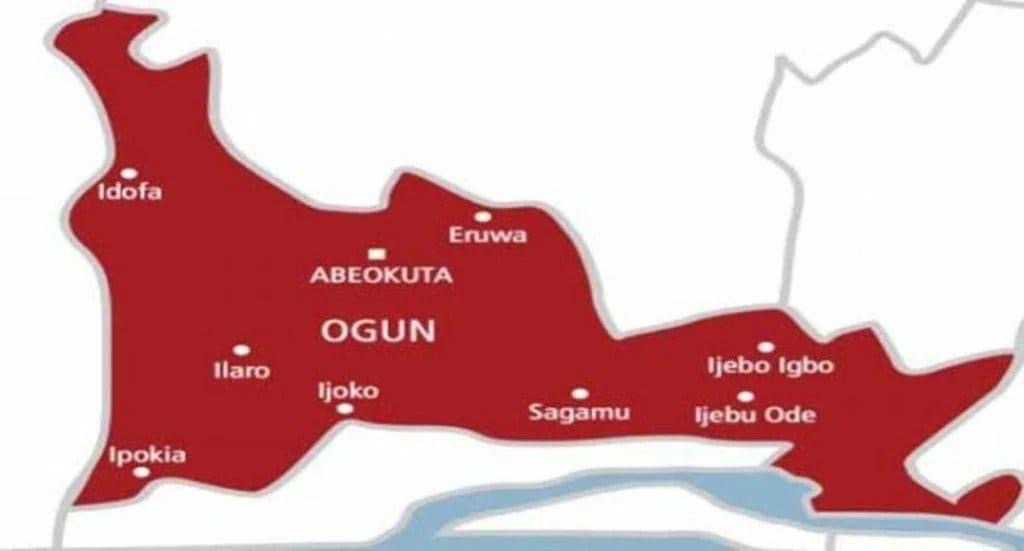
Insecurity: Ogun Tightens Security Measures, Begins Documentation of Foreign Workers

Governor Dapo Abiodun says Ogun State is adopting new security measures following rising insecurity across the country. After a security meeting in Iperu, he announced that the government will begin documenting foreign nationals working with multinational companies, while new non-indigenes entering the state will undergo screening by community leaders to verify their purpose and means of livelihood.

The governor revealed that about 70 undocumented foreigners from Niger, Chad, and Sudan were recently arrested after failing to explain their presence in Ogun. He said they will be processed by the Nigeria Immigration Service, and urged non-indigene communities to be more vigilant.

Abiodun also raised concerns over the activities of scavengers and scrap dealers, describing them as emerging security threats. He directed law enforcement agencies to monitor their operations closely and clear out criminal hideouts such as “Zanga” in Ijebu-Ode. He warned that any property used by criminals will henceforth be seized by the government.

The governor addressed illegal mining and movement through forest reserves, noting that some miners operate as miscreants. He assured that the state is working with security agencies to secure forests, mining sites, and settlements like the one at Ajebo in Obafemi-Owode.

He called on residents to support community policing by reporting suspicious activities and urged traditional rulers to stop allocating land to strangers, warning that defaulters will be held responsible. Abiodun praised security agencies for their cooperation and commended President Bola Tinubu for ongoing national security efforts and recent successful rescue operations in Niger and Kwara states.

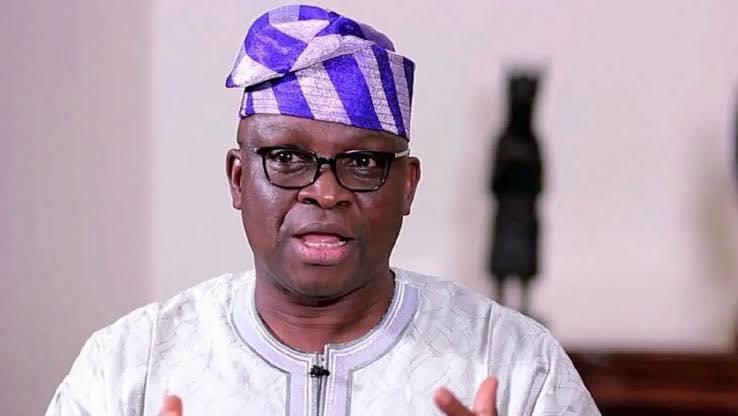
“I Almost Hit Obasanjo With the Mic”— Fayose Recalls Tense Moment at 65th Birthday Party

Former Ekiti State Governor, Ayo Fayose, has revealed that he was so provoked by former President Olusegun Obasanjo’s remarks at his 65th birthday celebration that he momentarily felt like grabbing the microphone and hitting him with it.

Fayose, who spoke in a recent interview, narrated the behind-the-scenes events that led to the tense exchange between him and the former president at the Lagos event.

According to him, two weeks before his birthday, he made a personal decision to reconcile with several political figures he had fallen out with over the years — and Obasanjo was one of them. Despite his effort to extend an olive branch, Fayose said the former president’s comments at the ceremony “touched a nerve.”

During his speech at the event, Obasanjo had revisited their long-standing political rift, stating that while Fayose achieved notable political success, he was “not the best” among his protégés. The remark reportedly triggered a wave of emotions in the former governor.

Fayose, however, said he composed himself, choosing maturity over confrontation and allowing the ceremony to continue without disruption. He added that regardless of past differences, he remains committed to making peace with his former adversaries.

Breaking: South West Governors Hold Emergency Summit In Ibadan Over Rising Security Threats

Governors from the South West are currently meeting in Ibadan for an emergency closed-door session convened to address escalating security concerns and other urgent regional issues.

The high-level gathering, hosted by Oyo State Governor Seyi Makinde at the Governor’s Office, Agodi, brings together leaders from Lagos, Ogun, Oyo, Osun, Ondo and Ekiti States.

Although the full agenda has not been disclosed, sources indicate that the meeting was triggered by growing security threats across the region, prompting the governors to review collective strategies, fast-track key development initiatives and strengthen cooperation under the Development Agenda for Western Nigeria (DAWN).

The governors are also expected to evaluate ongoing joint security operations, especially the activities of the Amotekun Corps, amid emerging challenges and the need for a more coordinated regional response.

Oyo 2026: Makinde Unveils ₦892bn Budget, Allocates ₦210bn to Infrastructure, ₦155bn to Education

Oyo State Governor, Seyi Makinde, on Thursday presented a total budget of ₦891.98 billion for the 2026 fiscal year, describing it as a strategic blueprint aimed at accelerating infrastructure expansion, strengthening human capital, and deepening economic growth across the state. Tagged the “People-Centred Prosperity Budget,” the proposal reflects the administration’s commitment to sustainability, fiscal discipline, and inclusive development.

Presenting the Appropriation Bill before the Oyo State House of Assembly, Governor Makinde disclosed that the budget is composed of ₦389.34 billion for recurrent expenditure and ₦502.65 billion for capital projects. The governor emphasised that the spending plan prioritises ongoing infrastructure projects, expansion of education and health facilities, agricultural development, and programmes that would ensure long-term economic resilience.

The personnel cost for 2026 stands at ₦156.38 billion, with overhead at ₦122.21 billion, and other recurrent commitments at ₦110.84 billion, bringing the total recurrent expenditure to ₦389.34 billion. Capital expenditure—which takes the largest share—was pegged at ₦502.65 billion, reflecting the administration’s sustained investment in roads, energy, and other long-term assets critical to economic stability.

A detailed sectoral breakdown shows that Infrastructure receives the highest allocation with ₦210.02 billion (23.5%), followed by Education with ₦155.21 billion (17.4%), Health with ₦70.85 billion (7.9%), and Agriculture with ₦19.99 billion (2.2%). Other multi-sectoral allocations collectively amount to ₦435.91 billion, representing 48.9% of the total budget. Makinde noted that these proportions underline his administration’s data-driven approach in directing resources to areas with the highest social and economic return.

Governor Makinde assured lawmakers and residents that the 2026 budget was crafted to consolidate gains recorded across sectors since the beginning of his administration. He added that his government remains focused on delivering “a modern, safe, and economically vibrant Oyo State powered by innovation, productivity, and inclusiveness.”

The Appropriation Bill is now before the Oyo State House of Assembly for legislative consideration and passage.

Tinubu Vows Decisive Action as Nation Reels from Fresh Attacks

President Bola Ahmed Tinubu has vowed to take firm and decisive action following the recent wave of attacks and killings reported in different parts of the country, assuring Nigerians that his administration will not allow criminal elements to undermine national stability.

In a strongly worded statement on Saturday, the President lamented what he described as a “corrosion of security, a collapse of communal ethics, and a distortion of the moral compass that once held our communities together.” He said the troubling incidents are a reminder of the urgent need for collective responsibility and stronger security architecture across all levels.

Tinubu noted that the government is already reviewing intelligence reports and security strategies to ensure a swift and coordinated response, adding that service chiefs and heads of security agencies have been directed to intensify operations in volatile zones.

“We cannot stand by while innocent citizens are attacked, while communities are thrown into mourning, and while the peace that binds us is threatened,” the President said. “Those who perpetrate violence will face the full weight of the law. Nigeria must remain a place where every life is valued and protected.”

He also urged traditional rulers, local leaders, and community influencers to work closely with authorities in restoring trust, strengthening early-warning systems, and discouraging acts of retaliation that often escalate crises.

Tinubu extended his condolences to families who have lost loved ones, describing the killings as “senseless, heartbreaking, and unacceptable,” and reaffirmed his commitment to safeguarding every Nigerian.

“The moral fabric of our society must be rebuilt,” he said. “We must resist fear, reject hatred, and commit to peace. My government will act — decisively and without hesitation.”

You cannot copy content of this page