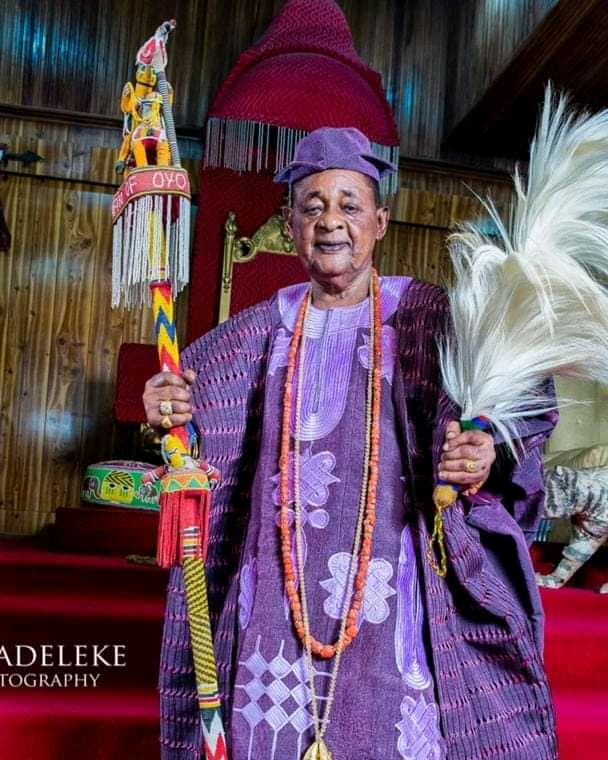
Ikubabayeye, the Alaafin of Oyo, Oba Lamidi Adeyemi III has advised political leaders to embark on restructuring to solve rising challenges of insecurity and menace of banditry in Nigeria.
The monarch, in a statement on Sunday, likened the current situation to the 1967 crisis during the early period of military interregnum.
He said the current situation requires that all Yoruba leaders should come together irrespective of political differences and speak with one voice as done in the days of the late Chief Obafemi Awolowo.
Oba Adeyemi said restructuring of Nigeria is a major solution, which Yoruba should push further this time.
The statement, which he personally signed, reads: “If there is anytime the Yoruba should come together and speak with one voice, this really is the time.
“Whether in terms of security or human welfare including safety of lives and property, I make bold to say that things have never been so bad in the country. This time is really an era of ethno-religious suspicion among our various communities.
“The present state of national uncertainty can best be compared with the situation in 1967 during the political crisis during the leadership of General Gowon.
“I recall with pleasant nostalgia that during the time, Yoruba leaders across different political parties sank their political differences and met in Ibadan under the governorship of General Adeyinka Adebayo.
“On that occasion, Yoruba unanimously chose the sage, Chief Obafemi Awolowo not only as leader but as the authentic spokesman of the Yoruba. It was the success of Awolowo leadership that kept the Yoruba away from any kind of civil war in spite of all temptations.
“Coming back to the present, suffice to say that the word restructuring, which we are all demanding now is not a new phenomenon in our national polity; only that it has changed its name.
“Thanks to the political foresight of the late Chief Obafemi Awolowo who, at all constitutional conferences in the pre-independence years, insisted on true federalism as the bedrock of political survival and stability of the country.
A Lagos State Mobile Court over the weekend convicted and sentenced a fake soldier arrested by the operatives of the Lagos State Environmental and Special Offences (Enforcement) Unit (Taskforce) for assault and impersonation to six weeks jail term.
Speaking on the arrest and arraignment, the Chairman of the Lagos State Environmental and Special Offences (Enforcement) Unit (Taskforce), CSP Shola Jejeloye, disclosed that the convicted fake soldier was apprehended after he collaborated with some miscreants to assault members of the enforcement team of the Agency at Airport Bus-Stop, along Lagos-Abeokuta Expressway.
He said that the operatives of the Agency were coming from monitoring and enforcement operation with over 150 impounded motorcycles loaded into three of the Agency’s trucks before the fake soldier, whose commercial motorcycle was also among those impounded while plying restricted routes, mobilised hoodlums to attack the team with dangerous weapons.
“The fake soldier was subsequently arrested after the attack was quelled. However, it was during preliminary investigations that it was discovered that he was not a member of the Nigerian Armed Forces but an impersonator”, Jejeloye said.
“The man later confessed to having only claimed to be a soldier in order to retrieve his impounded commercial motorcycle and that he painted his motorcycle with Nigerian Army camouflage colour in order to evade arrest from security agents while engaging in commercial activities on restricted routes”, he added.
CSP Jejeloye urged members of the public to stop impersonating security agents to commit crimes as anyone caught would be seriously dealt with in accordance with the Law.
The Chairman, however, confirmed that the arraignment of the fake soldier at the Lagos Mobile Court was in compliance with the directive of the Lagos State Commissioner of Police, Mr. Hakeem Odumosu.
Magistrate Oyebimbola Israel Adelakun, who presided over the matter, sentenced the accused Kabiru Mohammed (25 years) to six weeks in jail with N40,000 as an option of fine after he had pleaded guilty to the three-count charge of Assault, Conduct Likely to Cause Breach of Peace and Impersonation levelled against him.
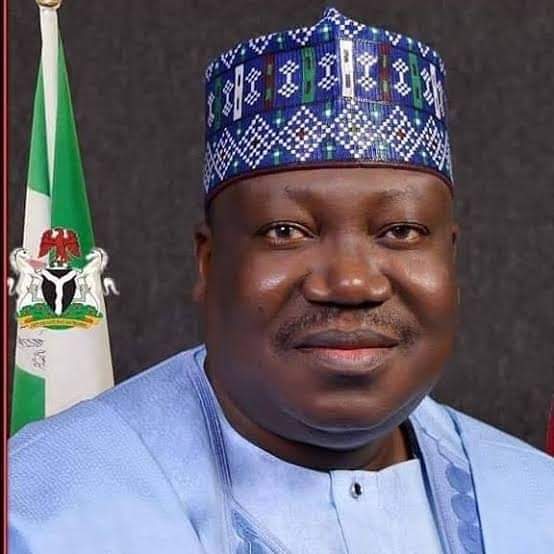
The Yoruba socio-political group, Afenifere and the Aare Ona Kakanfo of Yorubaland, Iba Gani Adams, an elder statesman, Pa Adebanjo have berated Senate President, Ahmed Lawan, over his comments indicting South-West governors for the recent mayhem in Sasa community, we Ibadan, in the Akinyele Local Government Area of Oyo State.
Lawan, in an interview with the BBC Hausa Service on Saturday, claimed that ‘unguarded statements’ by some governors in the South-West incited people in the area to take up arms against fellow citizens.
He also blamed what he called the failure of governments in the region for the crisis which led to property destruction in the area.
Lawan stated, “What happened in Oyo State and other things that kept happening in the South-western states are caused by leadership failures in the region. Some utterances by some governors also went a long way in inciting the citizens to take up arms against other ethnic groups settling in their states. The governors’ utterances emboldened the criminals to unleash violence against the northerners.”
Saying the incident happened while the National Assembly was on recess, he noted that it was one of the first issues deliberated upon when the assembly resumed legislative activities.
Lawan said, “Sasa killing was one of the things we deliberated upon at the plenary when we resumed. We condemned the violence and even moved against any kind of inciting comments or utterances by some government officials. We equally condemned the eviction order by one ethnic group on the other, or indigene-settle claims, just as we called for the compensation of all the victims of herder/farmer clashes in the country.’’
“Withdraw your provocative statement”
Reacting to Lawan’s comments in an interview with Sunday PUNCH, Adebanjo asked the Senate President to withdraw his provocative statement against governors in the South-West.
Adebanjo said, “It is an insult brought to us by those who aligned with the All Progressives Congress to force the President, Major General Muhammadu Buhari (retd.) on us as a nation. It is a tragedy that someone called the President of the Senate could make such a statement about South-West governors. In fact, it is Lawan that just made an unguarded statement.
“He has failed in his duty. He never had anything to say about the killings of farmers, raping of our women and massive destruction of our farmlands by killer Fulani herdsmen.
“His language is unguarded. I am sure that his language is that of President Muhammadu Buhari himself who has refused to caution the herdsmen.
When someone is part of a government that negotiates with bandits and criminals, what do you expect? It is people like Lawan who are behind the herdsmen and even own the cows. The statement by the President of the Senate is insulting, derogatory, shows lack of manners and a sign of improper training. It is condemnable and should be withdrawn.
“Are the governors in charge of security in their states or the one controlling the police? They have to resort to Abuja before the commissioner of police will even pick their calls. The Federal Government has refused to even allow Amotekun to bear arms but unconcerned when herdsmen carry sophisticated arms such as AK-47 and others.”
Also, speaking with one of our correspondents on Saturday, the Aare Ona Kakanfo of Yorubaland, Iba Gani Adams, described Lawan’s statement as ‘highly condemnable,’ asking him to withdraw it forthwith.
He said, “His comments are untrue. The information available to us indicated that the incident was caused by provocation. A Hausa porter beat a Yoruba pregnant woman. Talking about leadership failure, is leadership failure responsible for banditry in the North-West, North-Central or in the North-East where there’s insurgency? Then, it’s leadership failure that is responsible for the insecurity in the country?”
Adams also expressed worry that such a statement was uttered by the president of the country’s upper legislative chamber.
The Aare Ona Kakanfo added, “As a Senate President, he ought to detach himself from nepotism and appear like a statesman and not a sectional leader. The statement from him is highly condemnable and I will advise him to retract it. He will be bias if he’s asked to say anything concerning the Yoruba.’’
Speaking in a similar vein, Afenifere said ‘unwarranted provocations’ against the South-West were becoming too many.
Speaking through its Publicity Secretary, Yinka Odumakin, the group said, “So it’s not the unguarded statements of Buhari’s henchmen? It’s the leadership failure in Nigeria that is keeping people like him in office.’’
Lawan in the interview with the BBC demanded the arrest and prosecution of those involved in the Sasa mayhem.
He added, “Recently, President Muhammadu Buhari also invited the state governors and told them that the Federal Government would not condone any governor calling for the eviction of any ethnic group from his state. He said that no governor should incite his citizens to unleash terror or violence on the non-indigene members of the communities.”
On February 12, 2021, a disagreement between a Hausa porter and Yoruba female trader in Sasa market, Ibadan, degenerated into bedlam and claimed lives including multimillion naira investments.
A Yoruba cobbler, Shakirudeen Adeola, reportedly challenged the porter for beating the woman and in a fit of rage, the porter was said to have brought out a charm and hit Adeola who was rushed to a hospital and died thereafter. The news of Adeola’s death sparked off violence which shattered the peace in the area.
On sighting the headline of her piece entitled Nigerian Media: Let’s Stop Ethnic Profiling!, I initially thought well-respected media mogul, Kadaria Ahmed, was set to confront a media orthodoxy. Though it was plain, unambiguous and self-explanatory, in a moment, I imagined that that piece was about to collapse ancient established theses about the Nigerian media dominance and vain hold on power. This is because I love anyone who audaciously perforates the majesty of principalities and powers, persons, objects or places.
This was what carved a special place of regards in my heart for late Egba-born bard, Sakara music exponent and poet, Kelani Yesufu. Before his very unorthodox thinking, packaged into a line of poetry in his album entitled Atosi, at least among the Yoruba-speaking people of the then Western State, gonorrhea was an ailment that was believed to afflict only society’s greats. It was why the euphemistic acronym for it was arun gbajumo, translated: disease of the notable. But Kelani, in these very dense Egba dialect lyrics of his which sounded like an ululation, reversed that existing, very ancient perception. Atosi (gonorrhea) could not have been a disease of the notable, he vehemently argued in that vinyl. Why? And Kelani began his narrative. He chanted the disease’s long cognomen – atosi atoha – and many other attributes of its, paying unmatchable tribute to the destructive prowess of the then pestilence of this venereal disease. Men are afflicted by gonorrhea due to their multiple dalliances and careless libido, he said. Gonorrhea had killed so many people in those dark days of its affliction before the advent of the white man who readily provided a remedy for it. Kelani also dramatized how this venereal disease perforated the mouth of the sufferer’s midriff member, necessitating the victim regularly swallowing inscrutable potions like potassium called kanhun bilala as its remedy. For an affliction that takes its victim on such painful merry-go-rounds and the inconveniences it brings, asked Kelani, was it then right for gonorrhea to be labeled a disease of the notable?
The Kelani thesis momentarily unsettled existing narrative of the clubbing society and notables of the 1970s. Society apparently didn’t look at gonorrhea from that perspective before then. Those who labeled it a social disease ostensibly did that, placing it side by side the affliction of impotency, with the shame and societal ridicule which the afflicted victim went through. For a chauvinistic and charismatic African society like ours, the strength of manhood carried with it a conceit that men wore on their garments like a lapel. So, when comparatively estimated, the African society believed that the man who had multiple women liaisons and who, in the process, was afflicted by gonorrhea, was more desirable than an impotent man. Such challenge of existing order and narrative was what I thought Kadaria was about. By the way, Ahmed is a Nigerian journalist, media entrepreneur and television host who began her career in London BBC. Her media forays span print, radio, television, online and social media platforms. I was damn wrong on what I thought Kadaria was about after all. In the piece, she shared a sense of foreboding, of doom and war which she said the Nigerian media was spearheading. Offered as rhetorical interrogation of what she said was the media’s guilt in this grisly drum of war, Kadaria asked, “What exactly will we (media) gain if Nigeria descends into war? How does it advance us, if our fellow citizens turn on each other and begin large scale ethnic killings, against each other? Let me even assume that a few of us don’t believe in Nigeria anymore and want to see it broken into its constituent parts. How does enabling ethnic strife help achieve this objective in a way that guarantees the outcome you want?” The questions were targeted at whetting the ground for a more sweeping accusation: Media reporting of today, alleged Kadaria, has thrown away “the book on ethical reporting” and is now “propelled by emotions” and betrayal of “every moral consideration.”
Kadaria then lapsed into the ready-made typology of media complicity in war in Africa – Rwandan. The Nigerian media had failed woefully to learn a lifelong experience from media involvement in the 1994 Rwandan genocide and yielded its platform as “a tool that enables hate” Kadaria alleged. “We have given platforms to the worst among us, the extremists and the bloodthirsty. We have turned militia leaders and criminals into champions. Instead of us to lead calm and rational discourse on the existential challenges we face, with a view to promoting actionable solutions, we have succumbed to hysteria and the next exciting click bait headline. And yet for many of us, especially media owners, this place called Nigeria has been relatively good. This country has given many of us more opportunity than the majority of our fellow citizens. We have reaped a bountiful harvest from this place. We have done so well that if, God forbid, this country is consumed and chaos reigns, many of us will hop on a plane and bugger off to the many different countries abroad where our families live in peace, even though they are not native to those places,” she said. And then, the well-known journalist, who anchored that notorious interview with President Muhammadu Buhari, shortly before the 2019 election, where the president physically and clearly confirmed President Donald Trump’s alleged claim of his being lifeless, chose to bring out scary imageries of war. Said Kadara: “There will be killings in the thousands, limbs will be chopped off with machetes, women and girls will be raped, food will be scarce, fear will reign. The most brutal among us will take charge. And their word will be law. They will not tolerate journalists who try to hold them accountable.” In the piece under review, Kadaria exhibited a very uncritical mind that is everything but the hallmark of good journalism. If you remove her byline from it, you would imagine that a Federal Government demagogue had penned that piece. It brimmed with cants, assumptions, sophistries and ill-logics that can only be provoked by a poisoned mind. If you were not in Nigeria and not abreast of the narratives of cow that have engaged the polity in the last five years or so, you would think that Nigerian journalists were in a combat of strife and hatred against Nigeria. Or that the practice of the profession in Nigeria is done with a mind to incinerate Nigeria. Throughout the piece, Kadaria never apportioned any blame to the man her 2019 interview irritatintgly buoyed into presidential office for a second term, in spite of his manifest mental and governmental failings. Not for a minute in that interview did Kadaria communicate, either via innuendo or literally, that Nigeria was, with the Buhari she saw in that interview, going to be burdened by an impaired president.
Now, to the gravamen of Kadaria’s claim. I have been to Rwanda, where, between April and June 1994, an estimated 800,000 Rwandans were murdered within the space of 100 days, after the death on April 6, 1994 of President Juvenal Habyarimana. Habyarimana, a Hutu, had his plane shot down while about to land at the Kigali airport. I was at the Kigali Genocide Memorial Park; saw the mangled bones, tombs of reburied carcasses assembled from all parts of Rwanda and the eerie atmosphere of bloodletting in the park. I spoke with victims and victimizers of the genocide. Yes, the narrative of “mosquito” constantly used by Hutu Power, a private radio station which was established by extremists surrounding Habyarimana and echoing their tribe’s extremist narratives, contributed to the genocide, but Habyarimana, as well as men and women of both Hutu and Tutsi tribes had taken the hatred narrative to the cusp, merely having it amplified by the radio. But let me ask, did Kadaria anticipate a media that should blind its eyes to the ethnic-driven perfidy of the Buhari government or one that should not communicate the different queer narratives of what is happening under Buhari today? Further interrogation of Kadaria is apposite at this juncture. One: does she think the media is making up claims of Fulani herdsmen’s notorious criminal activities or that the media should have blurted out such reports? Second: Perhaps because Kadaria can conveniently be said to have medially helped to brew this Buhari broth, the government was then doing the right thing by looking the other way while the killing, maiming and raping of southerners is going on? Again, does she think that those who are recipients of this violence should have kept quiet? If they are narrating their gory experiences in the hands of Fulani herdsmen, does Kadaria think that the media should have turned its back on the victims? The honest truth is that, if you conduct a comparative analysis of Habyarimana’s guilt in the Rwandan genocide, it may only be a little higher than the war that Buhari is silently provoking by his inexplicable governmental cronyism and silence at the killing of innocent Southerners by Fulani herdsmen. Those who Kadaria wanted to impress with that piece, or those she intended the piece to earn their kudos or her further retainership, are Nigeria’s jailers. They are those who she ought to have concentrated her expletives and condemnation on. When Kadaria took to penning that piece which she said was borne of her distaste for her media constituency’s alleged recently acquired penchant for baiting blood and beating saber-rattling gongs of war, Bukola Elemide’s Jailer crept up my mind. Elemide, better known as Asa, is a Nigerian-French singer, songwriter and recording artist whose hit, Jailer holds a lot of refreshing narrative of both the current Nigerian situation and Kadaria’s misdirected bayonet. In Jailer, Asa levels every hill of suffering separating both the oppressed and their oppressors and removes all boundaries hitherto celebrated. Unbeknown to those who believed they occupied some level of ascriptions which insulate them from the Nigerian problems, Jailertells them that the calamities are layered. According to her, the man who holds the fire-brimming burner to the bum of the oppressed and the oppressed are operating on the same wavelength. I’m in chains, you’re in chains too//I wear uniforms and you wear uniforms too//I’m a prisoner//You’re a prisoner too, Mr. Jailer//Oh I have fears, you have fears too//I will die, but yourself will die too//Life is beautiful//Don’t you think so too, Mr. Jailer?
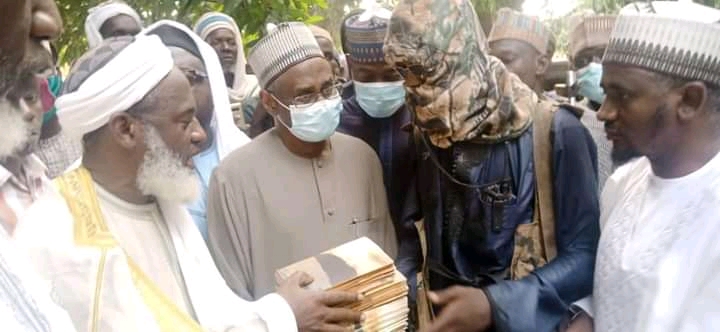
Unfortunately, there is a raging pestilence of minds which think uncritically like Kadaria’s in present day Nigeria. They afflict the rest of us with the impurity of their infectiously dangerous thoughts, in the name of defending the Kingdom of Cow that Nigeria is furiously turning into. Kadaria and her fellow travelers should know that, like the Jailer, we are all in this together and the earlier we got a resolution, the better for all of us. Last week, we examined the vacuous claim of the Bauchi State governor, Bala Mohammed, that since southerners who had been living in the north for decades were not expelled by their states of domicile, it was unconscionable for northern Fulani herdsmen living in the south to be expelled. Mohammed also justified Fulani herdsmen carrying that deadly weapon, the AK-47. We let him know that that reasoning was fallacious because, whereas the north had no reason to expel southerners. apparenty on the basis of their good behavior, the south had reasons to expel northerners living with them because their existence in their own land because of their recently acquired marauding inclinations. Now, Zamfara State governor, Bello Matawalle, has joined this race of impure thoughts. After meeting Buhari in the Villa last Thursday, Matawalle told the press that, not all bandits who terrorize some parts of Zamfara and other neighbouring states were criminals. First is that, that statement is a violent attack on language and logical semantics. A la semantics, banditry is “a type of organized crime committed by outlaws typically involving the threat or use of violence.” So, in the name of the twelve angels, how can tigers be described outside of their tigritude, or outlaws, outside of outlawry? And this was a governor who is faced with a violent affliction of hundreds of Zamfara people being killed or kidnapped by bandits, as well as in neighbouringKaduna, Zamfara, Nasarawa, Katsina, Niger and Sokoto, for many years now. Earlier, Sheikh Ahmad Gumi, who has recently began a weird forest evangelism, harvesting bandits whose hands are brimming with blood of innocent souls, had joined in the chorus as well. These deadly criminals and bloodthirsty hounds who make the forest their hibernation were offended by the Nigerian state and deserve not only federal armistice but amnesty, said Gumi. “The Federal government should give them blanket amnesty,” he said last week. Gumi belonged tothe same set of people who canvassed that Boko Haram insurgents, who have killed thousands of Nigerians and on account of whom the federal budget, earmarked for procurement of armament, is yearly depleted by billions of Naira, be granted amnesty, rehabilitated and given sumptuous financial grants. After meeting violent outlaws inhabiting the forest of Niger State on his latest intervention to rescue the 27 students of Government Science College, Kagara, Gumi had said: “The outcome (of his visit) is very positive. We have many factions and each faction is saying ‘I have complaints and grievances – we are persecuted, we are arrested, we are lynched,’” citing the bandits’ claim.
If we trace the filament that links all these tendentious statements, from Kadaria’s to Muhammed, Matawalle, Gumi and the likes, you will find an identifier, to wit a campaign for a world for the tyranny of Fulani herdsmen and bandits. The campaigners’ ultimate goal is to get carved out for them a Ministry of Banditry or Cattle Matters and a generous state negotiation, in the mould of Niger Delta militants’. If one may ask, why would anyone in their right senses compare the criminality of militants to that of bandits? As said last week, while the former is criminality buoyed by ethnic nationalism, the latter is engendered by undiluted criminality. It is no hidden fact that banditry in the Northwest isfallout of illegal and criminal artisanal mining of lead, gold, as well as other mineral resources. Does Kadaria know all these?
EXIT OF EWART BECKFORD, U-ROY
The reggae world lost a pioneering icon last week. He is Ewart Beckford, better known as U-Roy. Beckford was a king of the microphone, beginning his career as a disc jockey in 1961. It is almost impossible for anyone who had anything to do with this Jamaican-popularized music in the 1970s, 80s and 90s not to have had U-Roy barge into them. He was said to have passed on on February 17, 2021 after undergoing surgery in a hospital in Kingston, Jamaica’s capital city amid suffering from diabetes, blood pressure and a kidney disease. Born on September 21, 1942, one of U-Roy’s most famous offerings to the reggae world was Dread in a Babylon and Natty Dread (1976), the latter spiced up Mighty Diamonds’ Have Mercy.U-Roy also voiced the ‘Version Galore’ album and was known for bringing bravura and uniqueness to reggae rap, atop the blaring of rhythmic songs underneath. He was renowned for popularising this vocal style which was popularly known as “toasting.” He produced further albums, some of which are, Rasta Ambassador (1977), Jah Son of Africa (1978) and Pray Fi Di People which was released in 2012. U-Roy also featured on the album True Love done by Jamaican iconic old group called Toots and the Maytals. The album, in 2004, won the Grammy in the Best Reggae Album category, No one could duel with U-Roy in this “toasting” singing, pretty and mellifluous conversational chatter genre as he successfully overturned the paradigm of Jamaican music. The uniqueness of U-Roy’s contribution to reggae ranged from the cadence of his rapping voice, his shimmering howl mid-singing and his lyrical audacity. He was known to shout in the midst of his lyrical sessions and such shouts added huge difference to his music. U-Roy was a great Rastafarian who, like biblical Nazarenes, adhered to the injunction of keeping their hairs, which grow in locks, sacred. U-Roy will be sorely missed by the reggae world.
As Osun Judicial Panel of Inquiry on Police Brutality Human Rights Violations and Related Extra Judicial Killings resumed sitting on Saturday, three of the petitioners have appealed to it to prevail on the Government and the Nigeria Police Force to award them N125million compensation for the gruesome killing of one Mr. Rafiu Ajani.
The petitioners have approached the panel to seek compensation on account of different forms of brutality meted out to them by the overzealous police officers on 17th February, 2001.
According to them, the incident occurred at Obeira police check point, Okene area of Kogi State, where three armed police officers gruesomely killed eight out of 10 occupants in the vehicle.
Narrating the ordeal while being led in evidence by his counsel on how he narrowly escaped death, one of the petitioners, Mr. Sulaimon Badmus, said he escaped when the officers ran after one of the victims that wanted to run away.
He said the three fully armed police officers killed eight out 10 passengers in the vehicle that conveyed him on the fateful day.
The petitioner said the erring police officers were met at the check point along Okene road, and were allowed to check the vehicle after which they started grumbling because of the cash they saw in the vehicle.
“On that fateful day, I chartered a bus from Osogbo to Benue, but the driver took another eight passengers along the way who were going to Katsina State to buy rams because it was during Salah festival.
“But when we got to Obeira, Okene axis of Kogi State, we met three fully-armed police officers on our way. The driver stopped and they accosted us, but when the officers saw huge amount of money in our possession to purchase rams, they started misbehaving and asked us to follow them.
“We were deceived by the erring officers because we were told that they were taking us to station, not knowing they were taking us to the forest. They tied our hands and one of the passengers that attempted to escape was gunned down immediately.
“They poured petrol on us with an intention to set us ablaze. But when they ran after one of us that attempted to run, it was in that instance that I struggled to escape with one other passenger. Unfortunately, the remaining passengers were burnt to death, including the driver.
“When the matter was reported in the news and the police started the investigation, then I showed up to follow up the matter and gave evidence. I assisted the police to arrest the three officers and they were charged to court.
“The three erring officers were Benjamin Oyekhire; Jimoh Michael and Gershon Soba.
“The case was taken to Lokoja High Court where the three erring officers were sentenced to death by hanging.
“Although I didn’t follow up the matter, I later learnt that the officers went to Court of Appeal and Supreme courts where the lower court judgment was upheld.
“I can’t say if the three condemned officers were eventually sentenced as ordered by the hierarchy of the Courts. However, I was not too satisfied with the judgement because killing them was not enough as justice. None of the victims was compensated since the incident occurred twenty years ago. That is why I approached the panel for due compensation”, he added.
Corroborating the testimony, one Mr. Mustapha Muideen, the owner of the burnt Toyota Liteace with registration No Osun XB 104 SGB and a younger brother of the deceased driver, Mr. Dauda Ajani, told the panel the number of times they travelled down to Kogi State because of the case to give credence to the evidence tendered before the panel.
The counsel for the petitioners, Barrister J.O. Babalola, prayed the court to award his clients a total sum of N125million as compensation to cushion the negative effect of all they had suffered to the incident.
According to him, N100million was requested as compensation for the family of the late Rafiu Ajani, the driver of the bus that was burnt, saying the deceased was the sole bread winner of his family and was survived by dependants which include aged mother, three wives and five children.
He further appealed to the panel to award the second petitioner, Mr. Sulaimon Badmus, who escaped from the police a total sum of N20million as compensation for losing all his capital aimed to purchase rams, just as he also urged the panel to award a sum of N5million to one Mr. Mustapha Muideen, the owner of the bus that was burnt.
Ruling in the case, the Chairman of the Panel, Justice Akin Oladimeji (rtd), asked the petitioners’ counsel to prepare his final address for adoption and adjourned the case to March 5th, 2021.
… Charges Residents to Guide Public Infrastructure against Abuse
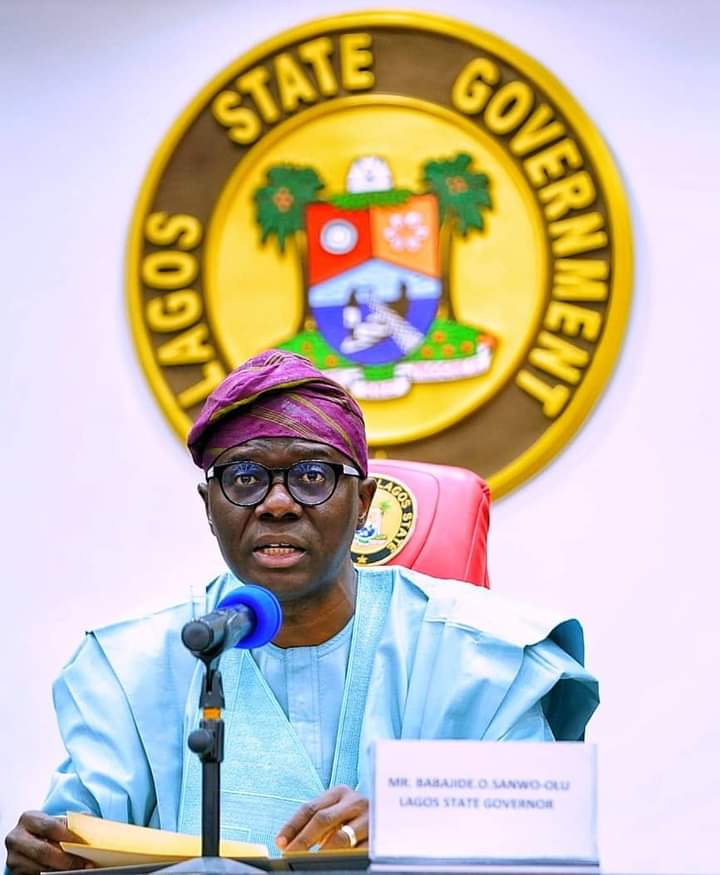
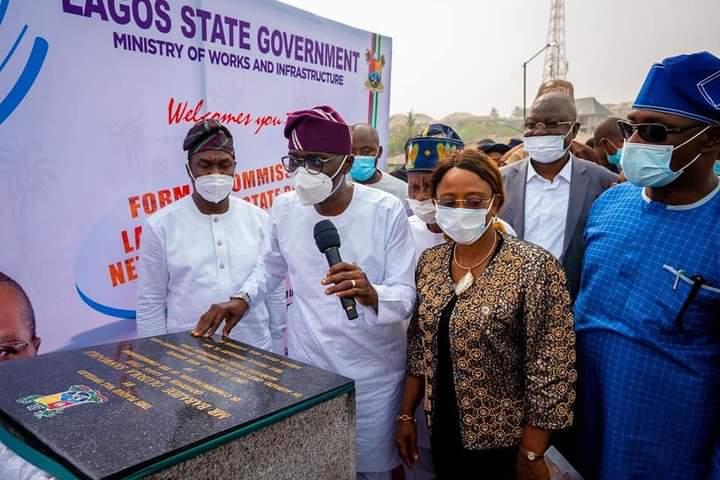
In fulfillment of the promise to complete all outstanding projects inherited by his government, Lagos State Governor, Mr. Babajide Olusola Sanwo-Olu on Friday commissioned a network of four roads in Agbado-Oke Odo LCDA in the second phase of the Lagos/Ogun State Boundary road projects.
Speaking during the commissioning, Sanwo-Olu expressed satisfaction at the quality of the job done on the road projects, noting that the construction of Lagos-Ogun State Boundary Roads in Alimosho Local Government Area was in recognition of the need to improve connectivity within Alimosho LGA and neighbouring State communities, thereby reducing travel time, loss of man-hours as well as boosting trade, commerce and investment opportunities in the area.
The Governor said, “Having realised the critical importance of road infrastructure to the opening up of the State, our administration, in accordance with the T.H.E.M.E.S Agenda, especially the Traffic Management and Transportation Pillar, decided to demonstrate the attendant impact of road infrastructure on business and commercial activities, welfare and productivity of the people”.
“The delivery of this road will boost trade, promote commerce and investment opportunities for our people. Consequently, the construction of Phase II was necessitated by the need to complement the Network of 21 roads and two Bridges executed in Phase I and abate perennial flooding in this axis”, he added.
Sanwo-Olu stated that the commissioned network of roads, apart from being capable of boosting the economic activities of both communities in the two States, was in direct response to the urgent need to provide an alternative route to Lagos-Abeokuta Expressway to reduce constant traffic bottlenecks often experienced on the highway due to bad road and commercial bus activities.
“The newly reconstructed roads, which are parallel to Lagos Abeokuta Expressway, is a functional alternative as motorists can now connect Ota from Abule-Egba-Ekoro through this network of roads. Without doubt, these projects provide massive connectivity, shorten distance, improve travel time, reduce the man-hour loss in traffic and the stress of commuting along the Expressway” he enthused.
He explained that the brief for new road projects entailed creation of new road alignment and expansion of existing pathways, including massive earth movements and relocation of public utilities such as water pipes, electric poles and transformers within the Right of Way, to achieve the road linkage.
Commending traditional rulers and other community leaders for coming out en-mass to receive him, Sanwo-Olu urged them to take ownership of the roads by enduring adequate and regular maintenance and prevent them from any form of abuse or misuse, reminding that public infrastructure is provided with taxpayers’ money.
His words: “As beneficiaries, we must note that adequate and functional maintenance of the provided road is the responsibility of not only the Government but the Society at large. We will continue to collaborate with the community both at the Local Government and CDA levels to promote and develop local initiatives for the community to participate in the maintenance”.
“Let me use this opportunity to urge you to refrain from such acts that could undermine the durability of the road. We know we can stem down and reduce the rate of theft of electrical cables and careless damage of the road. The road was provided from yours and other taxpayers’ money which could be used to provide other projects for other communities”, Sanwo Olu stated.
Earlier in her welcome address, Special Adviser for Works and Infrastructure, Engr. Aramide Adeyoye, noted that Agbado Oke-Odo is a settlement with a fast-growing population, thus requiring infrastructural upgrade and renewal.
Adeyoye disclosed that the Governor had during the commissioning of a network of 31 Strategic Roads in Ifako-Ijaye, a year ago, directed the Ministry of Works and Infrastructure to speed up the completion of the Lagos-Ogun State Boundary Roads Phase II, adding that the commissioning of the Phase II of the projects were in line with the quality service delivery of the State Government.
According to her, the commissioning of Lagos/Ogun State boundary road projects are a demonstration of the commitment of the Governor Sanwo-Olu-led administration to improve the quality of life of the residents and economic growth of the State.
She promised that her Ministry would work harder to deliver quality road infrastructure in line with the T.H.E.M.E.S. agenda and the Greater Lagos Vision of the State Government.
Also present at the commissioning was the Deputy Governor, Dr. Obafemi Hamzat, members of the State Executive Council, top officials, community leaders and other stakeholders.
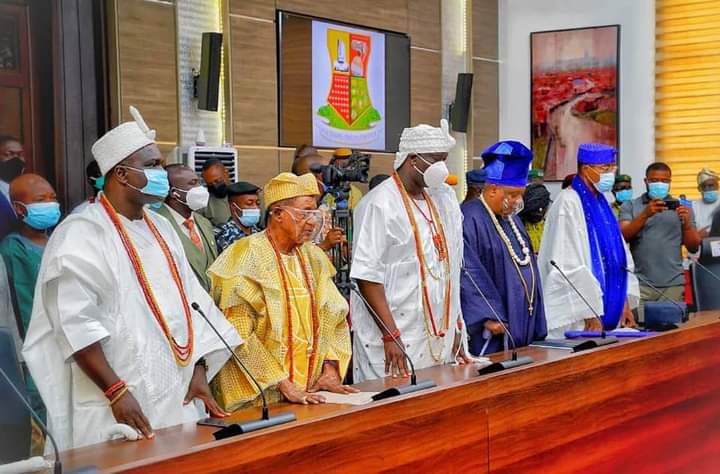
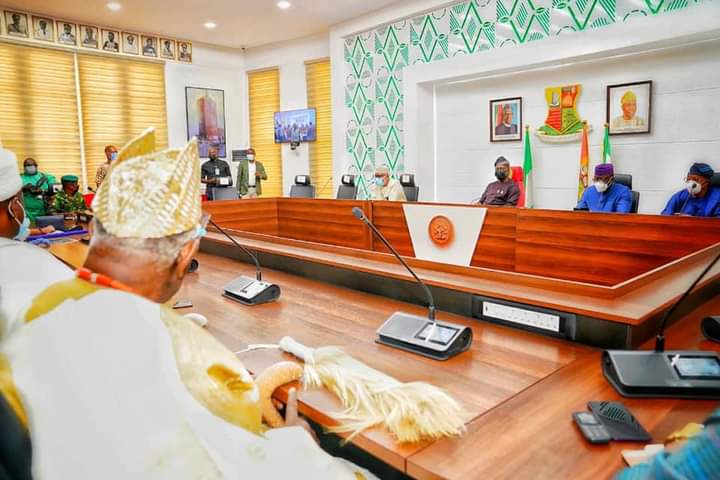
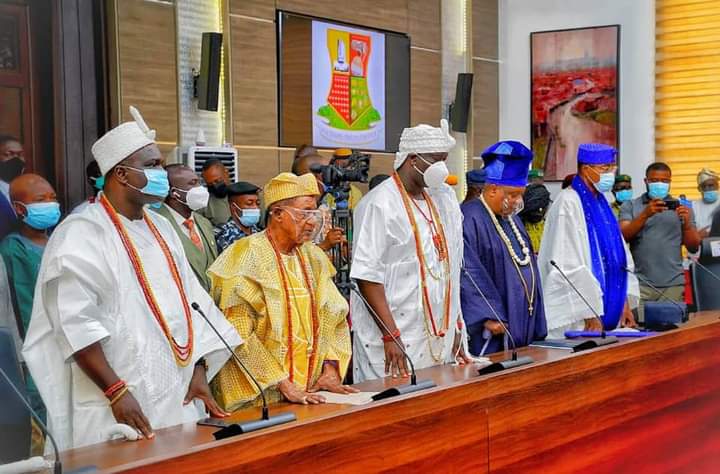
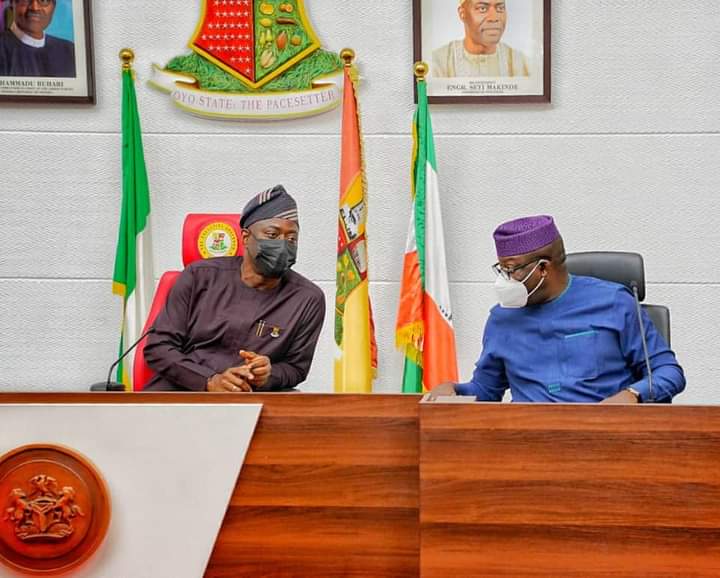
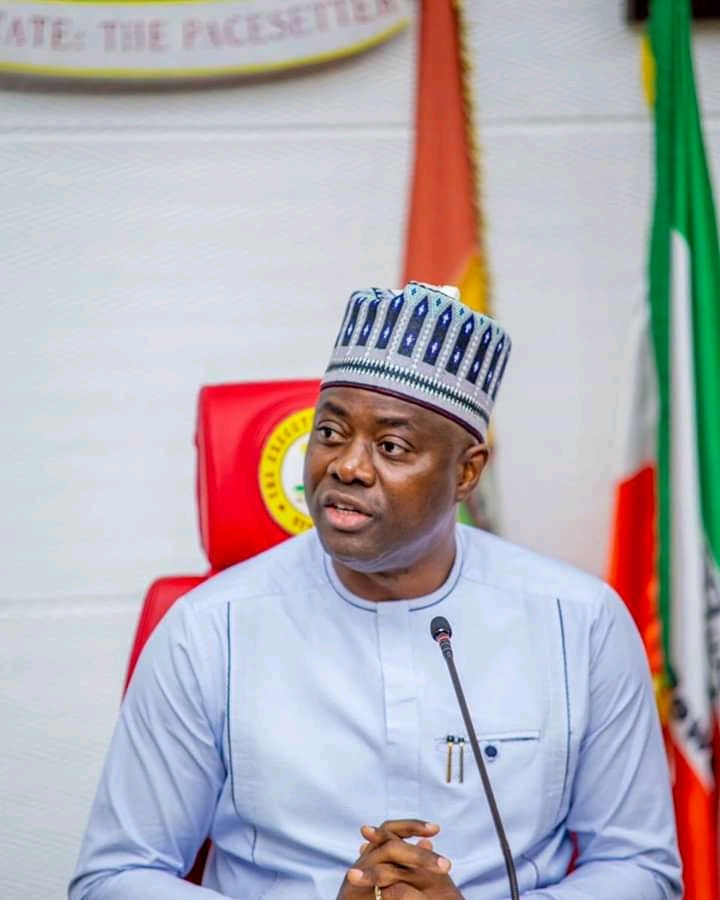
South-West Governors, Traditional Rulers and Security Chiefs converge in Ibadan, Oyo State on peace building and security matters. Below are the pictures taken at the event.
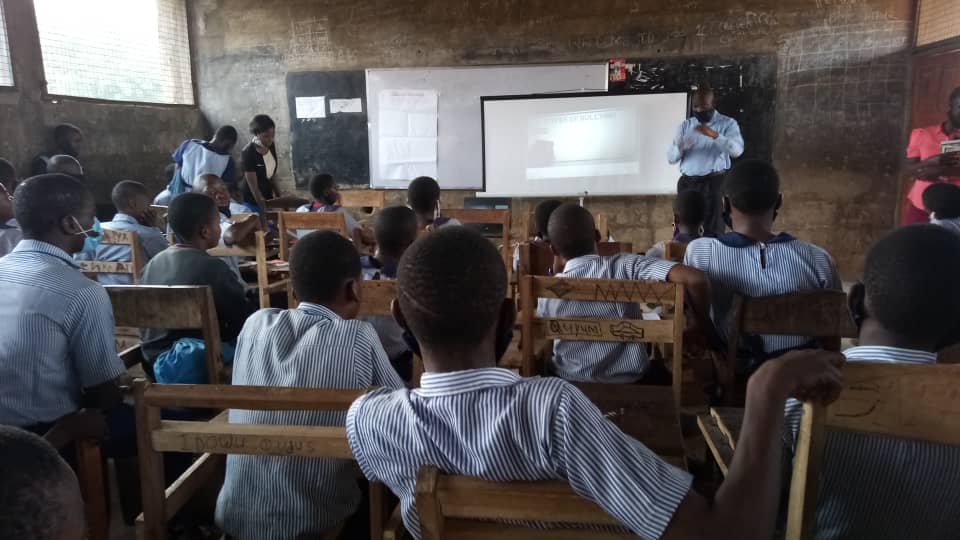
There was encomium last week when the Methodist Grammar School, Deaf and Dumb Unit started the usage of projector donated to them a year ago by The Baby Blue Angels Foundation.
You will recall that the NGO had donated projector and other educational materials to Deaf and Dumb Department of Methodist Grammar School, Ibadan during official launching in 2019 as part of its community and social development service aimed at ensuring that the disabled are not hindered from having access to quality education due to their disability.
The projector was donated to aid learning process of deaf and dumb students at Methodist Grammar School, Ibadan.
Ambassador Ramata Agberemi, the founder of BBA while handing over the projector and other educational materials to the beneficiary said, it behooves on them as non-governmental organization to contribute their own quotas towards the development of education of both abled and disabled in Nigeria.
“As NGO, our priority should not be centered on abled persons alone but to the disabled who have ability to contribute to the growth and development of Nigeria if given an avenue to develop their God-given potentials.
“We don’t have to be waiting for government at all times before we could be stretching helpful hands to one another. Nigeria can only attain its desired level of growth and development if only we can be helping ourselves”, said Ramata.
The head of the school while setting the projector for operation and the use of students last week said the disabled have contributed alot to the development of Nigeria and that all stakeholders must come together to ensure that they are not left behind in the development process of the country.
He therefore appreciated the benevolent act shown to them by the Baby Blue Angels Foundation as such gesture will go a long way in reshaping the lives of the students for better.
He prayed for the Founder of the NGO, Ramata Agberemi and the entire team members while charging them not to relent in their effort at ameliorating the suffering of the needy.
The Governor of Oyo State, Engr. Seyi Makinde on Saturday accepted Court Verdict delivered last week nullified Park Management System established by the State Government to take over National Union of Road Transport Workers NURTW.
The governor admitted that the state government was wrong to have appointed park managers for the state.
Speaking at the quarterly media chat, Governor Makinde said the government was wrong to have appointed park managers since it is within the jurisdiction of local government.
During the week, an Oyo State High Court presided over by Hon. Justice M. A. Adegbola nullified the appointment of Park managers in the state.
The Park Management System, PMS, was introduced by the Seyi Makinde -led Oyo state government following the proscription of the National Union of Road Transport Workers, NURTW, in the state.
Delivering judgement in the case filed by the former chairman of the National Union of Road Transport Workers in Oyo State, Alhaji Abideen Olajide (a.k.a Ejiogbe), Justice Adegbola described as illegal the collection of rates by the park managers appointed by the state government.
The Osun State Chapter of the Nigeria Labour Congress, NLC, has dismissed media report that listed Osun among states in the country that were yet to implement the new national minimum wage.
A newspaper had erroneously reported that during the last Central Working Committee and National Executive Council meeting of the NLC held in Abuja between 17 and 18 of February, 2020, Osun was mentioned among states in the country that are yet to implement the new minimum wage
However, a statement by the State Chairman of the NLC, Jacob Adekomi, described the reports as malicious and misleading, stressing that there was no time at the meeting Osun was mentioned among states that were yet to implement the minimum wage.
According to the NLC Chairman, it is glaring that Osun State is among the few states in the Federation that have implemented the new minimum wage.
“The media report is not only malicious but misleading because the State Council of NLC duly represented in the Meeting and there was no time that States that had not started implementing Minimum Wage was mentioned. This is verifiable through the Comminique released at the end of the NEC- in Session.
“Therefore, the reports should be discarded and thrown into the dustbin because it does not emanated from the National Headquarters of the Nigeria Labour Congress,” the statement reads in part.
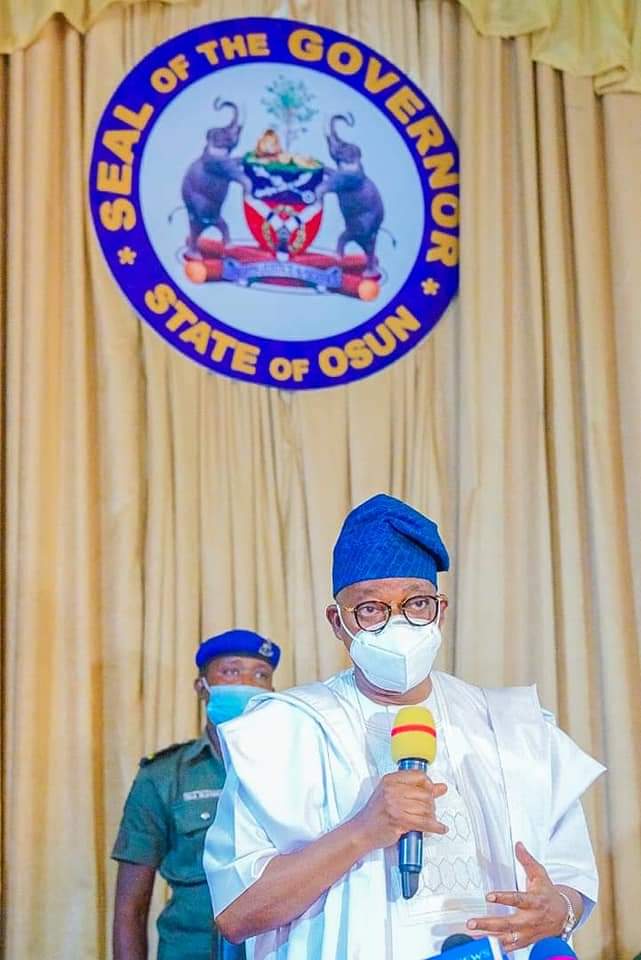
Adekomi said workers in Osun appreciate Governor Adegboyega Oyetola for approving the implementation of the new minimum wage and annual salary increment for them.
“The State has moved beyond the issue of Minimum Wage for now and we are awaiting other largesses promised the workers via the agreements signed between the Government and Joint Labour Force in the State.
“We shall continue to appreciate all the good workers in the State for their support, perseverance and commitment during the time past,” he added.
It will be recalled that Governor Oyetola in October, 2020 approved the payment of minimum wage to civil servants in the state beginning from November 1, 2020.
He also lifted the embargo on annual salary increment, promotion and conversion, which he said, was in fulfillment of his administration’s pledge to give the welfare of workers the deserved attention.