Ilorin Communities Protest Months of Blackout, Accuse IBEDC of Exploitation

Residents of Gaa-Saka to Madi axis and adjoining communities in Oko-Olowo, Ilorin, have protested prolonged power outage, accusing the Ibadan Electricity Distribution Company (IBEDC) of negligence and unfair billing.

In a statement signed by the Chairman of Project and Electrification, Alhaji Solihu Owonifari, and made available to newsmen in Ilorin on Tuesday, the affected residents under the 33KVA Sobi-Poly Feeder lamented that they have been in total darkness for months, yet continue to receive what they described as “outrageous and unjustifiable bills.”

“We have endured enough of this daylight exploitation. No Light, No Pay!” the statement read, as residents vowed to stop paying for electricity not supplied.

The communities accused the IBEDC Ilorin Marketing Unit of neglect and failure to fix what they termed “artificial problems” responsible for the continuous blackout.

Business owners and households said they have spent heavily on generators and solar alternatives while still being forced to pay monthly bills.

“This situation is crippling small businesses, disrupting students’ studies, and putting families under economic pressure,” a resident complained.

Quoting the Electric Power Sector Reform Act (EPSRA) of 2005, the protesters maintained that consumers have the legal right to fair billing and efficient service delivery, warning that forcing payment for services not rendered is illegal.

They called on the IBEDC management, the Nigerian Electricity Regulatory Commission (NERC), and the Kwara State Government to urgently intervene, fix the faults, and restore power to the area.

“Until power is restored, our stand remains clear; No Light, No Pay!” the residents declared.

Soyinka Shuns US Embassy Invitation, Says Visa Revoked Over “Superstition”

Nobel laureate, Prof. Wole Soyinka, has revealed that he declined an invitation from the United States Embassy for a visa re-interview because the appointment fell on September 11, a date he described as “uncomfortable and symbolic.”

Speaking on Tuesday at a media parley in Lagos, the 91-year-old writer said he could not bring himself to visit the embassy on the anniversary of the 2001 terror attacks.

“I was given a date to report to their consulate with my passport,” Soyinka said. “First of all, I didn’t like the date. Everybody knows what happened on that date, 9/11, many years ago, so I said, ‘Sorry, I’m superstitious; I’m not coming on that day.’” He added that he later chose not to pursue another appointment with the embassy.

The world-renowned playwright spoke during a media event tagged “Unending Saga: Idi Amin in Whiteface” at Kongi’s Harvest Gallery, Freedom Park, Lagos Island. There, he disclosed that the US embassy had revoked his visa and that the parley was necessary to inform those expecting him in the US that he had effectively been “banned.”

“I have no visa; I am banned, obviously, from the United States,” Soyinka declared with a wry smile. “So if you want to see me, you know where to find me.” The Nobel laureate noted that he received an official letter of revocation dated October 23, 2025, from the US Consulate, citing “additional information” discovered after his visa was issued in April 2024.

In the letter, the Consulate informed Soyinka that his non-immigrant visa had been revoked under section 22 CFR 41.122 of the US Department of State regulations and requested that he return his passport for “physical cancellation.” Soyinka described the request as “humorous,” asking the audience if anyone would volunteer to deliver it on his behalf.

Despite the development, Soyinka said the revocation would not affect his friendship with American citizens. “I assured the ambassador that both he and his staff have permanent visas to visit the Autonomous Republic of Ijegba anytime they wish,” he joked, referring to his residence in Abeokuta. “There will be no reciprocal conduct from my principalities.”

When asked if he would consider reapplying for a visa, Soyinka replied that he had no intention of doing so. “How old am I now? What am I looking for anywhere?” he said. “They owe me nothing, and I owe them nothing. If circumstances change and I’m invited, maybe I will go, but I won’t take the initiative myself.”

Tinubu’s Food Policy: A Quick Fix That Punishes Farmers and Ignores the Real Problem

By Taiwo Ismael

President Bola Ahmed Tinubu’s administration may have succeeded in momentarily reducing food prices, but it has done so through economic manipulation rather than genuine reform. The recent decision to grant import waivers on essential food items such as rice, maize, wheat, and vegetable oil has flooded the Nigerian market with imported products, creating an artificial surplus that is now driving down prices.

On the surface, this appears to be a win for consumers as food prices continue to drop and markets seem active again. But beneath that temporary relief lies a deeper structural crisis that the government seems unwilling to confront. The real reasons food prices have soared in Nigeria are the unstable exchange rate and the soaring cost of transportation driven by fuel subsidy removal and poor infrastructure. Until these two fundamental issues are addressed, any attempt to stabilize food prices through importation will only provide temporary relief while inflicting long-term damage on the economy.

Local farmers, who have already battled rising production costs and poor access to credit, are now being forced to sell their produce at a loss because imported food has become cheaper. Many of these farmers took loans or invested their savings in anticipation of profitable harvests, only to watch their crops rot unsold as markets are flooded with cheaper foreign goods. This policy, therefore, punishes the very people Nigeria should be empowering to ensure food security and rural development.

Before the floating of the naira in mid-2023, the average cost of a 50kg bag of rice hovered between ₦25,000 and ₦30,000, while maize sold for about ₦23,000 per bag. However, after the exchange rate was unified and the naira lost nearly 50% of its value, these same commodities skyrocketed to between ₦70,000 and ₦90,000 in many parts of the country. Based on the prevailing exchange rate, the real market value of these food items should be even higher, yet the government’s import waivers have artificially suppressed prices. Nigerians are, therefore, buying “cheap” imported food at the expense of local farmers who can no longer recover their production costs. Ironically, the prices of farm inputs such as fertilizer, insecticides, and transportation remain as high as ever.

The question then arises: what exactly is crashing food prices when the cost of production has not declined? The answer is clear, the artificial flooding of the market with imports, which creates the illusion of price relief while leaving the structural causes of high food prices untouched.

The removal of fuel subsidy has further deepened the crisis. With petrol prices rising from ₦185 per litre to over ₦650, the cost of transporting agricultural produce from rural areas to urban markets has more than tripled. What used to cost about ₦5,000 now takes ₦15,000 or more, directly feeding into food inflation. Importation cannot solve this logistical burden; only deliberate investment in rural infrastructure, energy, road networks, and security can. Yet, government response in these critical areas has been painfully slow.

Economic data further expose the superficial nature of this policy. Following the rebasing of inflation figures in early 2025, Nigeria’s official inflation rate reportedly stands at 24.48%, while food inflation is pegged at around 26.08%, according to the National Bureau of Statistics (NBS). However, these figures hardly reflect reality. Many households report that actual price increases are far higher, implying that the rebasing exercise merely masked the true extent of hardship. Independent estimates including those from the IMF suggest that Nigeria’s real inflation rate is closer to 31–34%, driven by currency depreciation, rising energy costs, and heavy import dependence.

Equally troubling is Nigeria’s swelling food import bill. According to statistics, the country’s food import expenditure surged to ₦1.18 trillion in the second quarter of 2025, up from ₦893 billion during the same period in 2024, a 33% year-on-year increase. In total, Nigeria now spends over US$10 billion annually importing rice, wheat, sugar, and fish, the commodities it once produced in abundance. The irony is glaring: a nation blessed with vast arable land and a youthful population has become one of Africa’s largest importers of food under a government that preaches self-sufficiency.

These numbers prove one point, Nigeria cannot import its way out of hunger. Every imported bag of rice or maize chips away at the future of local agriculture and discourages the next generation from farming. Instead of relying on waivers to create the illusion of price stability, the government should focus on addressing exchange-rate volatility that makes production expensive, improving rural roads to reduce transportation costs, and investing in mechanization, irrigation, and agro-processing to boost productivity.

If this policy direction continues, Nigerians may enjoy a brief moment of cheaper food, but it will come at the expense of national self-reliance and food security. The Tinubu administration must realize that true economic reform cannot be achieved through shortcuts but through consistent, homegrown solutions that protect both consumers and producers. By tackling the core problems such as currency instability, transport inefficiency, and production deficits, Nigeria can build an economy where food is affordable not because it’s imported, but because it’s proudly produced at home.

Taiwo Ismael, MNIM
Energy Economist and Public Affairs Analyst
taheewo2004@gmail.com

My Children Can’t Get Jobs Due to My Name – Bode George Cries Out Over Political Stigma

LAGOS, Nigeria – A chieftain of the Peoples Democratic Party (PDP), Chief Olabode George, has lamented the level of hardship and political intolerance in the country, revealing that his children have been unable to secure employment because of his name and political identity.

Speaking in a recent interview, the former Deputy National Chairman of the PDP said his family continues to face social and economic challenges due to the political stigma attached to his person. George noted that despite his years of service to Nigeria, his children often experience discrimination in job applications simply because they bear his surname.

“My children can’t even get jobs because of my name. Once they see ‘Bode George,’ they turn them down. That’s how bad things have become,” he lamented.

The veteran politician decried what he described as a climate of hatred and division in Nigeria’s political landscape, emphasizing that public service should not attract lifelong punishment or stigma for one’s family members.

George, who has been a vocal critic of perceived injustices within the political system, urged leaders to promote fairness, unity, and merit-based opportunities for all Nigerians, regardless of their background or affiliations.

His remarks have since stirred conversations across social media, with many Nigerians expressing mixed reactions—some sympathizing with his plight, while others argue that political elites are now facing the realities ordinary citizens have endured for years.

Gunmen Attack Bank Depositor in Ibadan, Injure Police Officer During Daylight Robbery

Gunmen on Monday reportedly attacked a bank depositor in the Osuntokun area of Ibadan, the Oyo State capital, dispossessing the victim of an undisclosed amount of money.

The assailants, who were said to have trailed the victim from a nearby bank, intercepted him shortly after he concluded a cash transaction. During the attack, a police officer attached to the area reportedly sustained injuries while attempting to repel the robbers.

Eyewitnesses recounted that the gunmen shot sporadically into the air, causing panic and forcing traders and passersby to flee for safety. The criminals later fled the scene with the stolen cash before security operatives could arrive.

Confirming the incident, the Oyo State Police Command said investigations had commenced and assured residents that efforts were underway to apprehend the perpetrators.

The attack adds to growing concerns over rising cases of daylight robberies in Ibadan and other parts of the state, prompting calls for enhanced security presence in commercial areas.

Many Trapped, 15 Rescued as Two-Storey Building Collapses in Lagos

Further updates have emerged following the overnight collapse of a two-storey building on Coates Street, near Cemetery Bus Stop in the Oyingbo area of Lagos Mainland an incident first reported exclusively by Lagos Reporters shortly after midnight on Sunday.

The collapsed structure, officials confirmed, had earlier been marked as distressed before it gave way, trapping several occupants beneath the rubble.

The Director of the Lagos State Fire and Rescue Service, stated that rescue operations are ongoing.

“So far, 15 people, including seven men, four women and four children, have been rescued with varying degrees of injuries and taken to the Federal Medical Centre in Ebute-Metta and General Hospital, Odan in Lagos Island,” the agency disclosed.

Emergency responders are continuing search efforts as more victims are believed to be trapped.

Police Warn Sowore, Others Against Protests Over Demolitions in Lagos

The Lagos State Commissioner of Police, Mr. Olohundare Jimoh, has issued a stern warning to activist Omoyele Sowore and others planning to mobilise protests over recent demolitions in the state, cautioning that the police would not tolerate any form of public disorder under the guise of demonstration.

Speaking to journalists on Monday at the Iyana-Oworo axis of the Third Mainland Bridge, the commissioner said massive deployments had been made across Lagos to prevent any planned protests that could lead to disruption, warning that the police would deal decisively with anyone who attempted to block highways or disturb the peace.

“We want to warn Sowore and his group to stay away from Lagos or face the full weight of the law,” Jimoh said. “The Third Mainland Bridge is too vital to the Nigerian economy and the safety of lives and property for anyone to think of blocking it.”

The police boss noted that officers had been strategically stationed at key locations, including the Third Mainland Bridge, Maryland, Ojota, Gani Fawehinmi Park, Gbagada, Bariga, and the Lekki Toll Gate, to maintain peace and public order.

While acknowledging that the Constitution guarantees freedom of expression and peaceful assembly, Jimoh stressed that protests must follow due process and not infringe on the rights of others.

“What we have seen in recent times is not protest but attempts to disrupt public peace. Anyone who engages in such will be dealt with according to the law,” he stated.

Addressing concerns over the recent demolitions in Oworonshoki, the commissioner defended the government’s actions, describing the cleared areas as illegal settlements and criminal hideouts.

He said genuine residents had been compensated and accused some individuals of attempting to exploit the situation for political or criminal gain.

Jimoh assured Lagos residents of continued protection, urging them to go about their daily activities without fear. “Every Nigerian is entitled to protection and safety. We will ensure Lagos remains peaceful, but criminality under the cover of protest will not be tolerated,” he added.

Over 100 Buildings Razed: Falana Accuses Lagos Govt of Flouting Court Order

Prominent human-rights lawyer Femi Falana (SAN) has accused the Lagos State Government of demolishing more than 100 properties in the Oworonshoki area despite a valid court order restraining any further demolitions.

In a statement released on Sunday, Falana alleged that the government went ahead with the demolitions “in flagrant breach and contempt of the subsisting court order” after being duly notified. He claims that “over 50 armed policemen and thugs” were mobilised, tear-gassed residents protesting the demolitions through the night, and then commenced a fresh round of property destruction.

Falana stated that the nighttime operation was not authorised by any court and led to the destruction of no fewer than 100 homes. He drew parallels with the 1986 case Military Governor of Lagos State & Ors. v. Chief Emeka Odumegwu Ojukwu & Anor., where the Supreme Court of Nigeria condemned the Lagos State Government for defying a court order, noting: “Even under a military regime, the Supreme Court strongly denounced such lawlessness … It is therefore unacceptable for a democratic government to repeat the same act of contempt almost four decades later.”

The dispute centres on a demolition injunction issued by the Adegboyega Balogun-led Lagos State High Court on Thursday, which ordered that the state government, its agents and contractors be restrained from carrying out further demolitions or creating third-party interests over properties located on Ojileru Street, Ososa Extension, and Toluwalase Street in the Itesiwaju Ajumoni Community Development Area (CDA).

Residents of the area had complained they were yet to receive compensation before demolition proposals. The court’s interim injunction sought to halt the demolition until compensation and legal interests were clarified.

The Lagos State Government has not yet issued a detailed response to Falana’s allegations. Lagos Reporters will continue to follow this matter and provide updates on developments in Oworonshoki.

Coup Plot: Tell Nigerians The Truth, ADC Challenges Tinubu Over Military Shake-Up

The African Democratic Congress (ADC) has demanded that President Bola Ahmed Tinubu explain the real reasons behind the sudden removal of Nigeria’s service chiefs, saying the move has sparked concerns about transparency and stability within government.

In a statement by its National Publicity Secretary, Mallam Bolaji Abdullahi, the party noted that while the President has constitutional powers to make such changes, the timing coming amid widespread rumours of an attempted coup makes open communication crucial.

“We acknowledge that the President reserves the power to make such changes as he may deem fit. However, we are somewhat concerned that this change is coming in the wake of widespread rumours of an attempted coup,” the statement read.

The ADC accused the Federal Government of giving confusing responses to the alleged coup reports, stressing that Nigerians deserved clarity, not “deliberate obfuscation and outright confusion.”

It also questioned why senior officers who had served barely two years were suddenly replaced, saying such drastic moves carry “serious implications for stability within the ranks.”

“As an opposition political party, our interest remains the stability of our country and our democracy. In light of developments in our neighbourhood, particularly in Chad and across the Sahel, we are gravely concerned,” Abdullahi added.

The party further warned that the shake-up could heighten public anxiety and fuel more conspiracy theories, accusing the Tinubu administration of being distracted by politics while insecurity worsens.

“We therefore reiterate that the Federal Government must address the issue transparently and reassure Nigerians that our democracy is not under threat,” the ADC said.

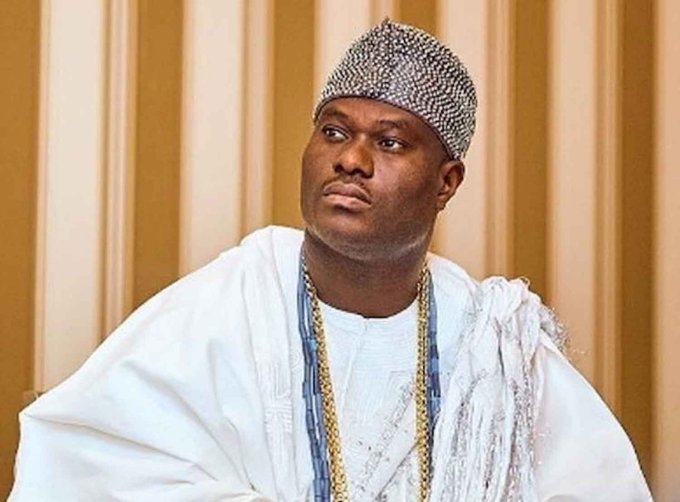
Ooni, Alaafin Mend Fence, Meet In Lagos To Create Council For Yoruba Unity

The head of the Oduduwa race Worldwide & Permanent Chairman, Southern Nigeria Traditional Council(SNTRC), Arole Oduduwa Olofin Adimula, Ooni Adeyeye Enitan Ogunwusi, CFR, Ojaja II, the Ooni of Ile-Ife and the Alaafin of Oyo, His Imperial Majesty Oba Abimbola Owoade, met in Lagos on Friday to reaffirm unity and peace across Yorubaland.

The historic meeting, held at the Eko Hotel Signature Building, was convened by the Odole-Oodua of The Source, Sir Dr. Kessington Adebutu, CFR during his birthday anniversary.

In a joint communiqué issued after the meeting, both monarchs emphasized their shared commitment to peace, mutual respect, and the advancement of the Yoruba people.

They announced the creation of a Joint Council of Yoruba Unity, a body that will focus on peacebuilding, cultural preservation, and socioeconomic development across Yorubaland.

The Ooni and Alaafin also called for continuous dialogue and collaboration between the two ancient thrones, stressing that the Yoruba race can only achieve greatness through unity and collective progress.

“Today marks a defining moment in our shared history. We are committed to promoting harmony among Yoruba sons and daughters and to upholding the sacred values of mutual respect and brotherhood bequeathed to us by our forebears,” the communiqué stated.

The meeting, attended by eminent Yoruba leaders, traditional rulers, and cultural custodians, focused on strengthening inter-kingdom cooperation and encouraging other traditional rulers to emulate the spirit of togetherness demonstrated by the two monarchs.

In their closing prayers, the Ooni and Alaafin jointly sought divine guidance, peace, and prosperity for Yorubaland, Nigeria, and the African continent at large. The session ended with an exchange of goodwill and royal blessings between the two revered thrones.

Sir Dr. Kessington Adebutu, who convened the meeting, expressed joy at witnessing the unity between the two prominent monarchs, describing it as a milestone that would foster peace and progress among the Yoruba people.

The communiqué was signed by the Ooni Ogunwusi, Alaafin Owoade; and witnessed by Sir Dr. Kessington Adebutu. It was issued by Aare Dr. Kola Oyefeso, Secretary of the Communiqué Drafting Committee.

You cannot copy content of this page