“I Almost Hit Obasanjo With the Mic”— Fayose Recalls Tense Moment at 65th Birthday Party

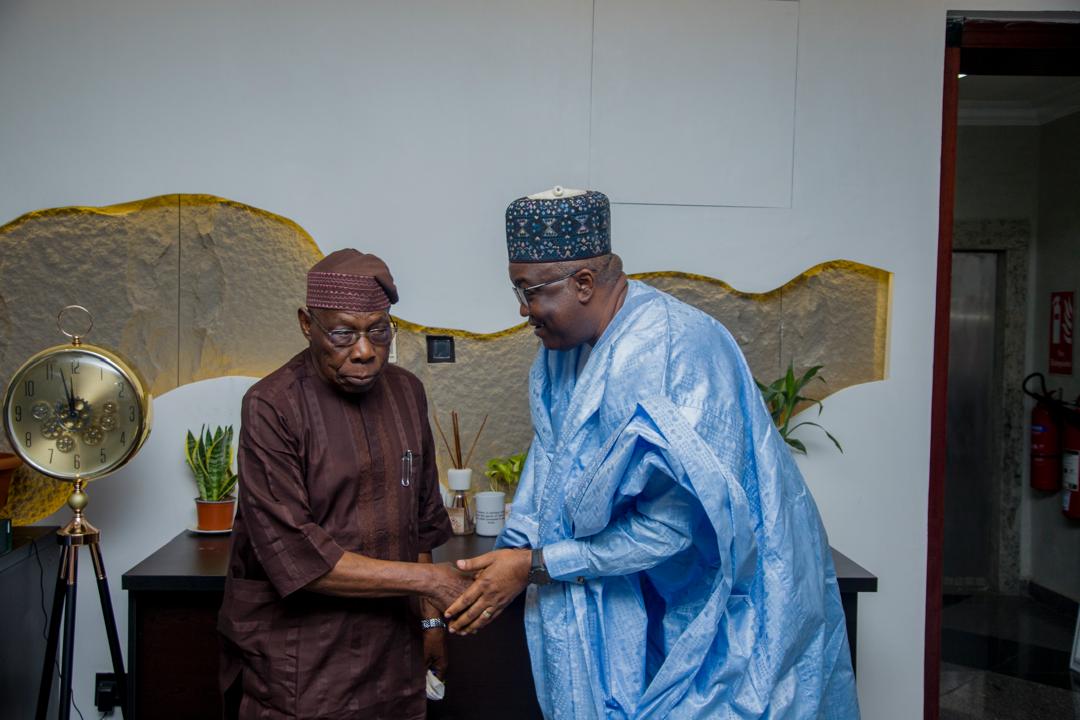
Former Ekiti State Governor, Ayo Fayose, has revealed that he was so provoked by former President Olusegun Obasanjo’s remarks at his 65th birthday celebration that he momentarily felt like grabbing the microphone and hitting him with it.

Fayose, who spoke in a recent interview, narrated the behind-the-scenes events that led to the tense exchange between him and the former president at the Lagos event.

According to him, two weeks before his birthday, he made a personal decision to reconcile with several political figures he had fallen out with over the years — and Obasanjo was one of them. Despite his effort to extend an olive branch, Fayose said the former president’s comments at the ceremony “touched a nerve.”

During his speech at the event, Obasanjo had revisited their long-standing political rift, stating that while Fayose achieved notable political success, he was “not the best” among his protégés. The remark reportedly triggered a wave of emotions in the former governor.

Fayose, however, said he composed himself, choosing maturity over confrontation and allowing the ceremony to continue without disruption. He added that regardless of past differences, he remains committed to making peace with his former adversaries.

Breaking: South West Governors Hold Emergency Summit In Ibadan Over Rising Security Threats

Governors from the South West are currently meeting in Ibadan for an emergency closed-door session convened to address escalating security concerns and other urgent regional issues.

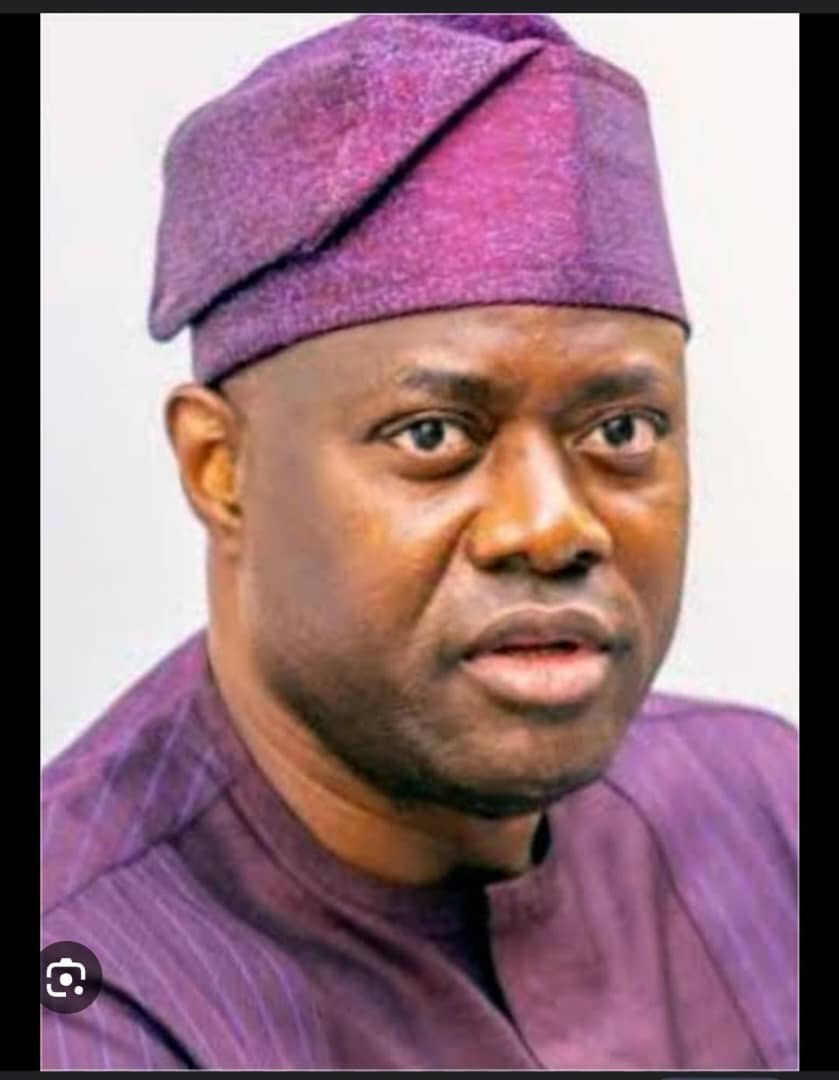
The high-level gathering, hosted by Oyo State Governor Seyi Makinde at the Governor’s Office, Agodi, brings together leaders from Lagos, Ogun, Oyo, Osun, Ondo and Ekiti States.

Although the full agenda has not been disclosed, sources indicate that the meeting was triggered by growing security threats across the region, prompting the governors to review collective strategies, fast-track key development initiatives and strengthen cooperation under the Development Agenda for Western Nigeria (DAWN).

The governors are also expected to evaluate ongoing joint security operations, especially the activities of the Amotekun Corps, amid emerging challenges and the need for a more coordinated regional response.

Oyo 2026: Makinde Unveils ₦892bn Budget, Allocates ₦210bn to Infrastructure, ₦155bn to Education

Oyo State Governor, Seyi Makinde, on Thursday presented a total budget of ₦891.98 billion for the 2026 fiscal year, describing it as a strategic blueprint aimed at accelerating infrastructure expansion, strengthening human capital, and deepening economic growth across the state. Tagged the “People-Centred Prosperity Budget,” the proposal reflects the administration’s commitment to sustainability, fiscal discipline, and inclusive development.

Presenting the Appropriation Bill before the Oyo State House of Assembly, Governor Makinde disclosed that the budget is composed of ₦389.34 billion for recurrent expenditure and ₦502.65 billion for capital projects. The governor emphasised that the spending plan prioritises ongoing infrastructure projects, expansion of education and health facilities, agricultural development, and programmes that would ensure long-term economic resilience.

The personnel cost for 2026 stands at ₦156.38 billion, with overhead at ₦122.21 billion, and other recurrent commitments at ₦110.84 billion, bringing the total recurrent expenditure to ₦389.34 billion. Capital expenditure—which takes the largest share—was pegged at ₦502.65 billion, reflecting the administration’s sustained investment in roads, energy, and other long-term assets critical to economic stability.

A detailed sectoral breakdown shows that Infrastructure receives the highest allocation with ₦210.02 billion (23.5%), followed by Education with ₦155.21 billion (17.4%), Health with ₦70.85 billion (7.9%), and Agriculture with ₦19.99 billion (2.2%). Other multi-sectoral allocations collectively amount to ₦435.91 billion, representing 48.9% of the total budget. Makinde noted that these proportions underline his administration’s data-driven approach in directing resources to areas with the highest social and economic return.

Governor Makinde assured lawmakers and residents that the 2026 budget was crafted to consolidate gains recorded across sectors since the beginning of his administration. He added that his government remains focused on delivering “a modern, safe, and economically vibrant Oyo State powered by innovation, productivity, and inclusiveness.”

The Appropriation Bill is now before the Oyo State House of Assembly for legislative consideration and passage.

Tinubu Vows Decisive Action as Nation Reels from Fresh Attacks

President Bola Ahmed Tinubu has vowed to take firm and decisive action following the recent wave of attacks and killings reported in different parts of the country, assuring Nigerians that his administration will not allow criminal elements to undermine national stability.

In a strongly worded statement on Saturday, the President lamented what he described as a “corrosion of security, a collapse of communal ethics, and a distortion of the moral compass that once held our communities together.” He said the troubling incidents are a reminder of the urgent need for collective responsibility and stronger security architecture across all levels.

Tinubu noted that the government is already reviewing intelligence reports and security strategies to ensure a swift and coordinated response, adding that service chiefs and heads of security agencies have been directed to intensify operations in volatile zones.

“We cannot stand by while innocent citizens are attacked, while communities are thrown into mourning, and while the peace that binds us is threatened,” the President said. “Those who perpetrate violence will face the full weight of the law. Nigeria must remain a place where every life is valued and protected.”

He also urged traditional rulers, local leaders, and community influencers to work closely with authorities in restoring trust, strengthening early-warning systems, and discouraging acts of retaliation that often escalate crises.

Tinubu extended his condolences to families who have lost loved ones, describing the killings as “senseless, heartbreaking, and unacceptable,” and reaffirmed his commitment to safeguarding every Nigerian.

“The moral fabric of our society must be rebuilt,” he said. “We must resist fear, reject hatred, and commit to peace. My government will act — decisively and without hesitation.”

“A Rare Gem Is Gone” — Gbenga Hashim Pays Emotional Tribute to Segun Awolowo

Presidential hopeful and businessman, Gbenga Hashim, has paid a moving tribute to the late Segun Awolowo, former Executive Director of the Nigerian Export Promotion Council (NEPC) and grandson of the late Chief Obafemi Awolowo.

In an emotional statement titled “Good Night My Brother and Friend, Segun Awolowo,” Hashim said news of Awolowo’s passing reached him while he was in Madrid, leaving him “shocked and unsettled.” He explained that the reports initially came in quietly, prompting him to reach out to close associates for confirmation.

Hashim said his first call was to Kwara State Governor, Abdulrahman Abdulrazaq, a mutual friend of more than two decades. Still uncertain, he contacted businessman Terry Waya, who confirmed the tragic news. He also attempted to reach members of the Awolowo family, including Funke Awolowo, and later spoke with Mr Edward Dickson, Managing Director of Tribune, who further validated the loss.

The late Segun Awolowo, he noted, was part of a close-knit circle of Abuja friends—an inner circle that spanned 26 years and included Abdulrazaq, Waya, and the late Abdul Kokori.

Hashim recalled visiting Awolowo in Abuja only months earlier, where he found him lively and full of plans, even proudly introducing him to his senior management team. In what he now considers a final parting charge, Awolowo had told him: “Gbenga, please keep standing for Nigeria. Among all of us, you’re the one I know has the capacity to stand.”

Describing him as “a rare gem, humble, thoughtful, and deeply patriotic,” Hashim said Awolowo distinguished himself through hard work, public service, and a strong personal ethic, far beyond the weight of his famous surname.

He added that their friendship was grounded in deep conversations and moments of prayer, which Awolowo always valued. “I am grateful for the gift of friendship we shared and pained that it ended too soon,” he wrote.

Hashim ended his tribute with a solemn farewell: “Good night, my brother and friend. Rest well, Segun.”

Segun Awolowo’s passing has continued to reverberate across political, business, and social circles, with tributes pouring in nationwide.

Gani Adams Warns of Looming Terror Plot on South-West: “Kogi, Kwara Attacks Are Just a Test”

Aare Ona Kakanfo of Yorubaland, Gani Adams, has raised an alarm over what he described as a coordinated plot by terrorists and bandits to launch major attacks across the South-West. According to him, credible intelligence indicates that Oyo, Ekiti, Ondo, and Lagos States are the primary targets of the planned assaults. He warned that recent violent incidents in Kogi and Kwara should be seen as preliminary “tests” by the attackers before moving their operations deeper into the region.

Adams explained that the suspected terrorists have reportedly set up bases in forests across several states, including Kogi, Kwara, Ekiti, Ondo, Osun, Oyo, Ogun, Lagos, Edo, and Delta. He described the emerging threat as serious and capable of destabilising the peace and security of Yoruba land if not addressed urgently. He stressed that the situation requires heightened vigilance from both residents and authorities.

He expressed frustration with South-West governors, accusing them of ignoring his previous warnings and proposals for a unified security strategy. According to him, a comprehensive South-West Security Summit should have been convened long ago to bring stakeholders together and develop coordinated solutions. He noted that his efforts to engage regional leaders on security concerns have not been given due attention.

Adams said the consequences of inaction are already being felt, citing reports of rape, farmers being driven from their lands, kidnappings, and widespread insecurity linked to these criminal elements. He warned that if security agencies and regional leaders fail to take decisive action, the criminals may soon move from forest hideouts to urban centres, resulting in more severe attacks.

He concluded by calling on traditional rulers, security agencies, community leaders, and residents to unite and adopt a proactive response. Adams urged Yoruba people to set aside differences and work collectively to protect their land, insisting that only a coordinated regional strategy can prevent the looming danger.

South-West Leaders Rally Behind Tech-Driven Security Overhaul, Demand State Police

South-West leaders have renewed their push for a homegrown, technology-driven security framework as insecurity worsens across Nigeria. At a regional security gathering, Governor Babajide Sanwo-Olu and other key stakeholders emphasized that traditional methods are no longer sufficient to combat increasingly sophisticated criminal threats.

Governor Sanwo-Olu stressed the need for advanced surveillance tools, intelligence-led operations, and faster response mechanisms. He noted that the region must embrace modern technologies—such as drones, digital communication systems, and data-driven monitoring—to strengthen safety and protect critical infrastructure.

Stakeholders also highlighted the importance of enhancing the Amotekun Corps, describing it as the backbone of the region’s community-based security efforts. They agreed that Amotekun requires stronger inter-state coordination, upgraded equipment, and improved training to match evolving security demands.

A central issue discussed was the longstanding call for state police. Leaders argued that decentralizing policing will enable quicker intelligence gathering and more culturally aware policing. They maintained that local officers are better positioned to respond swiftly to threats, especially in rural communities where insecurity is spreading.

The meeting concluded with the adoption of a Regional Technology-Driven Security Framework, which focuses on digital monitoring, synchronized operations, and legislative advocacy for state policing. Leaders assured residents that implementation would begin immediately to ensure a safer, more resilient South-West region.

Ogun Police Deploy Tactical Teams, Debunk Rumoured Attack In Ajebo Community

… Command assures residents of sustained security, warns against panic

The Ogun State Police Command has reassured residents of Ajebo community in Obafemi-Owode Local Government Area that there is no imminent threat of attack, despite a viral video circulating on social media suggesting that herdsmen were preparing to launch violence in the area.

In a prompt response, the Commissioner of Police, CP Lanre Ogunlowo, deployed the Command’s tactical team, led by the Deputy Commissioner of Police (Operations), to conduct an extensive security assessment. The operation was carried out alongside the Amotekun Corps, So-Safe Corps, Police Community Relations Committee (PCRC), local hunters and the Vigilante Group of Nigeria (VGN).

Findings revealed that the Fulani settlers in Ajebo are long-standing peaceful residents with no trace of hostility or criminal activity. Women and children were seen within the settlement, and no weapons or suspicious movements were detected. The absence of adult males was explained by their routine travel to Oyo State for trading—a long-established economic pattern. Officers also confirmed the presence of an extended RUGA settlement that has reportedly existed for over a decade.

For further clarity, the Kabiyesi, Oba Rueben Oluwole, said to have allocated the land to the settlers, has been invited by the Command. The Baale of Alapako, where another cluster of huts was found, has also been summoned for a meeting with the Commissioner of Police.

Meanwhile, the combined security team is maintaining ongoing surveillance within the forest area, approximately 10km from the main community. Authorities emphasised that the deployment is purely precautionary, as no threat was established.

The Ogun State Police Command urged residents to remain calm and vigilant, while cautioning the public against spreading unverified information capable of causing unnecessary panic.

PeacePro Drops Explosive National Healing Blueprint — Says Every Region Owes Nigeria an Apology

“No group is guiltless, no community is without pain,” says Executive Director, Abdulrazaq Hamzat

Nigeria’s long-ignored wounds were thrust into the national spotlight yesterday as the Foundation for Peace Professionals (PeacePro), led by its Executive Director, Abdulrazaq Hamzat, unveiled a groundbreaking and controversial blueprint for national healing, one that demands a rare, honest confrontation with the country’s painful past.

In a bold statement, Hamzat warned that Nigeria cannot continue to “patch over deep scars” while expecting unity to magically emerge. According to him, “True reconciliation begins with truth, acknowledgment, and the courage to say, we are sorry.”

The PeacePro blueprint calls for a series of symbolic yet powerful apologies across regions, communities, institutions, ethnic blocs, and religious groups, a move that has already ignited intense national debate.

The proposal outlines a sweeping set of restorative gestures.

The South East should apologize to the Niger Delta for political maneuvers that heightened tensions leading to the iconic 12-Day Revolution.

The South East should also apologize for the 1966 first military coup, an event that reshaped Nigeria’s political trajectory.

The North must apologize for the pogroms against the Igbo, one of the most tragic and haunting chapters in Nigeria’s history.

The Federal Government should apologize to every Nigerian for decades of insecurity, corruption, economic hardship, and consistent governance failures.

The Federal Government should also apologize to the South East for the massive human and economic losses suffered during the Nigerian Civil War.

Fulani leadership should apologize to victims of banditry and herders-related violence, which have devastated entire communities.

The three major ethnic groups, Hausa, Yoruba, and Igbo, must apologize to the minority groups for decades of political and cultural marginalization.

Christians and Muslims should apologize to each other for mutual intolerance, while both faiths should also apologize to traditional worshipers for decades of discrimination and exclusion.

“This is not blame, this is leadership”

Hamzat emphasized that the blueprint is not designed to provoke division, but to liberate Nigeria from decades of denial, silence, and unaddressed trauma. “An apology is not weakness,” he said. “It is leadership. It is maturity. It is the first step toward healing.”

He stressed that for Nigeria to truly move forward, every region and group must interrogate its role in the nation’s troubled history. “No group is guiltless. No community is without pain. Every side contributed to where we are. Every side must contribute to where we’re going.”

PeacePro’s blueprint concludes with a powerful appeal for national forgiveness, not as a dismissal of the past, but as a requirement for the future.

According to the organization, Nigeria stands today at a historic crossroads, one where truth, courage, and collective forgiveness may finally build the united and peaceful nation that generations have long imagined.

With this bold intervention, PeacePro has thrown a challenge not just to government, but to every Nigerian, asking them to choose healing over hurt, and unity over division.

41 Colleges Have Been Shut Down Because Of Rising Abductions – Tunji Alausa

The Federal Government has ordered the immediate closure of 41 Federal Unity Colleges following the escalating wave of kidnappings targeting schools across the country.

The directive was contained in a circular issued on Friday by the Director of Senior Secondary Education in the Federal Ministry of Education, Binta Abdulkadir, who said the move was necessary to prevent further security breaches.

“Sequel to the recent security challenges in some parts of the country and the need to prevent any security breaches, the Honourable Minister of Education has approved the immediate closure of the listed Federal Unity Colleges,” the circular read. Principals of the affected schools were instructed to ensure strict compliance.

The schools ordered to shut down include: FGGC Minjibir; FGA Suleja; FTC Ganduje; FGGC Zaria; FTC Kafancha; FGGC Bakori; FTC Dayi; FGC Daura; FGGC Tambuwal; FSC Sokoto; FTC Wurno; FGC Gusau; FGC Anka; FGGC Gwandu; FGC Birnin Yauri; FTC Zuru; FGGC Kazaure; FGC Kiyawa; FTC Hadejia; FGGC Bida; FGC New Bussa; and FTC Kuta-Shiroro.

Others are: FGC Ilorin; FGGC Omu-Aran; FTC Gwanara; FGC Ugwolawo; FGGC Kabba; FTC Ogugu; FGGC Bwari; FGC Rubochi; FGGC Abaji; FGGC Potiskum; FGC Buni Yadi; FTC Gashau; FTC Michika; FGC Ganye; FGC Azare; FTC Misau; FGGC Bajoga; FGC Billiri; and FTC Zambuk.

The decision comes amid worsening attacks on schools in northern Nigeria. On Friday, several students of St. Mary’s School in Papiri, Agwara LGA of Niger State, were abducted by terrorists. Earlier in the week, 25 students were kidnapped from Maga in Kebbi State.

The situation has triggered widespread concern, prompting the shutdown of more than 50 schools in Kwara State on Thursday after bandits attacked multiple communities.

In response to the mounting insecurity, President Bola Tinubu cancelled his scheduled trips to South Africa and Angola to coordinate the government’s emergency response.

You cannot copy content of this page