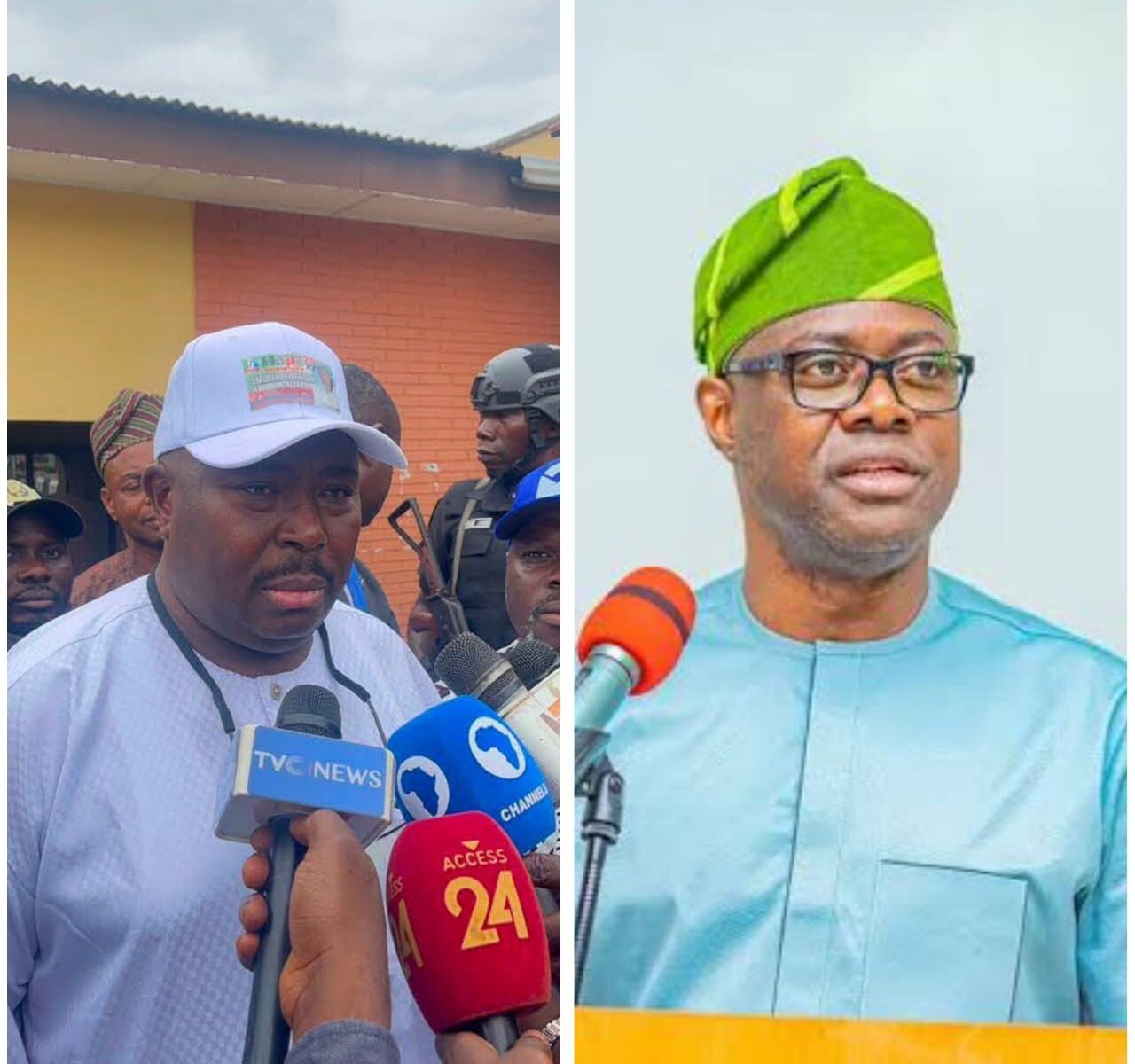
The Senator Sharafadeen Alli Campaign Organisation has hit back at Oyo State Governor Seyi Makinde following the governor’s recent remarks about the professional credentials of the All Progressives Congress (APC) governorship candidate ahead of the 2027 election. The campaign organisation accused Makinde of attempting to discredit Alli rather than defending his administration’s record.
In a statement signed by its Director of Media and Publicity, Bisi Oladele, the organisation questioned Makinde’s record as an engineer, particularly over the state’s streetlighting project. It alleged that more than N250 billion had been spent powering streetlights with diesel generators, describing the arrangement as evidence of what it called poor planning and questionable use of public resources. The figure was presented by the campaign organisation and has not been independently verified.
The group also criticised the renovation of the Lekan Salami Stadium, Adamasingba, Ibadan, alleging that despite an investment of more than N5 billion, the facility was unable to meet requirements for Shooting Stars Sports Club to host certain continental fixtures. It questioned the quality and certification of the renovation and asked what the state government had achieved with the expenditure.
The campaign organisation further defended Alli against Makinde’s earlier comments questioning his experience as a lawyer. Oladele described the governor’s remarks as evidence of “ignorance” and “bitterness” over the possibility of Alli succeeding him in 2027. The organisation also accused Makinde of repeatedly mentioning Alli in his public engagements, saying the frequency showed the senator had become a major focus of the governor’s political attention.
The Oyo State Government has, however, defended the projects. Makinde’s Special Adviser on Media, Sulaimon Olanrewaju, said the use of generators for streetlights was necessitated by unreliable electricity from the national grid, while noting that the government had built a 5MW solar plant being upgraded to 12MW. He also defended the stadium renovation, saying further upgrades were being carried out to meet evolving international standards.
The Governing Body of Jehovah’s Witnesses has announced a major adjustment to the organisation’s long-standing position on blood, allowing individual members to decide according to their personal conscience whether to accept or donate four major blood components. The change was announced on Friday, September 18, 2026, from the organisation’s World Headquarters in Warwick, New York.
Under the revised policy, Jehovah’s Witnesses may personally decide whether to accept red blood cells, white blood cells, plasma or platelets derived from another person’s blood during medical or surgical treatment. Members may also decide whether to donate blood specifically for the purpose of having its components or fractions used in the treatment of another person.
The organisation, however, stressed that the adjustment does not amount to an approval of whole-blood transfusions. Its long-standing religious position against transfusion of whole blood remains unchanged, with the organisation continuing to base the teaching on the biblical command to “abstain from blood.”
Jehovah’s Witnesses said the decision concerning the four primary components is now a matter of individual conscience because, in its interpretation, the Bible does not specifically address whether these components from another person should be accepted or donated. The organisation said members should prayerfully consider their circumstances and make decisions that allow them to maintain a clear conscience.
The latest development follows another significant clarification announced by Jehovah’s Witnesses in March 2026, when the organisation said members could personally decide whether to have their own blood removed, stored and later returned to them during medical or surgical procedures. The September decision therefore represents a further expansion of individual choice concerning blood-related medical care, while the prohibition on whole-blood transfusions remains in place.
President Bola Ahmed Tinubu has said Nigerians are already benefiting from lower transportation costs in several parts of the country following the deployment of Compressed Natural Gas (CNG) and electric-powered public transport services.
Tinubu made this known on Saturday while giving an update on the National Affordable CNG Transit Programme, saying the Federal Government and state governments were working to ensure that the savings from cheaper energy are passed directly to commuters through reduced fares.
The President said the initiative followed his August 27 meeting with the 36 state governors, after which an implementation committee was established under the Nigeria Governors’ Forum. He said the government’s target is for more Nigerians to begin experiencing measurable reductions in transportation costs from October 1, 2026.
Tinubu cited several examples of existing fare reductions across the country. In Oyo State, he said CNG buses deployed to Pacesetter Transport reduced the Lagos-Ibadan fare from about ₦8,000 to ₦3,200 during the initial deployment.
He also said CNG and electric transport services in Borno were carrying passengers for between ₦50 and ₦100 on routes where commercial operators charged between ₦300 and ₦600. In Kaduna, he said 100 CNG-powered buses were providing free transportation on major routes and had carried about 3.2 million passengers in their first year, saving commuters more than ₦3.5 billion.
According to the President, transport fares have also fallen in other locations. He cited a reduction from ₦8,000 to ₦4,000 in Adamawa, ₦2,500 to ₦1,500 on the Enugu-Nsukka route, and reductions on several Abuja commuter routes, including Area 1-Gwagwalada from ₦1,500 to ₦900 and Nyanya from ₦700 to ₦420.
Tinubu said more than 120,000 vehicles have already been converted to CNG, with over 400 certified conversion centres and more than 90 CNG refuelling stations currently operating nationwide. He urged state governments to accelerate the deployment of CNG buses, vehicle conversions and supporting infrastructure ahead of October 1.
The President also maintained that the government would not return to the petrol subsidy regime, arguing that Nigeria should instead expand alternative energy sources and reduce its exposure to fluctuations in global petroleum prices.
“These are not projections. Nigerians are already experiencing these savings,” Tinubu said, while urging states to work with transport unions and commercial operators to ensure that lower energy costs translate into lower fares for commuters.
The announcement comes amid continuing concerns over the cost of transportation and rising petrol prices. Recent reports from Abuja, for instance, quoted civil servants as saying increased petrol prices had pushed up their daily transportation expenses.
The Federal Government is therefore targeting wider implementation of the affordable CNG transport programme from October 1, with the stated objective of making cheaper transportation available to more Nigerians.
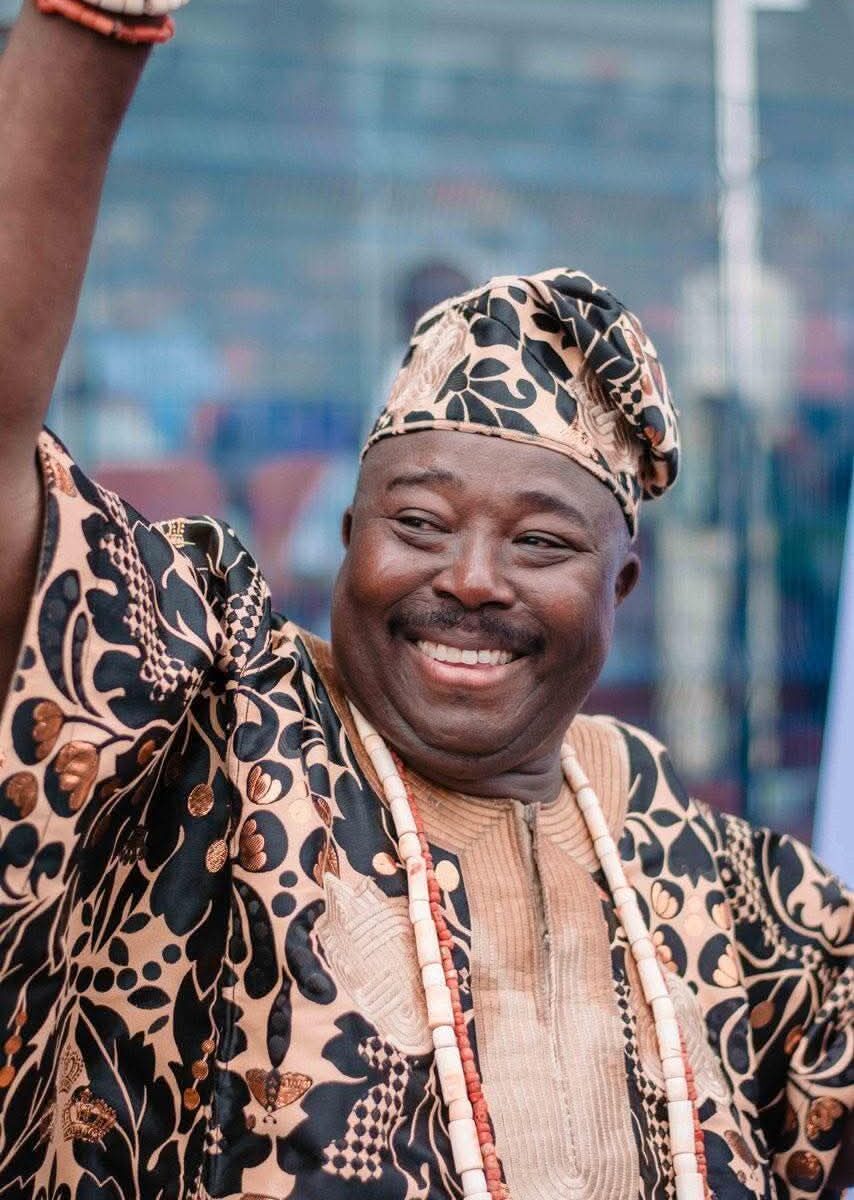
Senator Sharafadeen Abiodun Alli, the All Progressives Congress (APC) governorship candidate for the 2027 Oyo State election, has been elevated from Ekarun Balogun Olubadan to Ekerin Balogun Olubadan of Ibadanland by the Olubadan, Oba Rashidi Adewolu Ladoja.
Alli, who represents Oyo South Senatorial District in the National Assembly, announced the elevation in a statement on Saturday, expressing appreciation to Oba Ladoja and members of the Olubadan Advisory Council for the confidence reposed in him.
The senator was, however, absent from the elevation ceremony held at the Olubadan Palace, Oke-Aremo, Ibadan, as he is currently in the Holy Land performing the Islamic pilgrimage of Umrah. He said he used the opportunity to pray for Ibadanland, Oyo State and its people.
Alli also expressed appreciation to traditional rulers, Mogajis, Baales, political associates, friends and members of the Olofiere family who represented him at the ceremony.
Reacting to the elevation, Alli described the new position as more than a ceremonial title, stressing that advancement in the Ibadan traditional institution comes with increased responsibility to the people.
“A step up in rank is a step up in responsibility,” Alli said.
He pledged to continue contributing to the peace, unity, progress and development of Ibadanland and Oyo State, while linking the new traditional responsibility to his broader Oyo AHEAD vision.
The elevation places Alli on the Ekerin Balogun rung of Ibadanland’s Balogun chieftaincy line. The Ibadan traditional system operates through two major lines—the Otun (civil) line and the Balogun line—with Ekerin Balogun ranking above Ekarun Balogun.
The development comes as Alli, a serving senator, prepares for the 2027 Oyo State governorship contest on the APC platform. His political role and traditional position therefore place the latest elevation within both the traditional and political landscape of the state.
Alli said he received the honour with humility and renewed commitment to service, declaring that the elevation represents a fresh call to contribute to the advancement of Ibadanland and Oyo State.
Seyi Makinde, governor of Oyo and presidential candidate of the Allied Peoples Movement (APM), has accused the administration of President Bola Tinubu of running a “voodoo economy”.
Makinde spoke on Friday while addressing civil servants at the government house in Agodi, Ibadan, the Oyo state capital, after returning from his annual leave.
The governor said the old N18,000 minimum wage during the administration of former President Goodluck Jonathan could buy more than the current N70,000.
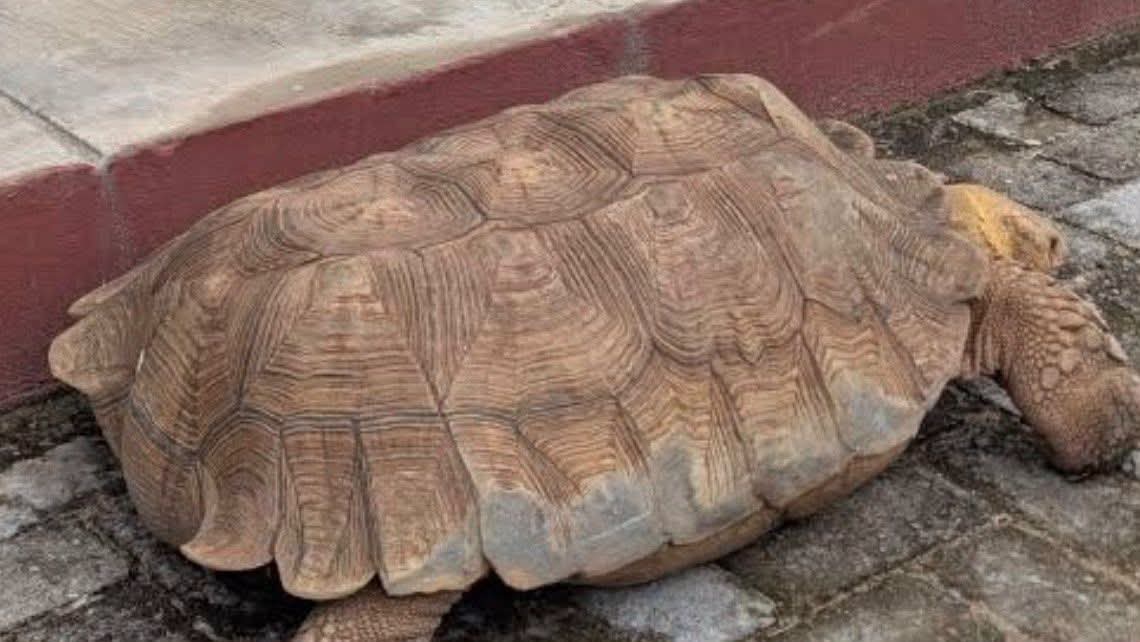
A tortoise known as Baba, which the Alaafin’s Palace in Oyo said had lived for about 420 years, has died after a brief illness.
The ancient tortoise reportedly died on Monday after falling ill and stopping eating. The palace later buried Baba within its premises.
The Director of Media and Publicity to the Alaafin of Oyo, Bode Durojaiye, announced the death in a statement issued in Ibadan on Thursday.
According to the palace, Baba was more than a palace pet, having become part of the oral history and cultural heritage associated with the Yoruba people and the ancient Oyo Kingdom.
Durojaiye said oral history traced Baba’s origin to Oyo-Ile, the ancient capital of the old Oyo Empire, from where the tortoise was reportedly brought to the present-day palace in Oyo town.
The tortoise was said to have been cared for by successive Alaafins and inherited as part of the historical relics associated with the palace.
The palace also said Baba became a notable attraction for visitors, with people travelling to the palace to see the tortoise because of its reported age, size and unusual history.
Two palace officials were reportedly assigned to care for Baba. Its diet included watermelon, corn pap wrapped in leaves and grass.
The palace described Baba as an “ageless companion” to the Alaafin institution and said its reported longevity enabled it to become a symbol of continuity between different generations of the Oyo Kingdom.
“In Oyo, Baba was regarded as the oldest indigene. It was the Alaafin’s most cherished pet. The monarch met it in the palace, while Baba was nourished by a succession of kings,” the palace said.
The name Baba, meaning “father” in Yoruba, was reportedly adopted because of the respect attached to the tortoise’s supposed age.
The palace said Baba fell ill on Monday and stopped eating before dying later that day.
“Baba fell ill on Monday, just a little sickness and couldn’t eat anymore. Then, he died. Just like that,” the statement said.
Baba’s reported age, however, has not been independently verified. Reports indicate that the 420-year figure is based on palace oral history rather than a documented birth record or scientific age determination.
Nevertheless, the death has drawn attention to the tortoise’s longstanding cultural significance at the Alaafin’s Palace and its role as a living link to stories surrounding the old Oyo Empire.
The palace also connected Baba’s symbolic importance with Yoruba cultural beliefs concerning the relationship between the living, the dead and the unborn, referencing Wole Soyinka’s Death and the King’s Horseman.
With Baba’s death, the Alaafin’s Palace has lost an unusual historical attraction that, according to the palace, had survived generations of monarchs and become an enduring part of Oyo’s oral tradition and heritage.
•Questions INEC’s fight to restore provisions Court of Appeal declared unconstitutional
Accord Party Presidential candidate and Co-Chairman of Movment for Democratic Renewal Dr. Gbenga Hashim, has called for the disbandment and reconstitution of the Independent National Electoral Commission (INEC) over its blatant disregard of a Court of Appeal judgment on the Electoral Act.
The Court of Appeal had voided Sections 77(5), 77(6), 77(7) and 84(2) of the Electoral Act 2026, and held that the provisions were inconsistent with Sections 221 and 222 of the 1999 Constitution, as amended.
Hashim said the implication of the July 16, 2026 judgment of the Court of Appeal in Abuja instituted by the Zenith Labour Party (ZLP) is far-reaching, arguing that actions taken by INEC under provisions subsequently declared inconsistent with the 1999 Constitution (as amended) could no longer stand.
The judgment followed an appeal by the Zenith Labour Party challenging provisions dealing with political party membership registers and candidate nomination including the timetable and schedule of INEC activities .
The Court of Appeal held that ordinary legislation cannot impose restrictions on political parties that conflict with powers already guaranteed by the Nigerian Constitution (as amended).
The Court of Appeal also stated that, “no other condition contained in a subsidiary law could disqualify an individual already qualified by the Constitution.”
Dr. Hashim insisted that reconstitution of the electoral body is germane to a transparent and credible 2027 general election.
Furthermore, he described ‘everything INEC has done’ under the disputed legal framework as a nullity; pending the final determination of the matter by the Supreme Court.
Hashim questioned why the electoral commission would seek to sustain statutory provisions which the Court of Appeal had declared inconsistent with the Constitution.
“The Constitution is supreme. The National Assembly makes laws. INEC administers elections. INEC is not the Parliament and INEC did not make the Constitution.
“So when a competent Court of Appeal declares specific provisions of an Electoral Act inconsistent with the Constitution, why is INEC fighting in court to restore those provisions rather than working with relevant political parties to address previous infractions?”
INEC has appealed the judgment to the Supreme Court.
On Wednesday, September 16, 2026, the Supreme Court heard arguments in the appeal and reserved judgment.
A seven-member panel, led by Justice Adamu Jauro, said the date for judgment would be communicated to the parties.
Regardless, Hashim stressed that his objection was not against INEC’s legal right to appeal.
“Of course, INEC can appeal. The issue is not whether it has the right to appeal. The question Nigerians should ask is; ‘what institutional interest does the electoral umpire have in sustaining provisions which a competent appellate court has declared inconsistent with the Constitution?’
“Does this not raise questions about INEC’s complicity in the very process that Nigerians are asking it to be an umpire over?”
Hashim warned that the commission’s action could described as going against Nigeria’s democracy.
“INEC is fighting in all courts, including the Supreme Court, wasting public resources to hire big lawyers to sustain provisions of the Electoral Act that contradicts the Constitution. INEC is complicit in the perfidy to rape Nigeria’s democracy.
“INEC, as presently constituted, is a threat to Nigeria’s democratic order.”
According to Hashim, an electoral commission should be the first institution to insist on constitutional compliance rather than defend statutory provisions that have been judicially declared inconsistent with the Constitution.
“An electoral commission should be the first institution to insist on constitutional compliance.
“It should not be seen as defending a statutory arrangement that has been judicially declared unconstitutional designed primarily by the ruling party legislators to constrict the democratic space”
Hashim said the development reinforces warnings he had made before now that the 2027 electoral process could become a “coronation” rather than a genuine democratic contest.
“We warned ever before now that what INEC seeks to do in 2027 is a coronation, not an election.”
He said the danger was not limited to election day, arguing that democracy also depends on whether citizens and political party members are allowed to genuinely participate in selecting candidates.
“An election means that citizens and members of political parties genuinely participate in choosing their candidates and ultimately their leaders.
“A coronation is the presentation of a predetermined choice for public endorsement through a process that constricts rather than widens the political space,” and added that, “from all indication, INEC is supervising coronation, not conducting election.”
Hashim also criticised what he described as the silence of some opposition candidates who, according to him, had become less vocal after securing party tickets.
“Some opposition candidates are deceived because they have been given gate-pass to attend the coronation ceremony and so, have lost their voices.
“We shall continue to speak because we are not just politicians. We are democrats.”
Hashim also questioned what he described as the “conspiracy of silence” of major media organisations over the Court of Appeal judgment and subsequent Supreme Court proceedings.
“How can a Court of Appeal judgment declaring portions of the Electoral Act unconstitutional, followed by an appeal by INEC to the Supreme Court, not be one of the biggest stories in Nigeria?
“How can a matter with direct implications for the rules governing political parties and candidates nomination ahead of 2027 election receive so little sustained national attention?”
He said Nigerians deserve to understand the constitutional questions before the Supreme Court without any attempt to interfere with judicial independence.
“I am asking Nigerians to understand what is before the Court. Judicial independence does not mean public silence,” Hashim insisted.
He questioned why major media organisations had not made the case a sustained National story. “Where are the front-page investigations? Where are the prime-time constitutional debates? Where are the legal experts explaining to Nigerians what the Court of Appeal actually declared and what the Supreme Court has been asked to determine?
“Why are we discussing the politics of 2027 without sufficiently discussing the legal architecture under which the 2027 election will be conducted?”
Hashim said the fact that judgment had been reserved made sustained public attention even more important.
“The case is now before the Supreme Court. The parties have argued their positions. Judgment has been reserved.”
He warned against a situation where Nigerians would only begin to understand the significance of the legal dispute after the 2027 election.
Hashim said his intervention should not be viewed merely through the prism of his political ambition.
“I am not just a politician. I am first and foremost a crusader for the establishment and sustenance of the democratic order.
“My commitment to democratic governance predates this particular contest. I will continue to defend the Constitution and Nigeria’s democratic order; whether the issue concerns me personally or another Nigerian.”
Hashim reiterated that he would continue to pursue the matter through lawful and constitutional channels and collaborate with individuals, political parties and organisations committed to true democracy.
“I will pursue every lawful avenue available to defend democratic choice. I will challenge, through constitutional means, any action by public institutions which I believe compromises the democratic rights of Nigerians.”
Hashim consequently called for the disbandment and reconstitution of INEC, describing the move as necessary to restore confidence in the electoral process.
“I believe INEC should be disbanded and reconstituted. “This is not a call to abolish elections or destroy electoral administration. It is a call to rebuild the institution responsible for conducting our elections.”
He said Nigeria needs an electoral commission that is institutionally independent and whose actions and activities are firmly anchored in the Constitution.
“We need an electoral commission that is constitutionally grounded, professionally competent, transparent and genuinely independent of the political interests of the government of the day.
“INEC must be stronger than individual politicians. It must be stronger than the government. “It must be stronger than the opposition. And, its first loyalty must be to the Constitution and the democratic choice of Nigerians.”
Hashim said Nigeria could not afford an electoral system in which citizens were invited to vote after critical political choices had already been determined through processes beyond their control.
“The 2027 election must not become a ceremony for endorsing decisions already made elsewhere.
“It must be an authentic democratic contest in which the constitutional rights of political parties, candidates and voters are upheld.”
Hashim said the central issue was ultimately whether Nigerians would be allowed to genuinely choose their leaders through a process in which constitutional rights and democratic choices were respected.
“Nigeria needs an election, not a coronation; constitutional supremacy, not administrative complicity with evil and impunity; and democratic choice, not institutional capture.”
The Federal Government has issued a fresh flood alert covering several states in the South-West, including Lagos, Ogun, Oyo, Osun, Ondo and Ekiti.
The warning, which covers the period from September 27 to October 10, was issued amid concerns over continued rainfall, rising river levels, saturated soil and increased surface runoff, all of which could heighten the risk of flooding in vulnerable communities.
Residents living in low-lying and flood-prone areas have been urged to remain vigilant, monitor official weather updates and take necessary precautions to protect lives and property.
Authorities have also advised residents to avoid crossing flooded roads and waterways during periods of heavy rainfall and to promptly move to safer locations where necessary.
Oyo State Governor, Seyi Makinde, has approved a three-month extension of the wage award for state workers, assuring civil servants that the transportation subsidy introduced by his administration to cushion the effects of economic hardship will also continue.
Makinde announced the extension on Friday shortly after resuming official duties at the Governor’s Office, Agodi, Ibadan, following his annual leave.
Addressing civil and public servants who gathered to welcome him back to office, the governor said the decision was informed by the prevailing economic challenges confronting workers and residents of the state.
Makinde said his administration remained committed to workers’ welfare, particularly at a time when rising living costs and other economic pressures continue to affect household incomes.
The governor also assured workers that the transportation subsidy would remain in place as part of the government’s measures to ease the financial burden on residents and cushion the impact of the current economic situation.
Speaking further, Makinde highlighted his administration’s adherence to constitutional provisions, particularly the transfer of power to his deputy during his absence from the state.
He challenged President Bola Ahmed Tinubu to adopt a similar approach whenever he is outside the country or otherwise unavailable to personally perform the functions of his office.
The latest extension means Oyo State workers will continue to benefit from the wage award for an additional three months, coming amid continued concerns over the rising cost of living and demands for improved workers’ welfare across the country.
TRAGIC DEATH: A final-year student of Obafemi Awolowo University (OAU), Oluwole Oluwasegun, has reportedly died by suicide at his off-campus residence in Ile-Ife, Osun State.
Oluwasegun, a student of the Department of Materials Science and Engineering, reportedly died on Tuesday afternoon at a hostel around the Damico area of Ooni Layout.
According to the university’s Public Relations Officer, Olarewaju Abiodun, the institution’s Quick Response and Security (QRS) Team immediately responded after receiving the report and contacted the Nigeria Police.
Officers from the ‘A’ Division, Moore, Ile-Ife, joined university security personnel at the scene, after which the student was taken to the University Health Centre, where a medical doctor certified him dead.
The university said relevant information and items recovered from the scene were handed over to the police, who have commenced an investigation into the circumstances surrounding the death.
The institution also notified the appropriate student affairs authorities to provide necessary follow-up, particularly regarding the welfare and support of students affected by the incident.
Vice-Chancellor Professor Simeon Bamire expressed condolences to the deceased’s family, friends and colleagues and encouraged students facing severe emotional distress, relationship difficulties, financial pressures or other personal challenges to seek help promptly.
“No student should feel that he or she has to confront overwhelming difficulties alone,” the Vice-Chancellor said.