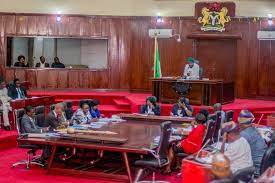
The Federal Government (FG) has withheld the February, March, and April 2025 allocations for Osun State’s local government councils due to a political and legal dispute over the legitimacy of local government leadership.
The All Progressives Congress (APC) argues that only “democratically elected” and “judicially certified” officials, specifically APC chairmen elected in October 2022, should receive the funds, citing a February 10, 2025, Court of Appeal ruling that allegedly reinstated these chairmen after they were sacked in 2022.
Conversely, the Osun State Government, led by the Peoples Democratic Party (PDP) and Governor Ademola Adeleke, claims a state High Court ruling confirmed vacancies in local government positions, justifying the February 22, 2025, elections won by the PDP.
The FG’s decision to withhold the allocations appears to stem from this unresolved conflict over which group—APC or PDP officials—legitimately controls the local governments, pending further judicial clarification.
The Osun State Government has filed a lawsuit against the Federal Government at the Supreme Court, alleging that the Federal Government withheld the monthly allocations for local government councils in Osun State for February, March, and April 2025.
The suit, dated April 23, 2025, and filed by Musibau Adetunbi, SAN, on behalf of the Osun State Attorney General, names the Attorney General of the Federation as the defendant.
Osun State is seeking a court order to compel the release of the withheld funds and to restrain the Federal Government from further withholding or seizing local government allocations.
The state’s Finance Commissioner emphasized in an affidavit of urgency, sworn on April 24, 2025, that the continuous seizure of these funds is causing significant hardship and could cripple local government functions and, by extension, state governance. The status of the May 2025 allocation remains undetermined.
This action follows a broader political and legal dispute over local government control in Osun State, involving tensions between the ruling Peoples Democratic Party (PDP) and the opposition All Progressives Congress (APC).
The Independent National Electoral Commission (INEC) has officially announced the dates for the 2026 governorship elections in Ekiti and Osun States.
INEC Chairman, Professor Mahmood Yakubu, disclosed that the Ekiti State governorship election will be conducted on Saturday, July 20, 2026, while voters in Osun State will head to the polls on Saturday, August 8, 2026.
Professor Yakubu made this announcement during the swearing-in ceremony of six newly appointed Resident Electoral Commissioners (RECs), whose nominations were recently approved by the National Assembly.
Speaking at the event, the INEC boss noted that the Commission is also in the final stages of preparations for various bye-elections to fill vacant positions in both the National Assembly and State Houses of Assembly.
INEC’s early announcement of these dates is expected to give political parties ample time to prepare and mobilise ahead of the crucial polls in the two southwestern states.
Two important agricultural projects which included smart irrigation system and smart crop dryer to enhance productivity of farmers and national food security were unveiled at the Centre for Petroleum, Energy Economics and Law, University of Ibadan. The prototype of the projects was launched at a strategic energy workshop hosted by the Centre in collaboration with the Department of Agricultural Extension and Rural Development, University of Ibadan with a focus on driving sustainable energy solutions for rural communities. The workshop was held with the theme: “Concept to Community: Scalable Energy Solutions for Rural and Off-Grid Sustainable Development.
In his remarks, the Director of CPEEL, Prof. Olugbenga Falode emphasised the vital role of innovation and technology in addressing Nigeria’s energy challenges. He announced that his team has developed several tailored energy technology solutions such as IOT enabled solar irrigation, IOT enabled solar dryer, smart meter, biogasifier, smart microgrid integrated with renewable energy etc, specifically designed to improve energy access and efficiency in rural areas. He however laid emphasis on the need for government to invest in energy research and technologies such as mini-grid which can power agro-processing units and cold storage, clean cookstove which can save hours of unpaid labor and reduce indoor pollution that disproportionately affects women and children among several other innovations. He noted that CPEEL’s partnership with the Department of Agricultural Extension and Rural Development is essential, as it brings valuable expertise in community structures, behavioral change, and participatory engagement. This collaboration ensures that energy solutions move beyond laboratories and policy papers to make real impact in fields, farms, and homes. He further emphasised, “Energy is the golden thread that connects economic growth, social equity, and environmental sustainability.” Sadly, that golden thread remains broken in many rural communities.
Today, over 640 million Africans lack access to electricity, with the continent’s access rate just above 40%—the lowest globally. In sub-Saharan Africa (excluding South Africa), per capita energy consumption is only 180 kWh, compared to 13,000 kWh in the U.S. and 6,500 kWh in Europe. More than 80% of those without power live in rural, off-grid regions and rely on biomass for cooking, which has serious health, environmental, and economic consequences. Poor energy access causes indoor air pollution, weakens healthcare and education, and raises business costs. Expanding energy access is critical for poverty reduction, job creation, and inclusive, sustainable growth.
“At the Centre for Petroleum, Energy Economics & Law, we are deeply committed to research, innovation, and policy engagement that translate scientific knowledge into practical solutions. Our focus spans a spectrum of energy resources, from renewable energy technologies such as solar photovoltaics, biogas systems, improved cookstoves, mini-grids, and hybrid systems to sustainably utilising oil and gas.” By promoting responsible oil and gas usage alongside renewable options, we are creating an energy mix that is realistic, context-sensitive, and geared toward long-term sustainability. But we recognize that the challenge is not just technological—it is also institutional, financial, and behavioral.
Speaking on behalf of the Department of Agricultural Extension and rural development, the Head of Department, Prof. Stella O. Odebode, highlighted the importance of cross-sector collaboration. She stressed that the partnership between CPEEL and the Department is essential to ensure the successful deployment and adoption of these solutions within rural farming communities. According to her, agricultural extension services play a critical role in bridging the gap between technology developers and end users. Also, Prof. O.B. Oyesola of AERD presented an audit report for the Ajebandele community to support the planning and deployment of sustainable energy solutions.
In his keynote, Engr. Adebayo Ige, CEO/MD of IESL, reaffirmed the company’s commitment to innovation and sustainability as a strategic partner in community-driven energy development. He acknowledged Dr. Diran Fawibe, Chairman of IESL, for his leadership in aligning engineering with social impact. Engr. Ige highlighted IESL’s ₦10 million annual grant to the Centre, aimed at supporting locally driven energy solutions. He emphasized the importance of empowering local talent and scaling innovations like solar mini-grids and hybrid systems through stronger collaboration with research institutions, governments, and communities—ensuring solutions are user-focused, locally owned, and sustainable.
In their words, the trio of Prof. Akin Iwayemi, Principal Investigator of CPEEL, Prof. Adeola Adenikinju, the President of Nigerian Economic Society/co-PI, CPEEL and the former Director of CPEEL, Prof. O.E. Olubusoye while speaking hinted on the importance of investment in research and the need for collaboration between town and gown to be able to proffer solutions to myriads of problems confronting Nigeria as country, saying the vision of CPEEL is to bridge the gap between industry and academics by training energy professionals with the sole aim of finding a lasting solution to energy poverty in Nigeria and Africa at large.
Dr. Kehinde Bewaji, speaking for the technical team, emphasised the showcased projects’ potential to enhance agricultural productivity and reduce energy poverty among rural farmers. Experts at the workshop praised the initiative and called for stronger collaboration between academia and communities to overcome technological barriers. They urged the Centre to sustain its leadership in energy research and deepen engagement with policymakers. The team, supervised by Prof. O.A. Falode, included Dr. Bewaji, Dr. Akinsanoye, Engr. Tekhukoroh, and Engr. Kamara. Dr. Princess Nwankwo while thanking the audience, reaffirmed the Centre’s commitment to community-driven energy solutions, echoing Prof. Adenikinju’s call for inclusive, sustainable development.
An Osun State High Court, sitting in Iwo, has sentenced an Islamic cleric, Kabiru Ibrahim, to death by hanging for the murder of his 25-year-old client, Lukman Adeleke.
Ibrahim, an Alfa, was charged with conspiracy, murder, and theft, contrary to Sections 324, 319(1), and 390 of the Criminal Code, Cap. 34, Laws of Osun State.
Justice Lateef Adegoke, delivering judgment, held that the prosecution proved its case beyond a reasonable doubt and sentenced Ibrahim to death by hanging for murder.
A statement from the Information Officer of the Ministry of Justice, Opeyemi Bello, obtained in Osogbo on Wednesday, May 28, said the prosecution team, led by Abiodun Badiora, told the court that Ibrahim was a spiritual consultant to the deceased.
Badiora explained that the deceased had approached the cleric, revealing his intention to purchase a parcel of land, and Ibrahim asked him to bring the money for an overnight prayer before paying the vendor.
The students of Methodist Grammar School, Bodija, Ibadan could not hide their joy when the recreational games lounge was commissioned yesterday by the Founder of an NGO, Baby Blue Angels Foundation who is also the Senior Special Assistant to Gov. Makinde on Local Government and Chieftaincy Matters, Chief Ramata Agberemi Dabo popularly known as RAD.
The gaming lounge equipped with many educational games like scrabbles, chess, monopoly, and others was commissioned inside the school premises.
Ramata while speaking through her representative, Hon. Kobiowu Aminat said, the idea behind the launching of the games lounge was to nurture and bring out God-gifted talents from the young kids especially the students with disabilities in the school.
She said she was inspired by the famous Chess Master, Tunde Onakoya who has carved a niche for himself in the world of chess and as part of the initiative of Oyo State First Lady, Her Excellency, Mrs. Tamunominini Makinde who has always been a source of inspiration to women in leadership.
“There are many talented kids here who need a little push up to be able to discover their talents and showcase them to the world but they are being constrained due to lack of resources or avenue to nurture their God’s gifted talents, and that is the reason why we are commissioning this lounge for the students with disabilities to be able to discover their abilities as they say there is ability in disability”.
“I therefore use this medium to thank our role model, the First Lady of Oyo State, Her Excellency, Mrs, Tamunominini Makinde who has been a source of inspiration to me. Also, I express my appreciation to the the Secretary of Alumni of Methodist Grammar School, Barrister Ebony for her usual support towards the realization of the dream.
The Special Adviser to Governor Makinde on Education, Hon. Tajudeen Tiamiyu who was a guest at the event commended Chief RAD for the laudable initiative he has embarked on, he said he has known Hon. Ramata as a great philanthropist who has helped many less privileged in various capabilities.
He thereafter hinted on the disposition of Governor Makinde in repositioning education sector, and part of which is the recently approved interventionist project launched to rehabilitate some selected secondary schools and Methodist Grammar School was selected as part of the schools to be rehabilitated in the first phase of the exercise.
In her remarks, the Principal of Methodist Grammar School, Mrs. Etadon while speaking appreciated the kind gesture of Chief Ramata Agberemi Dabo and likened her to one of the notable alumni of the school they are always proud of.
She said the initiative was imperative at this era where skills and talents have taken the centre stage and such idea will in no doubt help the students with disabilities to be able to discover their talents and also help them to concentrate on their studies because the game house is equipped with various forms of educational games and activities aimed at enhancing cognitive skills and promoting healthy interactions among students.
The game lounge was commissioned and the students with disabilities engaged in a brief competition with guests while the Special Adviser on Education was taken around for needs assessment on dilapidated infrastructures in the school.
The Oyo State House of Assembly has rejected the report of its Committee on Agriculture and Rural Development on the investigation of the payment and disbursement of funds for the construction of a 10,000MT 4-Bin Silo and supply of combine silo equipment project in Awe Road, Oyo.
The report, which was presented to the House during today’s plenary session by Hon. PG Ojedokun was deemed inconclusive and lacking in crucial details.
According to lawmakers, the report failed to adequately address the mandate given to the committee to investigate whether or not the contractor, Rahvet International Limited, paid monies to the expatriate Chinese company involved in the project.
This critical aspect of the investigation was not sufficiently explored, leading to concerns about the report’s comprehensiveness.
Furthermore, the House questioned the recommendation for an additional N360,394,440 to complete the project, describing it as “proprietorial” and lacking justification.
Lawmakers expressed concerns about the contractor’s ability to manage funds and the potential for further abuse of public resources.
Another point of contention was the committee’s recommendation that the Auditor-General should contact the expatriate contractor to verify claims regarding remittance and cooperation.
The House felt that this approach undermined the committee’s mandate for independent investigation and could compromise the integrity of the inquiry.
In light of these concerns, the House resolved to transfer the assignment to its Committee on Finance, Appropriation, and State Economic Planning for a comprehensive review of the project.
The new committee has been tasked with conducting a thorough investigation, including examining materials already purchased by the contractor and other relevant aspects of the project.
The Speaker while ruling on the rejection of the report, said the development was to ensure transparency and accountability in the execution of government contracts.
Former Vice President Atiku Abubakar has come down hard on President Bola Ahmed Tinubu over his recent loan request to the National Assembly, warning that the borrowing spree is mortgaging Nigeria’s future.
In a strongly worded statement issued on Thursday, Atiku described Tinubu’s request for a $21.54 billion foreign loan and a ₦758 billion pension bond as “reckless, dangerous, and immoral,” accusing the administration of dragging the country into a debt trap that could cripple generations to come.
“The Tinubu administration is borrowing money not for development but to service existing loans, fueling a debt spiral that leaves nothing for infrastructure, education, healthcare, or jobs,” Atiku stated.
The two-time presidential candidate of the Peoples Democratic Party (PDP) said public debt has surged by 65.6% since Tinubu took office in May 2023, warning that the fresh loan request would push Nigeria’s debt from ₦144.7 trillion to a staggering ₦183 trillion.
“This is not just unsustainable—it is immoral,” Atiku warned. “Tinubu has thrown caution to the wind and turned public finance into a Ponzi scheme—borrowing to pay debts and then borrowing more to pay interest.”
The president’s request to the National Assembly includes $21.54 billion, €2.19 billion, and ¥15 billion, totaling over $24 billion in foreign loans.
Atiku did not mince words in condemning the move, labeling it “economic sabotage.” He urged the National Assembly, civil society organizations, the media, and the international community to intervene before it’s too late.
“We call on lawmakers, civil society organizations, the media, and the international community to take urgent action to stop this looming catastrophe. Nigeria must not be sold into debt slavery,” he said.
Lagos Reporters will continue to monitor developments around this controversial loan request and provide detailed analysis, reactions, and implications for Nigerians across all sectors.
As public concern grows over the country’s rising debt profile and economic hardship, Atiku’s criticism adds to mounting pressure on the Tinubu-led administration to reconsider its fiscal direction.
The Ooni of Ife has gifted 3 acres of land to the International Council for Ifa Religion, ICIR, for the construction of the largest World Ifa Temple in Ile-Ife.
Located at the Stadium area, Route 7, Ile-Ife, Osun state, this monumental project will serve as a major pilgrimage site for Ifa and Orisha devotees worldwide.
This generous gesture underscores Ooni’s commitment to preserving cultural heritage and promoting spiritual growth across the globe.
Students have been asked to shun all forms of indecency and concentrate more on their studies to attain their desired goals and aspirations.
This call was made at the 2025 Children’s Day celebration held at Baale’s Palace, Akinyele, Ibadan as sponsored by a Senior Lecturer and Gender Rights Advocate at the Department of History, University of Ibadan, Dr. Mutiat Oladejo.
The group led by the Programme Coordinator, Alhaji Yekini A. A. Kareem-Ojo highlighted important roles of good parenting in shaping the lives of the children to become useful for themselves and the society at large.
They therefore called on government to provide conducive learning and skill acquisition environment while advising teachers to be diligent in the discharge of their duties.
The communique of the event is reproduced below:
THE YEAR 2025 CHILDREN’S DAY CELEBRATION
A COMMUNIQUE ON THE YEAR 2025 CHILDREN’S DAY CELEBRATION HELD AT THE BAALE’S PALACE, AKINKUNMI TOWN IN AKINYELE L.G.A., OYO STATE, NIGERIA ON TUESDAY, 27TH MAY, 2025
The programme which was sponsored by a native of Akinkunmi Town in person of Dr. Mutiat T. Oladejo (nee Kareem-Ojo), a senior Lecturer and specialist in African History, Women-in-Politics, and Gender Studies at the History Department, Faculty of Arts, University of Ibadan, Ibadan, Nigeria was attended by about one hundred pupils and students of primary and secondary schools in Iroko and its environs.
The Baale, Chief Zakariya Olagoke Akinkunmi, supported by notable elders of the town, graced the occasion.
It was an inter-generational get-together where children were opportune to tell elders their feelings or opinions about life as it affect them, and the latter give guidance and counselings, accordingly.
In particular, there was demand for a more conducive learning environment that would assure the achievement of children’s academic-cum-career goals in a more efficient and effective manner.
It was highly informative, entertaining and, above all, educative as these two papers were presented at the occasion: “THE ESSENCE/IMPORTANCE OF CHILDREN’S DAY CELEBRATION” by Alhaja Saudat Ojo-a retired Vice Principal, TESCOM (Oyo State); and “HOW TO STUDY EFFECTIVELY” by Alhaji Yekinni Kareem-Ojo, an educator and retired Chief Accountant, University of Ibadan. The children were also given books of various titles published by REAMSWORTH PUBLISHING LIMITED, IBADAN.
In conclusion, all stake-holders were advised to do the needful:
Children to be more studious and shun all forms of indecency;
Parents to provide adequate learning material and conducive environment for home-study;
Governments at all levels to provide a more conducive learning and skill acquisition environment;
They should also create more conducive business-cum-investment environment;
Same goes for wealthy individuals, corporate bodies and non-governmental organisations (NGO) in the country, and
Teachers to be more diligent in the discharge of their duties and be models for the children.
Oduduwa News has gathered that a suspected thief has been arrested and taken to custody by Ekiti Police Command.
The suspect who allegedly duped a boutique of N150,000 worth of goods in Ado Ekiti has been apprehended in Ikere Ekiti.
The man, who was captured on CCTV footage deceiving the salesgirl, was tracked down and caught by authorities. The suspect is currently in custody, and further investigation is underway.
The successful arrest brings relief to the boutique owner and serves as a warning to would-be scammers in the state.