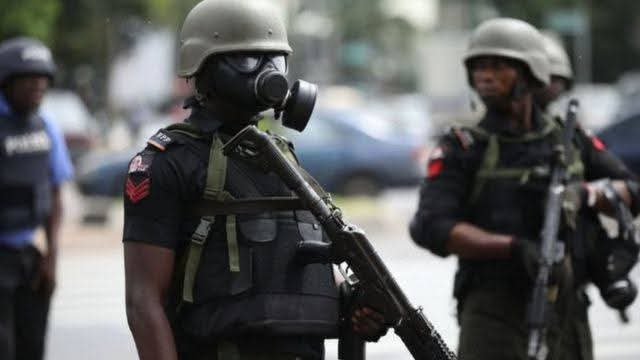
The Imo State Police Command has rescued 10 victims following an attack on two buses conveying prospective National Youth Service Corps (NYSC) members and other passengers travelling from Ibadan to the South-East and South-South.
The incident occurred on Thursday along the Owerri–Onitsha Road near Umunoha, where suspected armed men attacked the two buses. According to the police, the buses were travelling from Ibadan to Uyo, Akwa Ibom State, and Bende, Abia State, respectively.
Police spokesperson, DSP Henry Okoye, said tactical teams and other security agencies responded swiftly, leading to the recovery of the two buses and the rescue of 10 victims at the scene. The rescued victims were said to be safe and receiving necessary attention.
The police said the exact number of persons abducted was still being verified, while coordinated search-and-rescue operations and intelligence-led tracking were continuing to locate other victims and apprehend the attackers. The affected section of the highway has also been reopened to traffic, with security personnel deployed to protect commuters.
Earlier reports had put the number of abducted corps members at about 20, but the police have cautioned that the exact number of abductees is yet to be established. Therefore, the confirmed figure at this stage is that 10 victims have been rescued, rather than that all 20 corps members have been rescued.
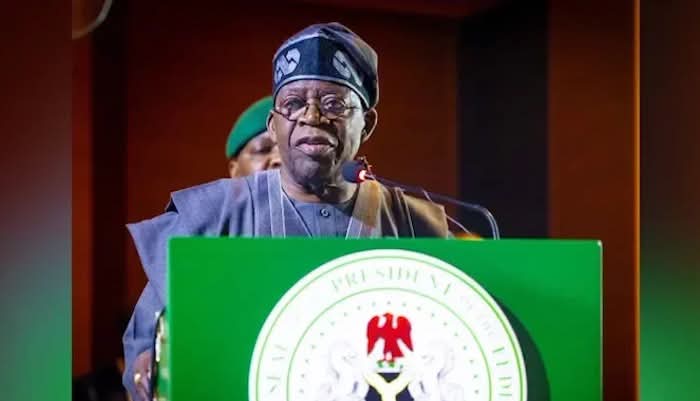
President Bola Ahmed Tinubu has declared that Nigeria has reached a major economic turning point, saying the country has moved beyond the difficult phase of economic reforms and is now entering what he described as an “age of prosperity.”
Tinubu made the declaration in his Independence Day address to Nigerians on Thursday, October 1, 2026, as the country marked its 66th anniversary. The address, titled “From Reform to Prosperity,” focused on the administration’s economic reforms and its plans to translate the gains of those reforms into improved living standards for Nigerians.
According to the President, the past three years were largely devoted to correcting what his administration regarded as deep-rooted economic distortions. He said the reforms had been difficult and had imposed significant hardships on citizens, but maintained that the government had now laid the foundation for a more stable and productive economy.
“The age of reform has done its work. Now begins the age of prosperity,” Tinubu said, stressing that the government’s central economic objective had shifted from correcting the country’s economic direction to achieving “shared and widespread prosperity.”
The President identified reducing the cost of living as a major priority of the next phase. He said the government would work to reduce the cost of producing and transporting goods through increased agricultural production, mechanised irrigation, improved access to seeds and fertiliser, better storage and transportation infrastructure, as well as investments in roads, railways and ports.
Tinubu also placed job creation, industrial expansion and opportunities for young Nigerians at the centre of the new phase, saying Nigeria’s large youthful population should become an engine of production and economic growth. He said improved electricity supply, infrastructure and a business environment that encourages fair competition would help bring down production costs and ultimately reduce prices.
The President also defended the economic reforms introduced since 2023, including the removal of petrol subsidy, arguing that the measures were aimed at addressing underlying structural problems rather than merely treating their symptoms. He warned against returning to what he described as unsustainable subsidy arrangements.
Tinubu acknowledged that the road ahead would still require discipline and sustained economic growth, but expressed confidence that Nigeria had “corrected its course.” He described the country as having “passed through our own Red Sea” and called on Nigerians to look forward rather than back.
He said the ultimate objective was to build a Nigeria where prosperity is broadly shared, children can aspire beyond the circumstances of their birth and the country’s vast economic potential is reflected in the everyday lives of its citizens.
“Our destination is in sight. Our foundations are strong. Our direction is clear,” the President said, as he urged Nigerians to move forward together.
Ogun State and the Nigerian National Petroleum Company Limited (NNPC) have opened discussions on the revival of the long-delayed Olokola Liquefied Natural Gas (OKLNG) project in Ogun Waterside, adding a major energy component to the emerging $7 billion maritime and industrial development taking shape along the state’s coastline.
The development comes barely a week after the Ogun State Government signed Memoranda of Understanding with global ports and logistics operator, DP World, for the development of the Gateway Deep Sea Port and the 10,000-hectare Ogun State Blue Marine Special Economic Zone.
The DP World agreements, signed in Paris in the presence of President Bola Ahmed Tinubu, are expected to attract more than $7 billion in initial investment and create over 50,000 direct jobs. The Gateway Deep Sea Port is planned with a four-kilometre berth and an 18-metre draft, while the adjoining economic zone is designed to support manufacturing, processing, logistics and export-oriented industries.
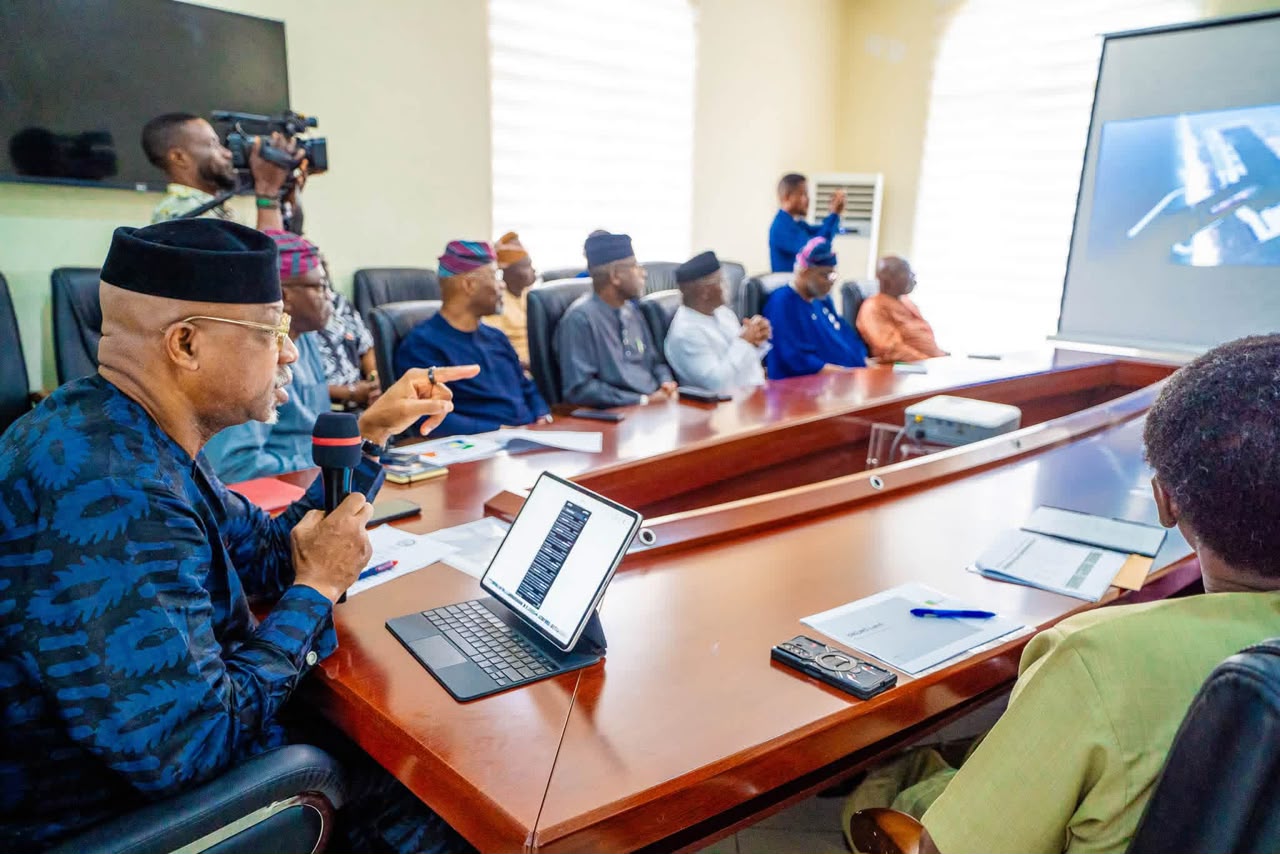
Receiving officials of NNPC in Abeokuta on Wednesday, Governor Dapo Abiodun said the renewed interest in the LNG project would further strengthen Ogun’s emergence as a major industrial and energy hub.
“Last Wednesday, we signed an MoU on the Deep Sea Port, and today we have the NNPC team here discussing the activation of the LNG plant,” Abiodun said.
The Governor said the proposed LNG facility, which had been on the drawing board for more than three decades, could provide a major energy base for industries within the emerging coastal economic corridor and contribute to meeting the energy needs of the wider South-West.
He described the revival of the project as particularly significant coming immediately after the agreement with DP World, noting that the port, marine economy, industrial zone and LNG project could collectively create an integrated ecosystem for energy, manufacturing, maritime trade and logistics.
“They have come to discuss with us the LNG plant that was originally designed and called OKLNG, which was meant to be situated on our coastline. Now, they have brought the project back to life,” the Governor said.
According to Abiodun, discussions with NNPC focused on land acquisition, incentives and other requirements necessary to facilitate the take-off of the project, with the state government committing to provide the necessary cooperation and guarantees.
“They will pay for land in the Economic Zone, and we will be giving them all the cooperation that this project deserves. We will give them all the assistance and guarantees,” he said.
The Governor said the project could generate substantial employment and multiplier effects, citing the NNPC facility in Bonny, Rivers State, where he said about 14,000 people are employed.
He added that the Ogun facility could supply gas to industries within the economic zone as well as businesses and communities across Ogun and the wider South-West.
The renewed push for OKLNG adds an important energy dimension to the coastal investment corridor being developed around Ogun Waterside. The Federal Government had, at the Paris signing ceremony, identified the OK LNG project as part of the broader strategic corridor linking maritime infrastructure, industry, energy and trade.
Under the emerging development framework, the Gateway Deep Sea Port would provide maritime access for the movement of raw materials, equipment and finished products; the Blue Marine Special Economic Zone would provide the industrial and logistics platform; while the LNG project could strengthen the energy supply required to support gas-based industries and other businesses.
President Tinubu had described the integration of the port with the economic zone as an industrial ecosystem, while noting that the emerging corridor would connect with the OK LNG project and other strategic infrastructure.
Abiodun said DP World’s global experience in developing ports and integrated economic zones would be important to the realisation of the coastal development, noting that the company operates major port and economic-zone facilities around the world.
He explained that the deep sea port was being developed under a Public-Private Partnership framework, with private investors providing the funding while the Federal Government serves as guarantor.
On the LNG project, NNPC Group Chief Financial Officer, Mr Adedapo Segun, said the company was undertaking a comprehensive review of the challenges that stalled the project in the past, with the objective of finding lasting solutions and resuscitating it.
“We are here to engage with the government of Ogun State on the project we are looking to site along the coastline of the state,” Segun said.
Also speaking, NNPC Executive Vice President, Gas, Power and New Energy, Mr Lekan Ogunleye, disclosed that the company would require approximately 1,728 hectares for the LNG plants, utilities, storage facilities and associated infrastructure.
He said the project would also require about 2.5 kilometres of dedicated Atlantic frontage to support marine traffic and safety requirements for up to three LNG jetties.
Ogunleye congratulated the people of Ogun State on the proposed project, saying its successful implementation would have a significant impact on the economic fortunes of the state.
For Ogun, the simultaneous movement on the OKLNG project and the DP World-backed port and Blue Marine Special Economic Zone represents the development of complementary infrastructure around the same coastal corridor—linking energy supply with maritime access, industrial production, logistics and export markets.
The development also adds to the wider infrastructure network planned for the area, including the Ogun section of the Lagos-Calabar Coastal Highway, which the Presidency said would provide a critical connection between the port, economic zone, Lagos, the Nigerian hinterland and wider African markets.
The emerging Ogun Waterside corridor therefore moves beyond the development of an individual port or LNG facility, with the projects collectively aimed at creating an integrated platform for energy, maritime commerce, manufacturing, logistics and international trade.
Osun State University (UNIOSUN) has made its debut in the Times Higher Education World University Rankings 2027, emerging as Nigeria’s highest-ranked state-owned university and securing a joint eighth position nationally.
According to a statement by the University’s Public Relations Officer, Ademola Adesoji, released on Wednesday, the 2027 ranking, published on September 30, placed UNIOSUN in the 1,201–1,400 global band, alongside Babcock University and the University of Nigeria, Nsukka.
The latest ranking assessed 2,297 universities across 118 countries and territories. Nigeria had 29 universities ranked, making it the most represented country in sub-Saharan Africa.
UNIOSUN recorded notable performances across several of the ranking indicators. The university scored 25.6 in Research Environment, the second-highest score among the 29 ranked Nigerian universities, behind Covenant University’s 32.5.
It also scored 23.6 in Teaching, placing fifth nationally. Its other scores were 43.8 in Research Quality, 17.6 in Industry and 40.3 in International Outlook.
The report described UNIOSUN as a new entrant and highlighted its performance in Research Environment and Teaching as notable strengths, while identifying Research Quality as an area with room for further improvement.
The Times Higher Education ranking is based on five broad pillars: Teaching, Research Environment, Research Quality, International Outlook and Industry. The 2027 methodology comprises 18 performance indicators covering areas including teaching reputation, research productivity and quality, citations, international collaboration, industry income and patents.
The report also described UNIOSUN’s debut in the 1,201–1,400 band as noteworthy, noting that the university ranked ahead of 19 older and larger Nigerian universities.
Only seven state-owned universities were among the 29 Nigerian universities ranked in the 2027 edition, compared with 19 federal and three private universities. UNIOSUN consequently emerged as the highest-ranked state university in the country.
The university’s strong performance in Research Environment is particularly significant, given that the pillar had a national mean score of 13.9. UNIOSUN’s score of 25.6 was substantially above that average.
Similarly, its Teaching score of 23.6 was above the national mean of 20.6, placing the university among the five highest-scoring institutions nationally in the category.
The latest ranking comes amid the university’s sustained emphasis on research, innovation, postgraduate development, international collaboration and quality assurance as key components of its institutional development agenda.
Reacting to the development, the Vice-Chancellor of the university, Prof. Odunayo Clement Adebooye, commended the Osun State Government and other stakeholders for their support and commitment to the institution’s growth.
Adebooye said the university would continue to build on the achievement and pursue initiatives aimed at strengthening its academic and research profile and positioning it for greater global recognition.
The 2027 THE ranking represents a significant milestone in UNIOSUN’s development and provides an external benchmark of its performance in teaching, research, international outlook and industry engagement.
With its debut in the 1,201–1,400 global band, joint eighth position nationally and emergence as Nigeria’s highest-ranked state university, UNIOSUN has further strengthened its position within Nigeria’s competitive higher education landscape.
A 20-year-old driver, Olumide Olusola, has allegedly killed a police Sergeant, Johnson Okediji, during a stop-and-search duty along Olugbede Street, Egbeda, Lagos.
The Lagos State Commissioner of Police, CP Tijani Fatai, disclosed that the sad incident occurred on Saturday, 26th September 2026.
While briefing journalists about the activities of the Command in the month of September, CP Fatai said police officers had signalled a Lexus ES 350,with number plate FKJ 223 KX, driven by Olumide Olusolato stop.
He explained that the driver initially stopped but suddenly sped off as Sergeant Okediji approached the driver’s side.
The police boss added that the suspect knocked down Sergeant Okediji and dragged him underneath the vehicle for several metres despite repeated attempts by police officers and passers-by to stop him.
He said the driver was eventually chased and arrested. However in the process,the officer sustained multiple fractures and serious injuries to the head.
CP Fatai said he was taken to a nearby hospital and subsequently referred to LASUTH, where he was unfortunately pronounced de@d on arrival.
“His remains have been deposited at Mainland Hospital Mortuary for preservation and autopsy, while the vehicle has been recovered to the station.”
In a brief interview with journalists during his parade, the driver said the brake of the vehicle failed and all attempts to stop it also failed.
“I did not k!ll the policeman intentionally, it was due the vehicle’s brake failure,” he said
President Tinubu also stressed that Nigeria’s national security does not depend on nuclear weapons, noting that the country is not among the states possessing the 12,187 nuclear warheads held globally.
President Bola Tinubu has urged the United Nations Security Council to provide leadership in enforcing the principles of the UN Charter by imposing sanctions against the proliferation of weapons of mass destruction and advancing the total elimination of nuclear weapons.
President Tinubu also stressed that Nigeria’s national security does not depend on nuclear weapons, noting that the country is not among the states possessing the 12,187 nuclear warheads held globally.
The President’s position was conveyed by Nigeria’s Permanent Representative to the United Nations, Ambassador Jimoh Ibrahim, at a high-level plenary meeting of the UN General Assembly at the UN Headquarters in New York to commemorate the International Day for the Total Elimination of Nuclear Weapons.
Ibrahim said the total elimination of nuclear weapons remains the United Nations’ highest disarmament priority. He said Nigeria does not support the production or proliferation of nuclear weapons, describing those who engage in or support the development of weapons of mass destruction as enemies of democracy.
The Nigerian envoy stressed the need for countries to respect Article 6 of the UN Charter on disarmament, as well as Article 2(4), which prohibits the threat or use of force against the territorial integrity or political independence of any state.
He said strict adherence to the provisions of the Charter would strengthen international peace and reduce the need for the production and proliferation of weapons of mass destruction.
Ibrahim also conveyed President Tinubu’s commendation to African leaders for their efforts to ensure that the continent remains free from nuclear weapons testing and the production of weapons of mass destruction.
He expressed concern over the devastating human cost of nuclear attacks, recalling the massive loss of lives from the two atomic bombings during the Second World War.
The ambassador said the international community could no longer afford actions that fuel geopolitical tensions, stressing the need for greater commitment to peace and stability.
The UN meeting provided an opportunity to raise global awareness about the threat posed by nuclear weapons and mobilise international efforts towards achieving a nuclear-weapon-free world.
•We don’t have to become identical to become one nation — Hashim
•President recalls three decades relationship, longstanding support
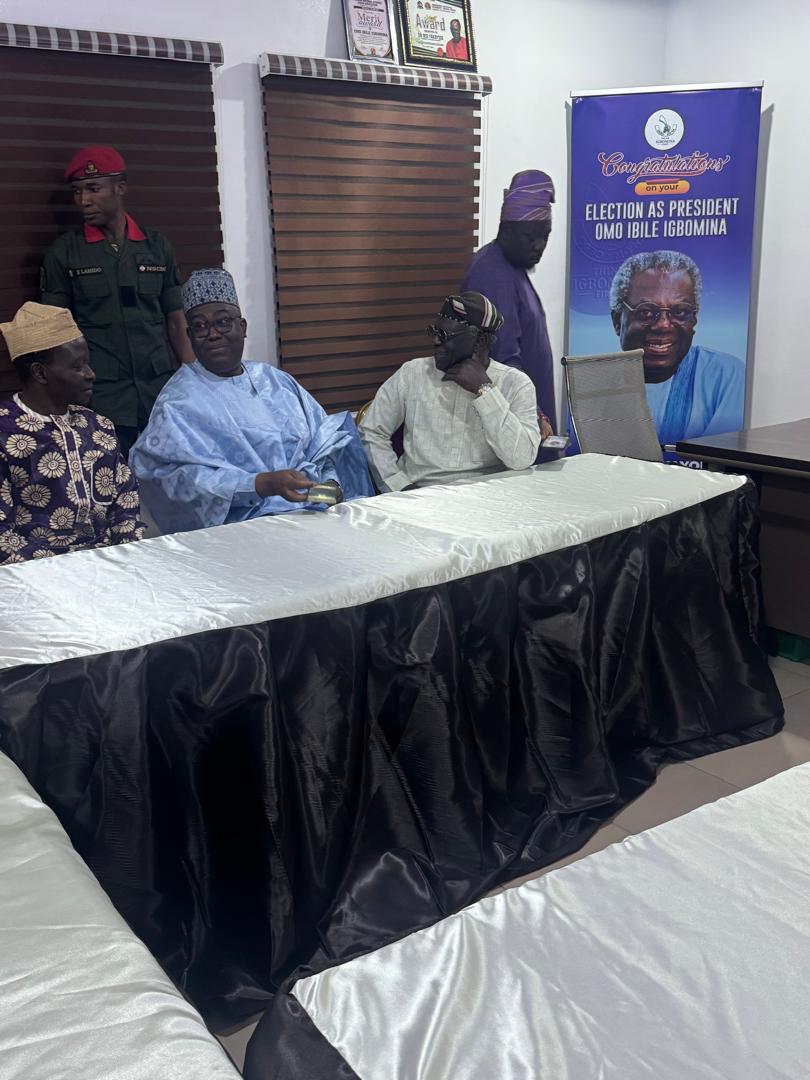
The National President of Omo Ibile Igbomina, Sir Bisi Fakayode, has received Accord Party presidential candidate, Dr. Gbenga Olawepo-Hashim, on a courtesy visit to the Omo Ibile Igbomina House in Ganmo, Kwara State, where both personalities reflected on their longstanding relationship, the development of the Igbomina institution and the wider question of national unity.
The visit also provided an opportunity for Hashim to draw from his personal connection with Igbomina and reflect on what he described as the region’s longstanding tradition of cultural accommodation and peaceful coexistence, which he said offers lessons for Nigeria’s nation-building project.
During the visit, Fakayode conducted Hashim around the Igbomina House, showcasing renovation, rehabilitation and other improvement projects undertaken under his leadership. He also took him on an inspection of the adjoining hospitality facility and other areas where development works are ongoing.
Fakayode expressed appreciation for Hashim’s longstanding support and encouragement, recalling that he was among the first three prominent supporters of the present Omo Ibile Igbomina leadership from its formative stage.
The group’s national president described Hashim as a friend, supporter and valued stakeholder of Igbomina, noting that although his ancestral origin is outside present-day Kwara State, his upbringing and longstanding relationship with Igbomina have created a strong bond between him and the people.
“What we are witnessing today did not start today. You supported and encouraged this journey from the beginning. From my days as a local government chairman to where God has brought me today as the national president of Omo Ibile Igbomina, your support and encouragement have been part of this journey,” Fakayode said.
Responding, Hashim commended Fakayode for the transformation taking place at Igbomina House and expressed appreciation for the opportunity to see the projects firsthand.
He acknowledged the progress recorded under Fakayode’s leadership and encouraged the Omo Ibile Igbomina leadership to remain committed to strengthening the institution and advancing the collective interests of the Igbomina people.
Hashim also reflected on Fakayode’s journey from public service and local government leadership to his present position as national president of Omo Ibile Igbomina, acknowledging the longstanding relationships, encouragement and support that accompanied the journey.
Beyond the immediate purpose of the visit, however, Hashim said his connection with Igbomina was deeply personal.
He explained that although his ancestral roots lie in Yauri, he has long regarded Igbominaland as home, having been raised within an Igbomina family that lived in New Bussa, Niger State.
According to him, that upbringing shaped his understanding of community, identity and belonging and exposed him to what he described as Igbomina’s remarkable tradition of accommodation and peaceful coexistence.
Hashim noted that Igbomina communities have historically existed alongside settlements and communities of people from different ethnic backgrounds, including Fulani, Hausa, Tiv, Zuru, Birom and Igala communities, among others.
He said these communities were not merely tolerated as outsiders but became part of the wider social, economic and political life of the communities around them while retaining their distinct identities.
For Hashim, that experience demonstrates that cultural diversity does not necessarily have to produce social fragmentation.
He described the social environment in which he was raised as an example of the “workability, resilience and strength of cultural pluralism,” arguing that people of different ethnic and cultural backgrounds can live, trade, farm, build relationships and participate in shared social and political spaces without abandoning their identities.
“We don’t have to become identical to become one nation. We can be different and yet belong together,” Hashim said.
Hashim argued that Nigeria’s diversity can become a source of strength when supported by mutual respect, appropriate institutions and a shared sense of belonging.
The Accord presidential candidate further said his visit to Omo Ibile Igbomina House was more than a social engagement.
He described it as “a reminiscence of where I came from, a celebration of what I have experienced, and an inspiration for what Nigeria can still become.”
Hashim concluded that Nigeria’s diversity need not be a weakness, arguing that “properly organised, mutually respected and institutionally protected,” it can become one of the country’s greatest sources of strength.
Staff unions in three Ondo State-owned universities have suspended their month-long industrial action following intervention by Governor Lucky Aiyedatiwa.
The unions, comprising SSANU, NASU and the National Association of Academic Technologists, directed members at Adekunle Ajasin University, Olusegun Agagu University of Science and Technology and the University of Medical Sciences to resume duties on Tuesday, September 29.
The strike, which began on September 2, was triggered by issues including unpaid allowances, implementation of agreed wage structures and staff welfare concerns.
The unions, however, urged the institutions to address outstanding non-financial aspects of the Federal Government-unions agreement.
The Oyo State House of Assembly on Tuesday, September 29, 2026, passed the Constitution of the Federal Republic of Nigeria (Sixth Alteration) Bill, 2026, seeking to provide a constitutional framework for the establishment and operation of State Police Services across the country.
The Bill was passed at plenary after clause-by-clause consideration by the lawmakers, with the sitting presided over by the Speaker, Rt. Hon. Adebo Edward Ogundoyin.
The consideration followed the reading of a letter from the Clerk to the National Assembly, Kamoru Ogunlana, Esq., transmitting the Bill to the Oyo Assembly for consideration and approval.
The National Assembly stated that the Bill was passed by the Senate on June 24, 2026, and the House of Representatives on July 23, 2026, and urged state legislatures to give it expeditious consideration to facilitate the conclusion of the constitutional alteration process under Section 9 of the 1999 Constitution.
Rt. Hon. Adebo Ogundoyin said the passage of the Bill would have significant legislative implications for the Oyo Assembly, particularly the need to develop a comprehensive State Police Law capable of translating the constitutional framework into an effective operational institution.
Explaining the Bill to members, the Speaker said the proposed amendment would fundamentally restructure Nigeria’s policing architecture by providing for a Federal Police Service alongside State Police Services.
He said the Bill would empower each state to establish its own Police Service through legislation by the State House of Assembly, while defining the respective responsibilities of federal and state police authorities.
According to him, State Police would be responsible for the enforcement of state laws, public safety and order, prevention and detection of offences, protection of life and property, and other local policing functions prescribed by state law.
Rt. Hon. Ogundoyin explained that the proposed framework would also establish State Police Service Commissions with responsibilities covering the appointment, promotion, transfer, discipline, oversight, complaints and accountability of state police personnel.
He noted that the Bill provides for a State Commander of Police to head each State Police Service, with the Commander to be appointed by the Governor on the recommendation of the National Police Council and subject to confirmation by the State House of Assembly.
The Speaker also highlighted provisions empowering the National Assembly to prescribe minimum policing standards for both federal and state police services, while allowing states to prescribe higher or additional standards.
•Says local refineries’ll buy crude at local price
•Plans one million barrels/day refining capacity through direct, JV investment
•Insists petrol can sell at N605/litre
Accord Party Presidential candidate, Dr Gbenga Hashim, has declared that under an Accord Party administration, Nigerian refineries will have access to Nigerian crude at a strategic domestic price, giving them the cost advantage to compete aggressively in the sub-regional markets and transform Nigeria into a global energy power.
Hashim has also promised to deliver cheaper petrol to Nigerians.
The Accord Party presidential candidate made the declaration at the weekend, in Ilorin, Kwara State, during the Diaspora Dialogue, when he spoke on Fuel Subsidy and the Politics of 2027; anchored by Prof. Farooq Kperogi, Prof. Moses Ochonu and Dr. Osmund Agbo.
Hashim spoke against the backdrop of rising petrol prices and growing pressure on global energy markets.
He said Nigeria’s greatest economic mistake has been to treat crude oil primarily as an export commodity instead of using it as the foundation of National Industrial Power.
“Nigeria has spent decades giving the world our crude and buying back the value created from it. Our Energy First policy will reverse that equation.
“Our crude is our strategic advantage. We will put that advantage behind Nigerian industry. Refining and petrochemical industries are a core part of our immediate industrialisation strategy as we aim to be the world most reliable energy source.”
Hashim also added that Dangote Refinery and other qualifying Nigerian refineries would be able to access Nigerian crude under a strategic domestic pricing framework rather than being treated simply as foreign buyers competing for an internationally-traded commodity.
“If the crude is Nigerian and the refinery is Nigerian, the Nigerian economy must capture the advantage.
“Our refineries will buy Nigerian crude at a strategic local price, not international crude economics so they can produce competitively, expand aggressively and conquer international markets starting first with the African region.”
Hashim stressed that the policy would not be designed to favour any single company.
“This is not a Dangote subsidy. It is a Nigerian industrial strategy. “Dangote will benefit because it has invested at extraordinary scale. Other existing refineries will benefit. New refineries will benefit. Any Nigerian refinery that meets the required efficiency, transparency and performance standards will have access to the same framework.
“We are not creating one protected champion. We are going to create an army of Nigerian energy champions.”
Hashim said an Accord Party government would also use direct government investment and strategic joint ventures to expand Nigeria’s domestic refining capacity by an additional one million barrels per day within three years.
He said the objective is not simply to produce more petrol, but to establish Nigeria as Africa’s leading refining and petrochemical hub.
“We want to be Africa’s refining and petrochemical hub, not just a huge crude exporter.
“We will use government investment strategically and deploy joint ventures where necessary to expand refining capacity, deepen petrochemical production and ensure that Nigerian crude creates value in Nigeria before it is exported,” he said.
According to Hashim, Nigeria must move beyond the ambition of becoming merely self sufficient in refined petroleum products to becoming a country whose energy companies compete and win globally.
“We don’t want Dangote merely to dominate the Nigerian refining market. We want Dangote to compete with the world’s biggest energy companies. It started doing this by being the largest supplier of aviation fuel to Europe in the last few months.
“We want Nigerian refineries supplying Africa. We want Nigerian petrochemicals companies competing globally. We want Nigerian energy traders operating internationally”
“We want Nigerian companies to shape the global energy market.”
Hashim said the local crude strategy must be matched by a dramatic increase in Nigeria’s crude production.
He has proposed recovering approximately 3,000 shut-in and non-producing wells and raising National crude production towards 4 million barrels per day within 24 months of an Accord Party administration.
“It makes no economic sense for a country, with thousands of oil wells sitting idle to behave as though crude is scarce.
“We will recover commercially viable shut-in wells, restore production infrastructure, improve evacuation and security, and bring Nigeria’s lost barrels back into the economy.”
But Hashim said the additional barrels must not simply become additional exports.
“The real question is not whether Nigeria can produce four million barrels. The real question is; what will Nigeria do with four million barrels? Under our Energy First policy, we will use those barrels to power Nigerian industry.”
Hashim also doubled down on his proposed ₦605 per litre petrol price within the broader Energy First philosophy, adding that Nigeria should reduce energy costs by reducing the underlying cost of production and expanding productive capacity rather than permanently subsidising consumption.
“₦605 is not our destination. It is a starting point in a transition from subsidising consumption to building productive capacity.
“We want to make energy cheaper because Nigeria produces more, refines more and captures more value, not because government endlessly pays the difference.”
He said the long term objective is to bring petrol prices down towards ₦200–₦300 per litre as crude production rises, domestic refining expands, efficiency improves and logistics costs fall.
“The cheaper energy we are promising Nigerians will not be based on accounting magic.
“It will come from producing more, refining more, wasting less and capturing more value within Nigeria.”
Hashim said refining should only be the beginning of Nigeria’s energy transformation.
“We must stop thinking of petroleum as petrol. “The crude beneath our soil can become petrol, diesel, aviation fuel, lubricants, plastics, fertiliser feedstock, petrochemicals and thousands of industrial products.
“That is where the real economic transformation lies.”
He said an Energy First government would, therefore, build an integrated energy industrial ecosystem around Nigerian crude and gas, supported by pipelines, ports, storage, electricity, transportation, security and predictable regulation.
“Government will build the ecosystem. Nigerian entrepreneurs will build the companies. Nigerian companies will conquer the markets.”
“Our job is to make Nigerian energy companies less dependent on Nigeria’s limitations.”
Hashim said the emergence of the Dangote Refinery has demonstrated that Nigerian capital can operate at global scale.
“Dangote has shown the world what Nigerian capital can build. Now Nigeria needs a government with the ambition to match that investment.
“Our job is not to make Dangote dependent on government. Our job is to make Dangote less dependent on Nigeria’s limitations.
“We want to give Nigerian energy companies the crude advantage, infrastructure, policy certainty and strategic support required to compete anywhere in the world.”
Hashim said the ultimate objective of Energy First is to change Nigeria’s position in the global energy economy.
“For decades, the world bought Nigerian crude and created wealth from it elsewhere.
“Energy First will ensure that Nigerian crude creates Nigerian industries, Nigerian companies, Nigerian jobs and Nigerian global champions.
“Local crude. Local refining. Global products. Global markets. Nigerian companies. Global energy power.”