CCTV Now Mandatory, Ondo CP Warns Churches, Mosques

The police boss conducted what the command described as a comprehensive security assessment of religious facilities across the state on March 1, 2026, as part of efforts to bolster security and enhance intelligence gathering.

The statement was signed by the Police Public Relations Officer, DSP Abayomi Jimoh, on behalf of the command.

Centres visited by the CP included NASFAT Central Mosque, Akure; St. Stephen Anglican Church, Ipele; St. Patrick’s Catholic Church, Ijebu-Owo; Holy Trinity Catholic Church, Owo; Ansarudeen Central Mosque, Owo; Celestial Church of Christ, Uso; NASFAT Mosque, Owo; and Anglican Methodist Church, Owo, among others.

The exercise, according to the command, was aimed at assessing the security status of worship centres and ensuring compliance with the state government’s directive mandating the installation of CCTV cameras in religious and other public spaces.

During the visits, Lawal charged religious leaders to remain vigilant and put in place adequate security measures, including proper screening of congregants at entry points and the installation of functional CCTV cameras to aid monitoring and intelligence gathering within their premises.

He also urged residents of the state to promptly provide actionable and credible information to the police, stressing that the protection of lives and property remains a collective responsibility.

The CP further directed officers deployed to worship centres to remain steadfast, proactive and professional in the discharge of their lawful duties at all times.

The Ondo State Police Command reaffirmed its commitment to ensuring the safety and security of residents and worshippers across the state.

Members of the public were advised to contact the command through 0906 058 8958, X (@OndoPoliceNg), Instagram (Ondopolicecommand), Facebook (Ondo State Police Command) or via email at Ondopolice@gmail.com for inquiries.

Ogun Awards ₦6.1bn Contract for Court of Appeal Complex in Abeokuta

The Ogun State Government has approved the award of a contract for the construction of a complex to house the Abeokuta Division of the Court of Appeal.

The approval was granted at the State Executive Council meeting held today. The contract, valued at ₦6,118,098,154.70, provides for the development of the court complex on a 2.6-hectare parcel of land adjoining the existing State Judiciary Complex in Olipakala Village via Kobape area of Abeokuta, within the Judiciary Cluster along the Abeokuta–Sagamu Expressway.

This milestone represents a significant step in the State Government’s sustained efforts to deepen access to justice and bring appellate adjudication closer to the people of Ogun State. A review by the Ministry of Justice showed that a clear majority of appeals currently heard by the Ibadan Division of the Court of Appeal emanate from Ogun State. The absence of a division within the state has, over the years, increased the financial burden on litigants and legal practitioners and, in some instances, contributed to delays in the resolution of appeals.

The State Government has consistently demonstrated readiness for the take-off of the Abeokuta Division. In preparation, six duplexes were constructed on 4,359 square metres of land in Ibara Housing GRA to serve as official residences for justices of the division. In addition, twenty bungalows at the Prince Court Estate, Kobape, have been set aside for support staff.

In 2025, the State received approval from the President of the Court of Appeal for the Abeokuta Division to commence operations. This followed the special sitting of the court in Abeokuta in May 2024, during which about ten panels sat in the state and disposed of over 150 appeals within three days.

The groundbreaking ceremony for the new Court of Appeal complex will take place in the coming days, while construction is expected to be completed within twelve months.

The Ogun State Ministry of Justice remains committed to justice sector reforms that democratise access to justice, strengthen institutions, and ensure efficient delivery of judicial services in the State.

New Timetable: INEC Chairman Must Resign or face mass action- Gbenga Hashim

Amupitan can’t deliver credible poll in 2027

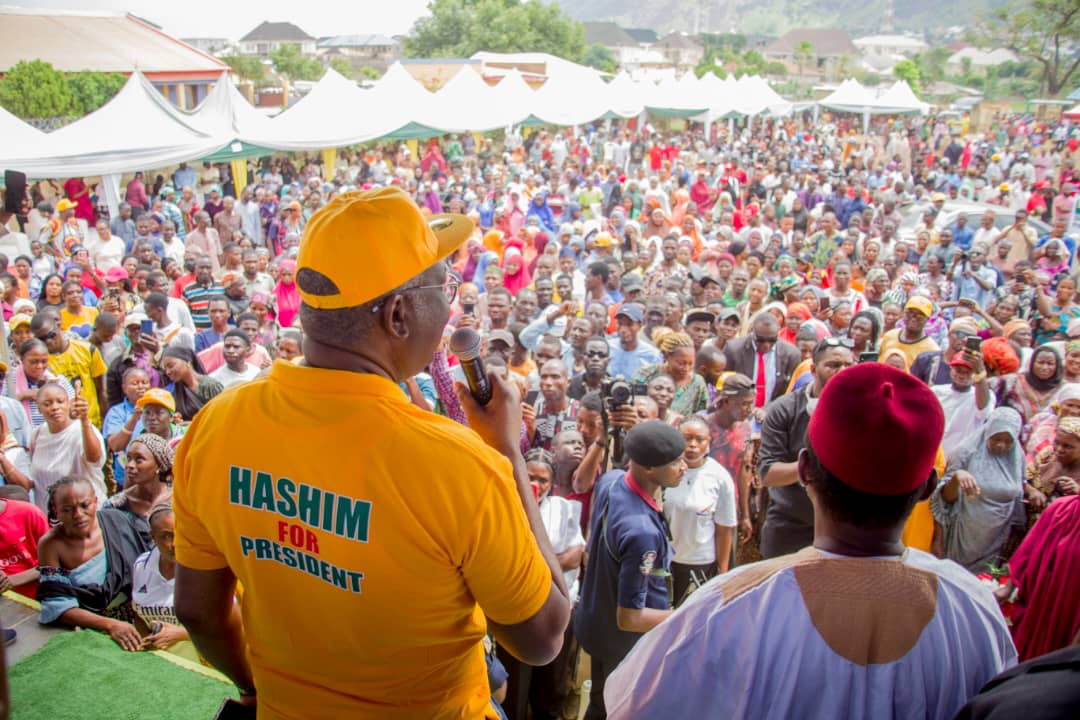
A former presidential candidate, Gbenga Olawepo-Hashim, has called on the Chairman of the Independent National Electoral Commission (INEC), Joash Amupitan, to resign over the recently announced timetable for the 2027 general elections.

Addressing journalists at a press conference in Abuja, Hashim rejected the adjusted schedule for party primaries released by INEC on Thursday, February 26, 2026, describing it as an overreach and alleging that it was structured to favour the ruling All Progressives Congress (APC).

According to him, INEC does not have the authority to dictate when political parties should conduct their primaries.

“It’s not the business of INEC to dictate to parties when they should conduct nominations of candidates for elections,” Hashim said.

“This shows that Amupitan cannot be trusted. It’s either he resigns or Nigerians will embark on mass action to force him out. He should not be allowed to stay a day longer in that office.”

He alleged that moving the primaries to an earlier date was a deliberate attempt to weaken opposition parties currently dealing with internal disputes.

“He’s deliberately working to favour the APC, having destabilised other political parties who are trying to sort out themselves in court. That is disingenuous and wrong,” he said.

Hashim further argued that for the 2027 elections to be free and fair, the electoral commission must be reconstituted, insisting that public confidence in the commission’s leadership is critical.

“For us to have an acceptable, free and fair election in 2027, INEC has to be reconstituted. Rushing out an ill thought out timetable after what we consider a poor performance in the Abuja Area Council election shows that the chairman cannot be entrusted with the 2027 general election.”

He warned against conducting elections whose outcomes, in his view, could become predictable, describing such a scenario as unjust to taxpayers.

The former presidential aspirant maintained that primaries are internal affairs of political parties, provided they comply with the Electoral Act’s nomination deadlines.

“INEC is not a headmaster that can impose what it wants on political parties. As long as parties comply with the Electoral Act regarding submission timelines, they have the right to determine when to hold their primaries,” he stated.

Hashim also referenced historical precedents in Nigeria’s political history, warning against any action that could undermine democratic continuity after 27 years of uninterrupted civil rule.

Wike Faction Dismisses Oyo Court Judgment on PDP Convention

The faction of the (PDP) aligned with the Minister of the Federal Capital Territory, , has dismissed the recent judgment delivered by the concerning the party’s convention, describing it as inconsequential and lacking binding effect.

In a statement issued on Thursday, representatives of the Wike-backed group argued that the court ruling does not invalidate the processes leading to the party’s convention nor does it affect decisions already taken by the party’s recognized leadership structures.

The faction maintained that internal party matters, including the conduct of conventions and congresses, remain within the jurisdiction of the party’s constitution and established organs. According to the group, any attempt to rely on the judgment to disrupt preparations or outcomes of the convention would amount to a misinterpretation of both the law and the PDP’s internal guidelines.

“The judgment in question does not in any way nullify the convention or the authority of the party’s legitimate organs,” the statement read. “It is merely being sensationalized by those seeking political advantage.”

The controversy stems from a suit filed by aggrieved party members challenging aspects of the convention process. The Oyo State High Court had reportedly issued orders affecting certain arrangements linked to the exercise, a development that deepened existing divisions within the PDP.

However, the Wike-aligned camp insisted that the ruling neither restrains the national leadership nor overrides decisions of higher courts on party administration. They further emphasized that the party remains committed to upholding due process and democratic principles.

Party stakeholders from the opposing bloc have yet to formally respond to the latest remarks, though insiders say consultations are ongoing on the next line of action.

The internal dispute underscores lingering tensions within the PDP, as competing interests continue to jostle for control of party structures ahead of future electoral contests.

Observers say the unfolding legal and political drama could shape the party’s cohesion and strategic positioning in the coming months.

Confusion As Ibadan Court Upholds Makinde, Turaki-Led PDP Convention Ahead Of Appeal Ruling

Ibadan, Oyo State — February 27, 2026

An Oyo State High Court sitting in Ibadan has delivered a landmark ruling affirming the legality of the Peoples Democratic Party’s (PDP) National Convention held in the city on November 15 and 16, 2025, a development set to reshape the internal power struggle within Nigeria’s main opposition party.

Justice Ladiran Akintola of Court 5 ruled on Friday that the convention was conducted in full compliance with all relevant statutory, constitutional, and party guidelines, dismissing legal challenges that sought to derail the process.

In the ruling, the judge granted all 13 reliefs sought by the claimant, Folahan Malomo Adelabi, who had approached the court through his counsel, Musbau Adetunmbi (SAN), challenging the legitimacy of the exercise.

The court held that the convention, which produced Dr. Kabiru Turaki as the substantive National Chairman of the PDP and ushered in a new National Working Committee (NWC), satisfied all legal and constitutional requirements under the 1999 Constitution and the Electoral Act.

Justice Akintola also dismissed motions attempting to stay proceedings or join additional parties to the case, describing them as lacking merit, and reaffirmed that no breach of due process or internal party rules occurred during the convention.

Stakeholders in the party have welcomed the judgment as a significant affirmation of internal democracy and judicial independence, noting that it brings clarity to a dispute that has divided the PDP for months.

With the court decision now delivered, the leadership elected at the Ibadan convention is expected to proceed with party affairs and preparations ahead of future elections, though opposition factions have signalled plans to appeal.

Gbenga Hashim Calls APC’s FCT Wins a ‘Political Illusion,’ Stakeholders Back His Presidential Bid

A Peoples Democratic Party (PDP) presidential aspirant, Dr. Gbenga Hashim, has dismissed claims of electoral victories by the All Progressives Congress (APC) in the Federal Capital Territory (FCT), describing the outcome of last week’s Area Council elections as a “political illusion.”

Speaking at a PDP stakeholders’ meeting in Abuja, Hashim argued that many of the candidates who emerged victorious on the APC platform were long-standing PDP members who allegedly switched parties under pressure, creating what he termed a false impression of APC strength in the territory.

“In reality, the contest was PDP versus PDP,” Hashim said. “What we witnessed was the deployment of massive resources and state institutions to manufacture the appearance of competition.”

He maintained that the FCT remains a traditional stronghold of the PDP and cautioned party members against what he described as engineered political narratives aimed at distorting the electoral reality in the territory.

Hashim urged supporters to remain united and committed to grassroots mobilisation, stressing that authentic political strength derives from popular support rather than what he called manipulated outcomes.

The meeting drew party chairmen from the six Area Councils, ward chairmen, and members of the State Executive Committee, among other stakeholders.

In a show of solidarity, the FCT PDP Chairman, Alhaji Ismail Mohammed Dogara, moved a motion reaffirming the chapter’s support for Hashim’s 2027 presidential aspiration. The motion was seconded by a member of the PDP Board of Trustees, Honourable Isa Dobi, and received broad endorsement from attendees.

Stakeholders at the meeting also commended Hashim for his support to party candidates before and during the Area Council elections. They called for the immediate release of party members allegedly detained by security agencies, claiming the arrests were intended to influence the electoral outcome.

Political observers say the developments underscore intensifying rivalry between the PDP and APC in the FCT ahead of the 2027 general elections, with both parties positioning to consolidate their influence in the nation’s capital.

“Withdraw All Charges”- Sowore Tells New IGP Tunji Disu to Reverse Egbetokun’s Actions

Omoyele Sowore has urged new IGP Tunji Disu to withdraw charges and reverse alleged illegalities carried out by former IGP Kayode Egbetokun.
He also called for an end to VIP protection by the police.

Human rights activist and politician Omoyele Sowore has outlined what he believes should be the first task of the new Inspector General of Police, Tunji Disu.

In a statement, Sowore said the new police chief’s immediate responsibility should be to withdraw all charges and reverse what he described as illegal actions carried out by former IGP Kayode Egbetokun.

He also called on Disu to put an end to VIP protection, arguing that the police force should prioritize the safety of ordinary citizens rather than focusing on protecting political elites and influential individuals.

Sowore’s remarks have sparked conversations online, with some Nigerians supporting his call for reforms, while others say the new IGP should be given time to settle into office.

“The first duty for the new IG of Police, Tunji Disu, is to withdraw all the charges and reverse all the illegalities carried out by Kayode Egbetokun, and to stop VIP protection.

Olatunji Disu Assumes Duty as 23rd Indigenous Inspector-General of Police

The Acting Inspector-General of Police, , has assumed office as the 23rd indigenous Inspector-General of the .

Disu took over from (Rtd), PhD, NPM, who served as the 22nd Indigenous Inspector-General of Police from June 19, 2023 to February 24, 2026.

Born on April 13, 1966, Disu hails from Lagos Island Local Government Area of Lagos State. He brings to the office over three decades of policing experience, spanning operations, intelligence, investigations, administration, and training.

He joined the Nigeria Police Force as a Cadet Assistant Superintendent of Police on May 18, 1992. Prior to his appointment, he served as Assistant Inspector-General of Police (AIG) in charge of the Force Criminal Investigation Department (FCID) Annex, Alagbon, Lagos.

Academic and Professional Background

The new Acting IGP holds multiple academic qualifications, including an MSc in Entrepreneurship from the (2023); an MSc in Criminology, Security and Legal Psychology from (2022); an Advanced Diploma in Forensic Investigation and Criminal Intelligence from (2019); an MSc in Public Administration from (2010); a Postgraduate Diploma in International Relations and Strategic Studies from Lagos State University (2000); and a B.A. in English (Education) from the same institution (1990).

Career Highlights

Throughout his career, Disu held several strategic positions, including:

  • Assistant Inspector-General of Police, Special Protection Unit (SPU), Force Headquarters, Abuja
  • Commissioner of Police, Federal Capital Territory (FCT) Police Command
  • Commissioner of Police, Rivers State Police Command
  • Commissioner of Police, Administration and Intelligence, Force Intelligence Bureau (FIB)
  • Deputy Commissioner of Police and Head of the Intelligence Response Team (IRT)
  • Commander, Rapid Response Squad (RRS), Lagos (2015–2021)
  • Assistant Commissioner of Police, Criminal Investigation Department, Rivers State
  • Officer in Charge, Anti-Kidnapping, Rivers State
  • Officer in Charge, Special Anti-Robbery Squad (SARS), Ondo and Oyo States (2011–2014)
  • Divisional Police Officer in Ondo State
  • Directing Staff, Nigerian Police Academy, Kano
  • Aide-de-Camp (ADC) to a former Governor of Lagos State

He also served in international peacekeeping, leading the first-ever Nigerian Police contingent to the African Union Mission in Sudan (AMIS) in 2005 to address the crisis in Darfur.

Professional Affiliations and Achievements

Disu is a member of several professional bodies, including the International Academy of Forensics; the National Association of Investigative Specialists (USA); the Nigerian Institute of Public Relations (NIPR); the Chartered Institute of Personnel Management (CIPM); and the International Association of Chiefs of Police.

Beyond policing, he has distinguished himself in sports. He was once National Chairman of the Nigeria Police Judo Association and holds a third-degree black belt in Judo. He won multiple medals, including a silver medal at the 2022 US Open Judo Championships.

Commitment to Reform

In his assumption of duty, the Acting IGP reassured officers, stakeholders, and the general public of his commitment to consolidating ongoing reforms within the Force. He pledged to enhance internal security, strengthen community partnerships, and uphold global best practices in the protection of lives and property.

The Nigeria Police Force expressed appreciation to the immediate past IGP, Kayode Egbetokun, for his contributions to the modernization and strengthening of the Force.

The Force also called for continued public support and cooperation as the new leadership works to deepen professionalism, discipline, and improved service delivery nationwide.

The announcement was made in a statement issued by the Force Public Relations Officer, ACP Benjamin Hundeyin, on February 25, 2026, in Abuja.

Tension As Kekere Ekun-Led NJC Begins Discreet Probe Of Senior Judges

The National Judicial Council (NJC) has commenced what insiders described as a discreet but far-reaching investigation into some highly placed judges in the country, including heads of courts.

Sources within the council told newsmen that the ongoing inquiry, described as “extraordinary,” was triggered by a series of serious petitions against unnamed senior judicial officers.

The NJC, the constitutional body responsible for appointing, promoting and disciplining judicial officers, is chaired by the Chief Justice of Nigeria, Justice Kudirat Kekere-Ekun.

According to insiders, the probe followed what they termed a wave of “damning and disturbing petitions” alleging grave misconduct.

“The allegation against one of the senior judges is so grave that Chief Justice Kekere-Ekun has ordered an urgent probe to identify culpable individuals and cleanse the judiciary,” an official familiar with the development said.

The source added that the investigation is being handled with strict confidentiality and is known only to a handful of insiders.

“I can tell you that the NJC has, in recent times, received several petitions and complaints alleging serious and shocking misconduct, forgery, age falsification and false asset declarations.

“Deeply disturbed by the weight of the allegations, the CJN is mobilising the NJC for urgent administrative action. She does not want these claims to further erode public confidence in the judiciary,” the source said

The identities of the judges under investigation and the petitioners were not disclosed, as officials said they were not authorised to speak publicly on the matter.

When contacted, Tobi Soniyi, Senior Special Assistant to the CJN on Media, referred enquiries to the NJC, stating he had not been briefed on the issue.

Similarly, the NJC’s Deputy Director (Information), Kemi Babalola-Ogedengbe, said she was unaware of any such probe.

Justice Kekere-Ekun had, in September 2025, during the commencement of the 2025/2026 legal year, pledged reforms aimed at promoting judicial excellence, transparency and effective administration of justice.

Earlier, at her swearing-in as acting CJN in August 2024, she acknowledged declining public confidence in the judiciary and vowed to reverse the trend.

Since assuming office, the NJC has taken disciplinary action against several judges.

On November 15, 2024, the council announced the compulsory retirement of two judges, suspended two others for two years and issued a formal warning to another.

Seven investigative committees were also constituted to examine allegations of misconduct.

On June 26, 2025, the NJC compulsorily retired 10 judges, cautioned five others and barred a judge of the National Industrial Court from promotion for three years.

Makinde, Kwankwaso Hold Closed-Door Meeting, Spark 2027 Alignment Speculations

The Governor of Oyo State, Engr. Seyi Makinde on Tuesday held a closed-door meeting with the National Leader of the (NNPP), Musa Rabiu Kwankwanso fueling fresh speculations about possible political realignments ahead of the 2027 general elections.

The high-level meeting, which took place at the Governor’s Office in Ibadan, was conducted behind closed doors, with details of the discussions kept away from the public. However, credible sources hinted that the talks centered on national politics, inter-party collaboration, and strategic consultations ahead of the next electoral cycle.

Though neither camp officially disclosed the agenda of the meeting, political observers believe the engagement may not be unconnected to ongoing consultations among key political actors seeking to reshape alliances before 2027.

Governor Makinde, a prominent figure in the opposition circle and a leading voice within the Peoples Democratic Party (PDP), has in recent times emphasized the need for broader cooperation among like-minded leaders to strengthen democratic governance in Nigeria. Similarly, Kwankwaso, a former governor of Kano State and NNPP’s presidential candidate in the 2023 elections, has remained active in national political discourse.

Sources close to the meeting said the discussions were cordial and focused on national development, security concerns, and the economic situation of the country. The two leaders were also said to have explored areas of mutual interest that could foster unity and political stability.

The meeting has since generated mixed reactions within political circles, with some analysts interpreting it as a strategic move toward coalition-building, while others described it as routine consultations between influential political stakeholders.

As of the time of filing this report, no official communiqué had been released regarding the outcome of the meeting.

The development has nonetheless heightened political conversations across party lines, as stakeholders continue to watch unfolding alignments that may shape Nigeria’s political landscape in 2027.

You cannot copy content of this page