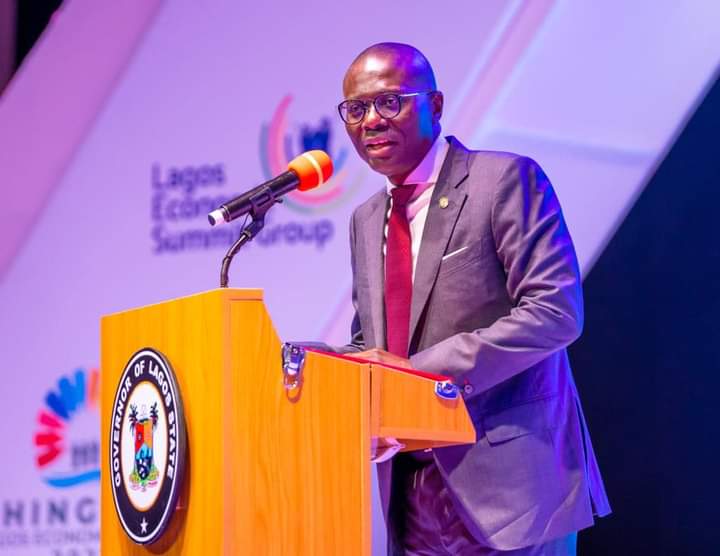
The Lagos State Governor, Babajide Sanwo-Olu, has approved 100 percent increment on bursary payable to the students of tertiary institutions across the country.
The new bursary increments and other benefits approved by the governor were aimed at supporting educational needs of students of Lagos State origin.
According to the government, the new adjustment was basically to let them cope with the present economic reality across the country.
As gathered, the new bursary approved by the state governor for the students would take effect from 2022/ 2023 academic session.
The Executive Secretary, Lagos State Scholarship Board, Abdur Rahaman Lekki, dropped the hints during a meeting with representatives of the National Association of Nigerian Students (NANS) Lagos State Chapter, and National Union of Lagos State Students (NULASS) at the Secretariat, Alausa, Ikeja.
The meeting which was held at the instance of the Special Adviser to Governor Sanwo- Olu on Education, Tokunbo Wahab, had in attendance, presidents and some Executive members of both the two students union bodies and representatives of the state government.
Lekki also disclosed that the Lagos State Government at the just concluded State Economic Summit known as ‘’Ehingbeti Summit’’ had also approved the resolutions on the establishment of Lagos Diaspora Scholarship Funds.
ODUDUWA NEWS has gathered that a Professor from Faculty of Education, Obafemi Awolowo University, Ile-Ife, Prof. Bamidele A. Faleye has been reportedly dead.
According to ODUDUWA NEWS, the news of his death was reported and confirmed yesterday by his colleague from Obafemi Awolowo University, Ile-Ife who spoke to our correspondent under the condition of annonymity.
It was learnt that the late academia died in his house at Ipapo area of Oke-Ogun after attending a wedding ceremony on Saturday.
It was gathered that the late Professor had told his people that he would sleep his house at his hometown before heading to Ile-Ife the following day only to be found dead in his sitting room.
According to a phone conversations with his colleague who is also a professor from OAU, Ile-Ife, he said, “the death of the professor was painful as he was a very bright, dogged and supportive ally before his death.
He was shocked to have heard the news of the death of a Professor of Tests and Measurements because according to him he looked very healthy and agile.
The teachers in Ekiti State have urged outgoing governor, Kayode Fayemi, to settle their outstanding benefits before the expiration of his tenure on 15 October.
The teachers are owed several months of unpaid salaries and gratuities of retirees, but are hopeful that the governor could still perform “magic” before the end of his tenure.
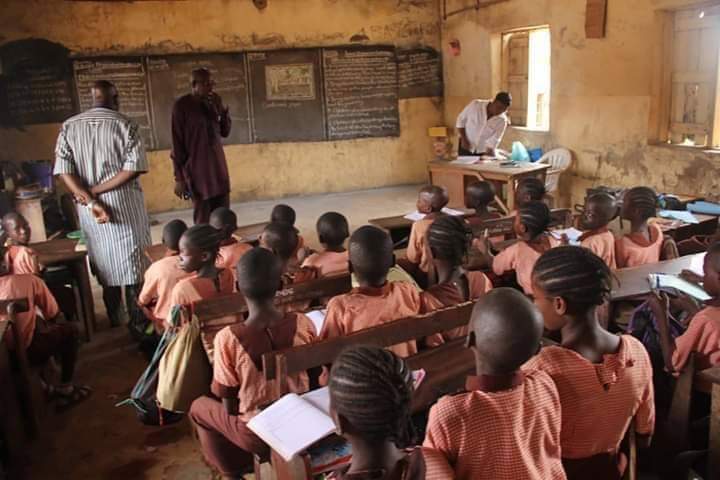
The teachers, who were at a ceremony on Wednesday in Ado Ekiti to commemorate the World Teachers Day, commended Mr Fayemi for initiating laudable programmes for the educational sector.
The teachers, under the auspices of Academic Staff Union of Secondary Schools (ASUSS) and the Nigerian Union of Teachers (NUT), warned the incoming government of Biodun Oyebanji not to compromise their welfare if a cordial relation would exist between the unions and the government.
The ASUSS Chairman, Sola Adigun, who spoke on behalf of the teachers, said teachers were still optimistic that some of their pending benefits would be paid within the next 10 days before Mr Fayemi bows out of office.
“We have so many unpaid benefits. Our salary, promotion, pension and gratuity arrears of retirees are there,” he said.
“We have that belief that Governor Fayemi can still do the magic and pay off before leaving on October 16.
“Though, we appreciate the fact that the state’s economy was not that buoyant, but you can still make the teachers happy before you go, while your successor will begin where you stopped.”
The teachers noted that the sector remains the most thriving industry that requires every resource for it to blossom.
Mr Fayemi used the occasion to reward outstanding teachers at both primary and secondary schools with cars and cash gifts.
He said the quality of their teaching had exponentially increased school enrolment from 191,117 in 2018 to 261,292 in 2022.
Mr Fayemi added that the increase in enrolment automatically resulted in the need to establish additional 10 secondary schools in 2021, while government paid the N6 billion counterpart fund to match UBEC’s contribution to execute 886 projects.
“As I speak now, under two World Bank assisted programmes, AGILE and IDEAS, renovation of structures/provision of furniture and equipment in 202 schools and upgrading of facilities in three technical colleges, are ongoing,” he said.
“Moreover, 1,558 teachers were employed by SUBEB, TESCOM and BTVE within the past four years.
“So far, we have disbursed N655 million as running grants to public schools in Ekiti State. Similarly, we have paid a total of N1,044,941,450 to enable 57,465 public school students sit for WAEC examination over the past four years.”
The Management of Ekiti State University, Ado-Ekiti has directed that full academic activities should resume on campus with effect from tomorrow, Thursday, 22nd September, 2022.
Accordingly, round off lectures for second semester of 2020/2021 academic session have been scheduled to hold between Thursday, 22nd September and Friday, 21st October, 2022, while the second semester examination for the 2020/2021 academic session would hold between Monday, 24th October and Saturday, 5th November, 2022.
Meanwhile, lectures for 100 level students admitted for 2021/2022 academic session will commence on Monday, 3rd October, 2022.
This according to a statement made available to newsmen by Bode Olofinmuagun, Head, Directorate of Information & Corporate Affairs as read in part:
“Students should note that ONLY DULY REGISTERED STUDENTS of the university will have access to all the academic activities.
“The Management of the university hereby appeals to all the academic and non-teaching staff of the institution to give their maximum support so that both the 2020/2021 and 2021/2022 academic sessions would be completed without further delay with a view to ensuring the survival of our common heritage (Ekiti State University, Ado-Ekiti). The Management wishes all our students safe trip back to Ado-Ekiti”.
The president of the Academic Staff Union of Universities, Professor Emmanuel Osodeke, has warned that the judgement of the National Industrial Court ordering lecturers back to class will have far-reaching effects.
Speaking during an interview on Channels TV on Wednesday, the don said the outcome of the verdict would be catastrophic.
He said, “Let me tell you the catastrophe of what has just happened. The last time this happened was during the military era. I can assure you, when this strike is over, a large number of our lecturers are going to migrate from this country. When you are using force to push your lecturers to class.
“First of, they said, ‘If we owe them, if we don’t pay them, they will come and beg us.’ Seven months, it didn’t work. Our members are still alive. And then, they went to court, you want to force them. It is a catastrophe. No country who is thinking about the future of their children, thinking about the health of the educational system, who believes in education, (leader) who believes in the future of this country, whose children are in those universities would try that.”
The Federal Government has dragged the Academic Staff Union of Universities, ASUU, to the National Industrial Court over the lingering strike.
This is contained in a letter from the Minister of Labour and Employment, Chris Ngige dated 8th September, 2023.
The letter is titled ‘Forwarding of a Referral Instrument in the trade dispute between the Federal government and ASUU’.
Chris Ngige said the referral was raised in line with the power vested in him by the Trade dispute resolution mechanism and the provision of Section 17 of the Trade Dispute Act of 2004.
ASUU began an indefinite strike on the 14th of February and the many negotiations between it and the government have been unable to end the industrial action.
As at the time of filing this report, ASUU President, Emmanuel Osodeke, has not reacted to the government’s action but a top Union Leader said the lecturers await the court’s decision on the matter.
The University of Ibadan (UI) on Tuesday announced resumption dates for the Distance Learning Centre (DLC) of the institution.
Management of the institution also directed new and returning DLC students to resume new academic session on September 5 and 19, 2022 respectively.
A statement by the Director, UI DLC, Prof. Emmanuel Omobowale, noted that new learners who were offered admission from March to date, in batches, are to pay an acceptance fee of N30,000 if they have not done so, urging them to also register for the new session to commence studies.
Omobowale said application forms for admission are still available for intending learners, noting that those who scored below 200 in JAMB and selected UI or any other institution, or those who did not sit for JAMB UTME can apply with five credits in relevant WAEC/NECO subjects in one sitting or 6 credits in two sittings.
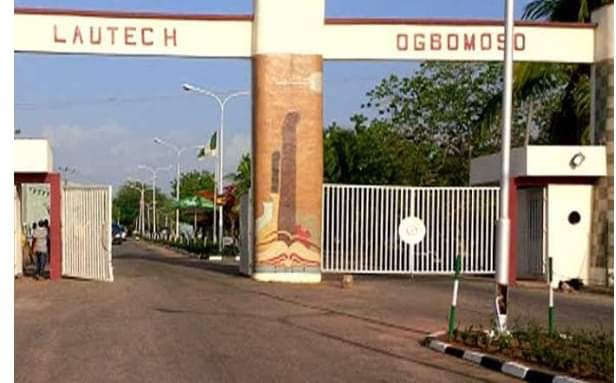
Hillarious as LAUTECH graduate went back to school to return his certificate, hinging his decision on “suffering and poverty”. Below is the clip of the event.
Prof. Niyi Osuntokun has appealed to Academic Staff Union of Universities to device another means of engaging Federal Government other than once can’t strike action.
Prof. Osuntokun made this disclosure in his statement reproduced below:
“Is there anybody who does not know that there is trouble in Nigeria? As an elder, I cannot pretend I do not know what is happening to higher education in our country. As a retired professor, I am a stakeholder in higher education in Nigeria. Having studied at the University of Ibadan, and for higher degrees studied in Canada, Britain, Germany and France, and taught in a Canadian and a West Indian university as well as the universities of Ibadan, Jos, Lagos and Maiduguri and in the Redeemers University, and served as Director of the National Universities Commission in Ottawa and Washington and was a member of council in four universities in Nigeria before becoming a pro-chancellor and chairman of council of a state university, with all modesty, I know a little about universities worldwide.
“This is why I am writing this article. It is extremely difficult for any retired professor not to be emotionally involved in the plight of university staff in Nigeria and particularly in the condition of academia generally.
“Let me say right away that the current industrial action of the Nigerian universities has gone on for too long and would have more than destroyed the university system by the time it is called off. This could not have been foreseen by ASUU. But this is the reality. Strikes in the universities began in the 1973/74 session and has been a yearly occurrence since then. It seems to me that ASUU has played into the hands of its enemies, so to say, because very few governments that I know would have allowed the current strike to go on for this long without doing something about it.
“I know, of course, that these are trying times for this government. It is faced with the problems of insecurity, collapsed economy and corruption; and each of these problems is capable of tearing the country into pieces. There is also the problem of over administration, too many states and too many local governments all guzzling disproportionate share of the national revenue. There is also the issue of over centralisation and concentration of too much power in the centre. The government is at the same time facing the demands of workers for better salaries in the face of rising inflation and wholesale devaluation of the national currency.
“The fact is that these problems are intricately interwoven. Without corruption and insecurity, and with the right structure of government, the economy would not be in the dire condition it finds itself. Our country must undergo a complete overhaul of the economy to recover enough for the government to meet its responsibilities. Our country is not mobilised for production and productivity. We all rely on collecting commissions on oil and gas exports and our people, apart from the salaried ones, do not pay taxes, and our country is almost unique in this respect.
“This is why we do not have a government that responds to the wishes of the people because it can exist while ignoring the people because it does not depend on their taxes. Whatever it, therefore, collects it can afford to dissipate and share it with whichever sector of the economy that is critical to its survival. That is why the security sector is favoured above the social sector of health and education.
“If my people in ASUU will understand this, they will have a different strategy than going on strike every year and expecting different reactions from the government. This is the height of madness. What ASUU should now be fighting for is university autonomy, which the law has, in fact, granted. ASUU should take governments, both federal and state, to court over university autonomy.
“Once university autonomy is granted, each university should cost what it will take to educate students across all disciplines in the universities in a differentiated school fees and come up with the economic cost. The government should then grant annually whatever it says it can afford while parents of students would have to come up with the remainder of the cost. Not all parents will be able to pay the economic cost of their children’s education. Such parents would have to be assisted by the federal, state and local governments scholarship awards. Churches and Mosques as well as NGOs, corporate bodies and individuals would also come in knowing that whatever assistance they provide will be tax deductible for those of them who pay taxes.
“This will lead to differentiated payments of fees and salaries by each university. Each university will develop unique characters rather than the homogenised national, or is it federal character, that we currently have. For example, the universities of Lagos, Ibadan, Ahmadu Bello, Bayero, Obafemi Awolowo, Port Harcourt and Nsukka, because of their reputation and location, may be able to generate revenues that will make them pay their staff better salaries than the current poor national remuneration.
“Governments at all levels must stop meddling in university administration. Some state governors that are not providing adequate funding for state universities are in the habit of announcing over the radio that their universities must not charge more than N50,000 per student per year when the actual cost of their programmes range from N500,000 to N1,000,000. The federal government also imposes arbitrary ceiling on fees for accommodation and tuition leading to poverty of accommodation and tuition not fit for human beings with the result that foreign students no longer come to Nigerian universities while young Nigerians flock to universities in neighbouring countries of Niger, Benin, Togo and Ghana, some of which are specifically established for Nigerians and, in some cases, by Nigerian business men and women!
“A properly funded university system where the universities are allowed to generate their own revenues through fees, grants, innovation and copyrights will free them from the deadweight of government control. Economic fees may also put an end to irresponsible fathering of children that they cannot support by men and this may indirectly curb the galloping rise in our population.
“A government that cannot fund existing universities finds it easy to announce new universities of “medicine” “transportation “”Navy,’’ “ Airforce, ‘’ “ Police “and “Army” etc. One former president during an after-dinner speech announced the establishment of eleven new universities with a grant of one billion take off budget!
“The cost of higher education can be moderated if, instead of establishing new universities, the current ones are expanded thus saving administrative costs of paying tens of vice chancellors, registrars, bursars and so on.
“My advice, therefore, to ASUU is to find a better way than embarking on strikes to fight a just cause. It should go to court to enforce university autonomy, and it should then raise revenue the way it must and allow the government to come up with whatever it says it can afford to grant the universities without any right to fix salaries and school fees. This is what university autonomy is all about.
“If the universities can improve and fix their dilapidated infrastructure and dilute the local staff with distinguished academic staff, perhaps people on sabbatical leave from the international academic system, foreign university students paying hard currencies will come as it was in my days as a student at the University of Ibadan.
“Universities, after gaining back their autonomy, can approach both Nigerian banks and the AFRICAN DEVELOPMENT BANK, and the WORLD BANK, for loans and grants to improve their physical, laboratory, teaching and research infrastructures. If their programmes are well packaged, foreign governments’ grants will find their ways into the universities rather than into the bottomless pockets of the corrupt bureaucracy of government.
“ASUU should pick up the gauntlet thrown at it by the government and methodically rise up to the occasion. Results will not be immediate and instantaneous but this is the way to go to put an end to this unending and degrading regime of annual strikes”.
Body of Mr. Gbenga Olofingboyegun, a director in the Ondo State Teaching Service Commission (TESCOM), has been discovered in Akure, the state capital.
Olofingboyegun, who was the Director of the Department of Research and Statistics in TESCOM, was declared missing on Thursday after he left the office for undisclosed reasons. His body was found on Sunday.
Family and friends had suspected that he was a victim of kidnappers and were waiting for the call of his supposed abductors for a ransom payment.
Efforts to trace him were fruitless until his decomposing body was found in Saint Theresa Primary School beside Saint Peter’s Unity School in Akure.
Eyewitnesses said Olofingboyegun’s head and other sensitive parts of the body were cut off and taken away by the suspected assailants.
A close relation said he was still in the suits and tie that he wore to the office when his decomposing body was found.
However, the Police Public Relations Officer (PPRO), Funmi Odunlami who confirmed the discovering of the mutilated human body, said she was not sure about the identity of the decomposing body.