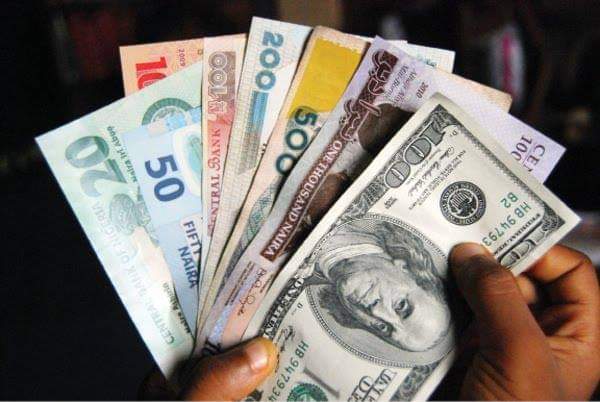
High Food Prices To Push Six Million Nigerians Into Poverty, World Bank Insists

The continuous increase in the process of goods and services which was recorded within a one-year period covering June 2020 and June 2021 may force additional six million Nigerians into poverty, the World Bank has said.

The Bank said this in a new report titled ‘COVID-19 in Nigeria: Frontline Data and Pathways for Policy.’

In recent times, the skyrocketing food prices in major cities across the country are being reported with deleterious effects on household budgets.

The series of insurgencies bedeviling the country, especially in the Northern part and pockets of dissentions in some states where most of the essential food items for the nation come from, have also adversely contributed to the ill reports about the astronomic rise for a range of food materials

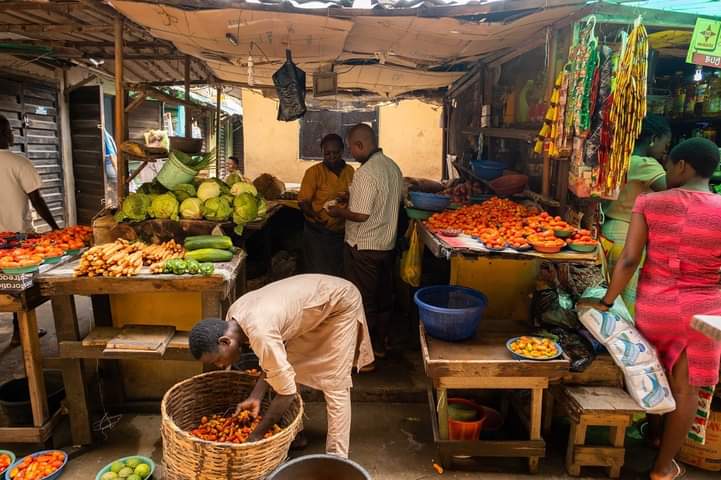
A visit to Dutse Market in Abuja showed that a cup of palm oil that was sold for N150 now sells between N220 and N250, while a cup of vegetable oil that was sold for N150 now sells for N280.

Other commodities such as Indomie noodles carton now sell for N4,600 (Super pack) against the initial price of N2,400 while a carton of chicken flavour now sells for N2,900 against the previous price of N1,600.

Currently, a pack of the super pack now sells for N120 while a pack of chicken flavour now sells for N100.

A sachet of milk which was sold for N50 now sells for N70, while a kilo of goat and beef previously sold between N1,400 and N1,500 now sell for N2,500 and N2,800.

A trader, Jennifer Imoh, who sells groceries and provisions in the Dutse market lamented, “Before, we used to buy a bag of milk for 3,500, now it is N11,000.

“If you want to buy noodles, a carton goes for N850, but now, we are buying it for N2,500. The loaf of bread that I used to buy from bakers at N200, now sells for a double price because of the high cost of the flour, milk and sugar.”

The World Bank in its report said that the rise in prices underscores the need for short-term policies to support welfare.

The report reads, “The rise in prices witnessed between June 2020 and June 2021 alone could push another six million Nigerians into poverty, with urban areas being disproportionately affected. This underscores the need for short-term policies to support welfare.

“The simple simulations suggest that the share of Nigerians living below the national poverty line could have increased from 40.1 per cent to 42.8 per cent, due to the food price inflation witnessed between June 2020 and June 2021.”

The report further disclosed that there has been low coverage of social protection programmes during the COVID-19 crisis in Nigeria.

For instance, it added that only just four per cent of households had received support from social safety net programs in the form of direct cash transfers from federal, state, or local government between March 2020 and March 2021.

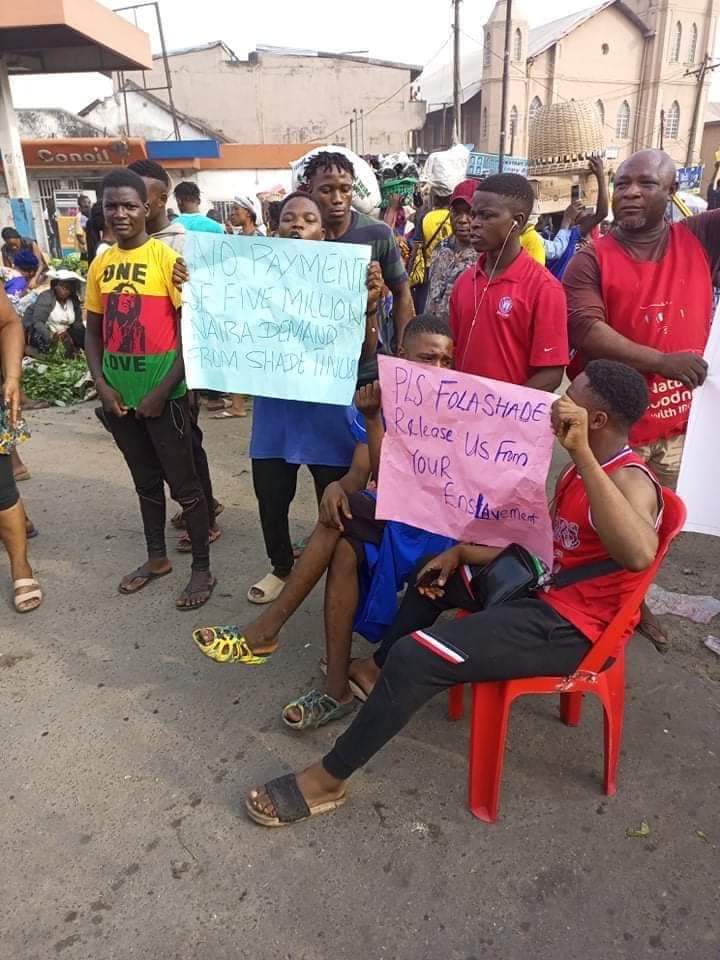
Oyingbo Market Traders Protest, Kick Against Imposition Of N5m Fine By Tinubu’s Daughter

ODUDUWA NEWS had gathered that protest is currently rocking Lagos over imposition of N5million Fine On Oyingbo Market Traders,

The Iyaloja General of Nigeria, Folasade Tinubu-Ojo has placed the Otto Modern Market, Oyingbo, Lagos State, on lock and key for the past two weeks, SaharaReporters has learnt.

Folashade, who is the daughter of National Chairman of the All Progressives Congress, Bola Tinubu, reportedly locked the gate to the plaza over complaints of trading in an untidy environment.

The traders were pleading with Folashade to reopen the premises and allow for the continuation of trading activities while calling for the scrapping of the imposed N5million fine.

Twitter Ban To Be Lifted After Fulfilling All 12 Conditions – FG

The Federal Government has said the suspension of Twitter has not been lifted because the company has met 10 out of the 12 conditions given it.

The government however raised the hope of Nigerians that it is a matter of time before all issues with Twitter are resolved.

But it clarified that the suspension of Twitter had nothing to do with issues bordering on President Muhammadu Buhari.

The Minister of Information and Culture, Lai Mohammed, made the clarifications while responding to a question from a participant at Nigeria International Partnership Forum in Paris.

Most investors at the forum were eager about the circumstances behind the suspension of Twitter.

Mohammed, who spoke in fluent French, caught the audience unawares.

The lady participant, who asked the question was perplexed and caught off guard by the Minister’s mastery of French.

But Mohammed took time to explain why the suspension of Twitter was not yet lifted.

He said:”I want to categorically say that Twitter was not banned by Nigera, it was only suspended. So, Twitter was never banned, it was suspended.

” Also, the suspension has nothing to do with President Muhammadu Buhari.

“The correspondences between us and Twitter have reached advanced stage. I want to say that the correspondences and the exchanges have been fruitful.

“But we have a few more issues to resolve. Out of about 12 conditions, Twitter has been able to meet 10.

“Very soon, all issues will be resolved in a way that it will be good for both our country and Twitter.”

Facebook Changes Name To Meta

Facebook announced that it has changed its company name to Meta.

The name change, which was announced at the Facebook Connect augmented and virtual reality conference, reflects the company’s growing ambitions beyond social media with the metaverse, a classic sci-fi term Facebook, now known as Meta, has adopted to describe its vision for working and playing in a virtual world.

“Today we are seen as a social media company, but in our DNA we are a company that builds technology to connect people, and the metaverse is the next frontier just like social networking was when we got started,” Meta CEO Mark Zuckerberg said.

The company will also change its stock ticker from FB to MVRS, effective Dec. 1, the company said in the announcement of its name change.

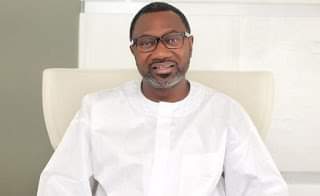
Business Mogul, Femi Otedola Becomes Largest Shareholder of First Bank

Nigerian billionaire businessman and investor, Femi Otedola, on Friday, reportedly took over First Bank of Nigeria Plc.

According to The Street Journal, Otedola took over the bank with the acquisition of about ₦30 billion worth of shares, making him the single largest shareholder of the bank.

Otedola, being the largest shareholder, holds the highest voting shares, giving him power to dictate the direction of the bank through his voting power.

Recall that Femi Otedola had in 2019 divested his 75% direct and indirect share holding in Forte Oil, via a merger of his company Zenon Oil and former African Petroleum.

This act made many wondered why he made such a decision especially because of the lucrative nature of the oil and gas sector.

The billionaire had expressed interest in going into refining and petrochemicals as well as investing in the real estate and financial sector.

It was gathered that Otedola decided to take over First Bank Nigeria because of the internal crisis rocking the bank.

Recall that the leadership crisis rocking the bank led to the Central Bank of Nigeria sacking both the chairman of the bank, Ibukun Awosika and Obafemi Otudeko, the chairman of FBN Holdings.

EFCC to probe Dapo Abiodun, Oduah, Peter Obi, others over Pandora Papers

The Economic and Financial Crimes Commission, EFCC is set to open investigations into several Nigerian Politicians named in the Pandora Papers Investigative report.

Pandora Papers, the biggest leak of 11.9 million documents from offshore services providers, detailing the secret offshore accounts of 35 world leaders, including current and former presidents, prime ministers, and heads of state as well as celebrities, has sent shockwaves across the World.

The leak exposed several notable world leaders like the King of Jordan, Kenya’s President, Uhuru Kenyatta amongst many others and their secret million dollar offshore dealings. In Nigeria, Former Governor of Anambra state, Peter Obi, Former Aviation Minister, Stella Oduah, the acting Managing Director, Nigerian Ports Authority, Mohammed Bello-Koko were mentioned in the report

Governor Abubakar Bagudu of Kebbi State, Governor Gboyega Oyetola of Osun State as well as Ogun State Governor Dapo Abiodun and Children of a former National Security Adviser, Col. Sambo Dasuki (retd.) were also named.

We gathered that the anti-graft commission will be investigating all of them. Mr. Obi has since been invited to come and explain his offshore dealings and secret assets.

Obi is to appear at the Headquarters of the commission on October 27th to face questioning. This newspaper earlier reported that the embattled former governor admitted having secret offshore accounts during an Interview on Arise TV earlier this month. He disclosed that he had about $15 million stashed in them for his family.

Osun govt begins disbursement of N636m CBN-supported MSMEs soft loans to residents

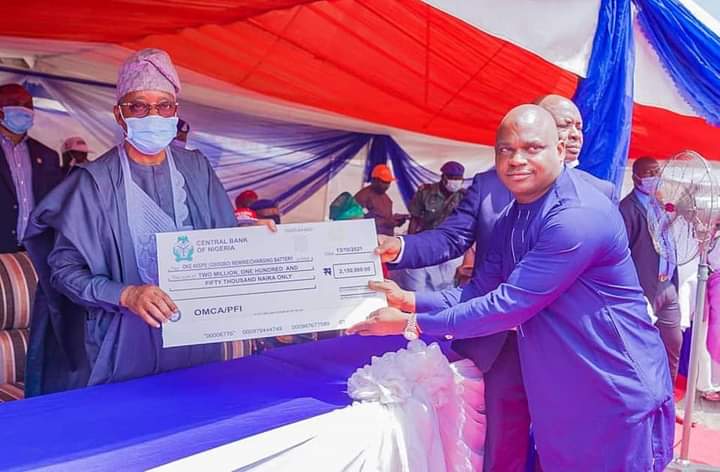
The Government of Osun, Adegboyega Oyetola, on Wednesday commenced the disbursement of Six Hundred and Thirty-Six Million, One Hundred and Ninety-Five Thousand Naira (N636.195,000.00) as soft loans to the citizens and residents of the State.

The initiative, which was actualised through collaboration with the Central Bank of Nigeria-supported Micro, Small and Medium Enterprises Development, was aimed at expanding the scope of businesses, trades, investments stimulating the economy and reducing the scourge of unemployment in the State.

This is even as the over 2, 000 beneficiaries of the loan facility showered encomiums on the State Government for the kind gesture.

The soft loans were disbursed through Osun Micro Credit Agency as part of efforts to ensure proper coordination.

Speaking at the flag-off ceremony held at Nelson Mandela Freedom Park, Osogbo, Governor Oyetola said the gesture was in furtherance of the Administration’s resolve to build a virile and healthy economy.

He said the initiative stemmed from the Administration’s Development Agenda that is focused on revitalising the economy for improved performance, noting that by their enormous productivity and capacity for value and job-creation, MSMEs constitute a critical part of government’s diversification agenda.

Oyetola reiterated his Administration’s commitment to scaling up the ease-of-doing business in the State. He said the initiative would go a long way to resuscitate moribund businesses and investments in the State.

Governor Oyetola disclosed that over Six Billion and Five Hundred Million Naira (N6.5 billion) of the Central Bank of Nigeria and Osun intervention funds has been disbursed to 31,888 beneficiaries in different categories.

He said the State had invested hugely in the economy as evidenced in the successes recorded so far.

“To actualise seamless cash flow among citizens, we have intervened in the issue surrounding business support funds from the Central Bank of Nigeria and facilitated timely release of the sum of Six Hundred and Thirty-Six Million, One Hundred and Ninety-Five Thousand (N636.195,000.00) to the State through Osun Micro Credit Agency in collaboration with Participating Financial Institutions in the State for disbursement to selected beneficiaries as approved by the CBN.

“Other citizens who fall within the classification of Small and Medium Enterprise Businesses who are interested in the fund should approach Osun Micro Credit Agency for possible enrolment in the next tranche of MSMEDF.

“This exercise is another effort by our Administration to strengthen our economy through the provision of supports for our Small and Medium Scale Enterprises.

“I wish to note that with this disbursement flag- off, the total number of beneficiaries of the CBN and Osun Government intervention funds is 31, 888 and the total amount disbursed from the fund for Micro, Small and Medium Enterprises Development in the State so far stands at Six Billion and Five Hundred Million Naira (N6.5 billion).

“I would like to express my appreciation to our partners, the Central Bank of Nigeria, for their sustained partnership that has made it possible to empower our business owners.

“This exercise stems from our Administration’s Development Agenda that is focused on revitalising our economy for much improved performance. The MSMEs, owing to their enormous productivity and capacity for value and job-creation, constitute a critical part of our diversification agenda.

“Since assumption of office, we have, in addition to our strategic investment in transforming the Agriculture, Tourism and Mining Sectors, focused attention on improving the performances of our MSMEs. This is because we believe that a virile MSMEs space holds limitless opportunities for our State.

“We are convinced that when there is greater accessibility to funding, requisite infrastructure, an enabling environment devoid of common limitations and a political will to drive the requisite policies, our MSMEs would be empowered to spread their wings and fly. All these we have passionately put to work since we assumed office,” he added.

In his remarks, the Commissioner for Commerce, Industry, Cooperative and Empowerment, Dr. Bode Olaonipekun, lauded Governor Oyetola for being supportive of the growth and development of businesses in the State.

“What we are witnessing today is a journey of over two years coming to fruition. Governor Oyetola has made it come to pass and our hope is that this gesture would expand the scope of business in the state as over two thousand beneficiaries will be empowered and this will boost Osun economy,” he added.

Also speaking, the acting General Manager, Osun Micro Credit Agency, Mr. Sanya Olopade appreciated the timely and prompt intervention of the government which has been helping the agency to soar higher.

He urged the beneficiaries to use the money judiciously and apply it for the purpose it was meant for, just as he appealed to them to refund the loan within the record time so as to give others same opportunity.

In their separate remarks, some of the beneficiaries praised the government for meeting them at the points of needs.

Mrs. Oduyemi Mary, Alhaji Azeez Rasak, Alhaji Afolabi Yusuf Adekunle, Mrs. Oladoye Olayemi Kehinde, Engr. Salami Rasheed and Mrs. Motunrayo Abiola extolled the initiative and promised to use the funds judiciously.

Economic experts disagree on Osinbajo’s push for devaluation of exchange rate

Vice-President Yemi Osinbajo on Monday called for an official rate that is reflective of market reality.

He said the current dual exchange rates allowed for arbitrage and blocked inflow/supply of dollars from investors.

Osinbajo said this on Monday in Abuja at the opening of a two-day Mid-Term Ministerial Performance Review Retreat organised to assess progress made towards the achievement of the nine key priorities of the Buhari regime. Experts, however, differed on the vice-president’s opinion.

This is as he said the country could not get new dollars into the system, where the exchange rate was artificially low.

The Vice President said the artificially low exchange rate was deterring investors from bringing foreign exchange into the country.

He said, “As for the exchange rate, I think we need to move our rates to be as reflective of the market as possible. This, in my own respective view, is the only way to improve supply.

“We can’t get new dollars into the system, where the exchange rate is artificially low. And everyone knows by how much our reserves can grow. I’m convinced that the demand management strategy currently being adopted by the CBN needs a rethink, and that is just my view.

“Anyway, all those are issues that when the CBN governor has time to address, he will be able to address in full.”

Osinbajo also suggested that the central bank was competing with the fiscal side of the economy, which includes the ministries, departments, and agencies of government.

He explained, “There must be synergy between the fiscal and the monetary authority. We must be able to deal with the synergy; we must handle the synergy between the monetary authority, the CBN, and the fiscal side.

“Sometimes, it appears that there is competition, especially on the fiscal side. If you look at some of the interventions, you will find that those interventions are interventions that should be managed by ministries.

“The Ministry of Industry, trade and investment should handle MSME interventions, and we should know what the CBN is doing.

“In other words, if the CBN is intervening in the MSME sector; it should be with the full cooperation and consent of the ministry of industry.

“Sometimes you will get people who are benefiting more than once because we simply have no line of sight on what is going on, on one side.”

Speaking on surviving the economic challenges of 2020, Osinbajo said that Buhari deserved the credit for providing steady leadership through the crisis.

He said, “Let me say on the whole that we have been able to weather the storm of a very, very serious economic challenge.

“I think that is based largely on the steady and stable leadership we received from the president. I think if Mr President had panicked in that period, we would have had a lot of difficulties, perhaps we would be in a much worse situation.

“He deserves the commendation for providing that steady hand when that was required.”

Osinbajo said anything was possible if Nigeria and Nigerians were willing to work together for the same objective.

However, experts who spoke to our correspondents offered different opinions.

A professor of capital market at the Nasarawa State University Keffi, Uche Uwaleke, said, the implications of devaluing the naira now were quite scary.

He said, “The first casualty will be the 2022 Appropriation Bill. It means the 2022 budget, which is predicated on N410.15 per dollar is dead on arrival.

“The Vice President obviously means well. But this statement is capable of triggering panic buying and speculation in the forex market (official and parallel) and further complicating things for the CBN.

“No doubt, devaluation will force down the volume of imports and reduce the pressure in the forex market temporarily. But have we thought of the impact it would have on pump price of fuel and the multiplier effects?

“How about the knock-on with regard to inflation and interest rates especially at a time when inflation rate remains elevated? Is high inflation rate not inimical to investments whether local or foreign?”

He said the argument that naira devaluation would incentivise foreign investors remained to be seen as other factors such as insecurity equally play a part.

The naira, he added, had suffered several devaluations in recent past.

He said, “It has neither solved the fundamental problem of helping to diversify the export base nor curbed unbridled imports. Doing so yet again will not change anything. Rather, it is a recipe for high poverty and unemployment levels.

“Again, suggesting that the CBN should discontinue its forex demand management strategy to the effect that certain items are excluded from accessing the official window has grave implications for exchange rate and the economy. If anything, it negates the import substitution drive of the present administration.

“The good news is that the CBN has sufficient external reserves to meet genuine demands for forex at the Investors and Exporters window. This much we have been told. The CBN should continue to manage it while joining hands with the fiscal authorities to create multiple sources of forex beyond oil.”

An economist and lecturer at the Lagos Business School, Dr Bongo Adi, said, “The exchange rate is a secondary indicator, driven by other economic factors. Vice President Yemi Osinbajo, with all due respect, displayed a lack of understanding of the economy.

“We need to ask why the naira is overvalued. It is simply because we have not been able to improve our export profile.

“We have not been exporting much, the only thing we export is oil. Even the volume of oil production and oil export has gone down in recent times. Without an enormous export profile, you may not have currency appreciation.

“We can say our export profile is not that big, and we keep borrowing money from outside. If you keep borrowing, your exchange rate will depreciate.

“The government has taken borrowing as a way of life, and this has made the naira devalue. When they say the market should drive the exchange rate, why shouldn’t the market drive the economic production and infrastructure in Nigeria?

“There is another angle which is the consistent depreciation of African currencies, not just the naira. If you compare the African currencies from Naira to the Cedis of Ghana to all of our currencies in Anglophone West Africa and Sub-Saharan African, you will see currency depreciation that has been known since the 1980s. Countries in Africa do not have control over their exchange rate.

“If you look at how Africa supplies the rest of the world, you have to look at the international dimensions. Unfortunately, our leaders do not have the strategic intelligence to engage with the rest of the world.”

On the other hand, a senior lecturer in economics at the Pan Altantic University, Olalekan Aworinde, supported the position of the Vice President on the revaluation of the naira to attract investors.

According to him, the value of the naira against the dollar is currently overvalued, thanks to the managed system adopted by the CBN to control the rate of the domestic currency.

“The naira as it is overvalued. Enough of this managed system whereby the CBN is trying to control the rate at which the naira is exchanged for the dollar.

“The VP is saying the truth because if we devalue the naira to its actual value, then the margins that the Bureau de Change relies on will no longer be there.

He said besides boosting the confidence of investors in the stability of the country’s economy, devaluing the naira would also drive increased exports.

“The disparity between the official rate and that of the parallel market is likely going to scare away investors because investors don’t want to go to a place that is full of uncertainty.

“If investors bring in funds and they can’t determine the actual worth of the funds, because of the discrepancies in the value of the exchange rate, so they choose to invest in other countries with unified or stable rates.

“Also if the exchange rate is devalued, we are likely going to see a situation where there is an improvement in the country’s balance of payment, in the sense that when we do this, imports become cheaper while exports become expensive.

“That way, we can bridge the trade deficit, as revenue from exports will be greater than what we spend on imports.”

The Founder of the Centre for the Promotion of Private Enterprise and economist, Dr Muda Yusuf, told our correspondent that it was inappropriate to say that the VP was calling for the devaluation of the Naira.

He said the VP implied that the currency should be market-reflective.

“What we are experiencing in the forex market is largely consequences of the CBN fixed exchange rate policy regime and administrative allocation of forex.

“The NAFEX window is a subsidised window and managing a subsidy regime is typically a herculean task. Suppressing the market is like swimming against the tide.

“The way out of the forex conundrum is for the CBN to allow the market to function. It is also imperative for the apex bank to de-emphasise demand management and focus on strategies to stimulate forex inflows.”

He added that a fixed exchange rate was a major disincentive to inflows and creates enormous pressure of demand for forex.

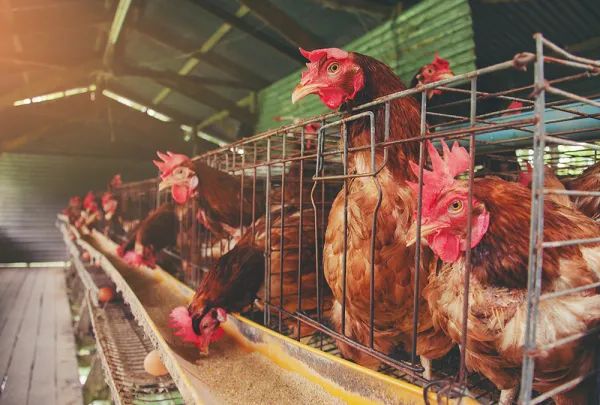
25 Million Nigerians Risk Job Losses Over Poultry Industry Crisis – PAN

The Poultry Association of Nigeria (PAN) has said that the current feed challenges facing the multi-billion naira poultry industry may take almost 20 to 25 million Nigerians out of jobs, if immediate interventions were not provided.

PAN National President, Ezekiel Ibrahim, who stated this in Abuja on Saturday during the World Egg Day celebration appealed to the federal government to come up with policies that would assist the farmers and save the industry from total collapse.

The association noted that the industry employs millions of Nigerians directly and indirectly, stressing that the entire value chain of poultry crop alone takes almost 4.5 metric tons of maize and 1.5 metric tons of soya beans annually.

Ibrahim, who was represented by the Director General of the Association, Onallo Akpa, said the collapse of Nigeria’s poultry industry would create a big market for other parts of the world who are into poultry production.

He said: “The poultry industry is about to collapse and if that happens, there are so many negative consequences that would affect the people.

“We are being challenged by maize scarcity and high exchange rate. People producing in other parts of the world are waiting to see the poultry industry in Nigeria collapse.

“If that happens, it is a big market for them because we have the population which will create a big market for them.

“We need the government to help look into some of the policies, we need their support to help grow the industry and, without their support, no matter the money we have to invest, we can’t really achieve much”.

While appealing to the federal government to intensify the school feeding program where an egg a day per child can be meaningfully implemented in the country, he urged them to make eggs part of Prisons feeding programme.

He further appealed to the federal government to consider eggs as a priority food product that could be supplied to displaced people at various locations throughout the country.

In his remarks, the Federal Capital Territory (FCT) PAN chairman, Pius Aminu, said the poultry sector should be taken more seriously by the government than any other sector.

Aminu said the poultry business had been good and very encouraging for people in FCT, but with the advent of COVID-19, a lot of setbacks have met the business.

While noting that some poultry farmers have been kidnapped in recent times, he said the industry is also faced with obstacles which hinder them from moving their produce from the farm to the city center.

“In the last six months, over 2000 people have been thrown into the labour market as a result of some of the challenges the poultry farmers are facing.

“No sector in Nigeria is employing people like the poultry industry, an average farm with a population of 2000 birds needs nothing less than 10 workers” he added.

The News Agency of Nigeria (NAN) reports that the association gave out packs of eggs to residents in the FCT to mark the celebration of World Egg Day 2021.(NAN)

Business: Zuckerberg Loses Billions As Facebook Faces US Senate’s Probe

Investor’s confidence in Facebook weakened a bit on Monday amid continued political pressure and a rare lengthy outage of the company’s apps, sending shares down 4.8% and zapping away billions from CEO Mark Zuckerberg’s fortune.

Zuckerberg’s fortune declined by $5.9 billion to a mere $117 billion in total. (He’s now the world’s sixth richest person.) Top lieutenent Sheryl Sandberg saw her wealth fall to $1.9 billion..

Facebook stock came under pressure from two fronts: an unusually long outage of its namesake platform, Instagram and WhatsApp, a mistake likely costing the company tens of millions of dollars in revenue. (In the latest quarter, it brought in around $330 million a day in sales.).

it waa reported that the US Senate has commenced probe following a whistle blower testimony that Mark Zuckerberg, the owner of Facebook, Instagram and WhatsApp prioritizes profit above safety of US.

Facebook last suffered a blackout like this in 2019, when the network shut down for 14 hours. A decade earlier, in 2008, it went dark for a day. Monday’s outage affected internal systems at Facebook, too, making it impossible for employees to access emails, the internal messaging system known as Workplace, even reportedly some doors at company headquarters.

You cannot copy content of this page