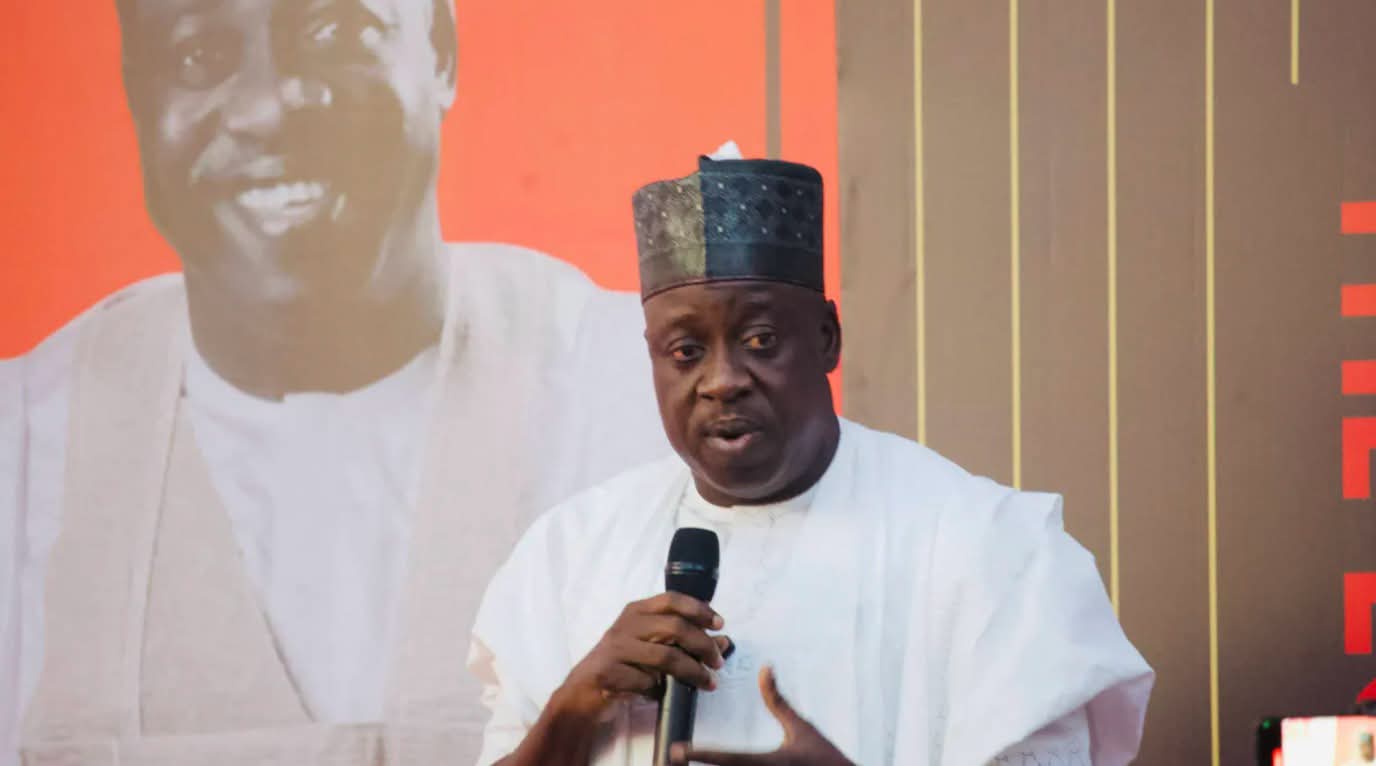
Chaos erupted in the Molete area of Ibadan, Oyo State, following a clash involving suspected political thugs allegedly associated with the Accord Party and members of the Allied Peoples Movement (APM).
An eyewitness who spoke to Oduduwa News said the incident triggered panic in the area as the two groups reportedly engaged in a violent confrontation.
Security operatives were subsequently seen mobilising to the scene in an effort to restore order and prevent further escalation.
While one person was feared dead and several others were reportedly injured, the casualty figures have yet to be independently confirmed as of the time of filing this report.
Further details surrounding the cause of the clash and the identities of those involved were still emerging as of press time.
The Speaker of the Oyo State House of Assembly, Rt. Hon. Adebo Ogundoyin, has expressed deep sorrow over the death of a serving member of the National Youth Service Corps (NYSC), Abidakun Oluwatosin, who lost her life in a fatal road accident involving an articulated truck in Ibadan on Monday.
The deceased, who had only recently resumed her primary assignment at the Oyo State House of Assembly, was on her way home after the day’s work alongside another corps member, who also recently resumed service at the Assembly, when the unfortunate incident occurred around Agodi Gardens, behind the Oyo State Government Secretariat.
The two corps members were reportedly riding on the same motorcycle when an articulated truck rammed into them.
While Abidakun Oluwatosin died in the crash, her fellow corps member sustained injuries and is currently receiving medical attention at a hospital.
The Speaker described the incident as a painful and devastating loss, noting that the death of the young corps member was particularly heartbreaking given that she had only just begun her national service with hopes and aspirations for the future.
Rt. Hon. Ogundoyin lamented that the life of a promising young Nigerian had been cut short in such tragic circumstances, describing the incident as a loss not only to her family and friends but also to the Oyo State House of Assembly, where she had recently commenced her service year.
He extended his heartfelt condolences to the bereaved family, friends, colleagues and fellow corps members of the deceased, praying that Almighty God would grant them the strength and fortitude to bear the irreparable loss.
The Speaker also expressed concern over the condition of the surviving corps member, praying for a speedy and complete recovery.
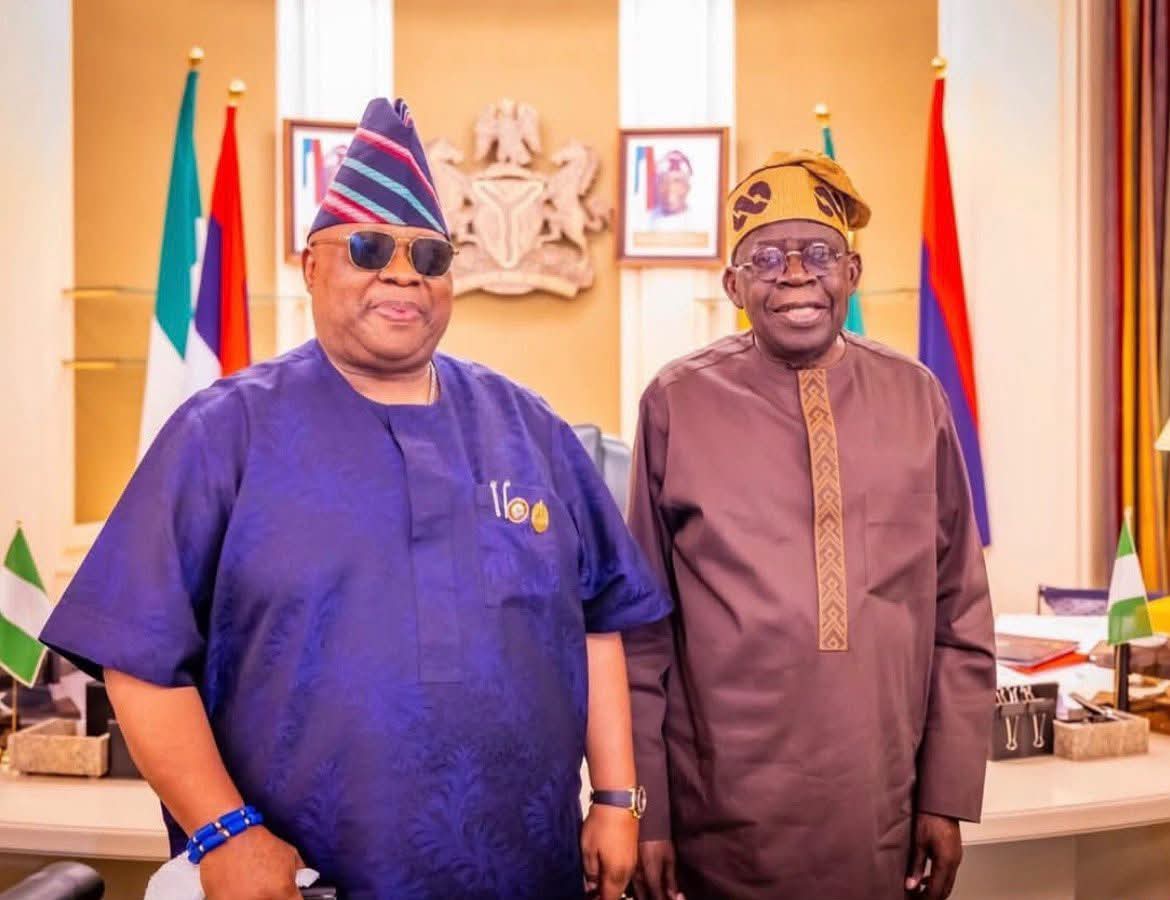
President Tinubu has appointed Osun State Governor Ademola Adeleke as Osun State coordinator for his 2027 presidential re-election campaign.
Ademola Adeleke will lead campaign coordination for President Tinubu in Osun State under the revised All Progressives Congress (APC) Presidential Campaign Council list.
The campaign council is scheduled to be inaugurated at the Presidential Villa in Abuja on Wednesday.
The reshuffled campaign list also includes Nyesom Wike (Minister of the FCT) as coordinator for Rivers State and the FCT, and Chukwuma Soludo (Governor of Anambra State) as coordinator for Anambra. Meanwhile, Adegboyega Oyetola was named Deputy National Coordinator I for Stakeholders’ Mobilisation in the South-West.
Reacting to his appointment, Governor Adeleke noted that his support is anchored on regional alignment as a fellow Yoruba man from the South-West rather than a formal pre-election political pact, pledging a strong electoral push in the state.
The National Publicity Secretary of the African Democratic Congress (ADC), Bolaji Abdullahi, has questioned whether the Minister of Finance and Coordinating Minister of the Economy, Taiwo Oyedele, has the appropriate educational background to manage Nigeria’s economic policies.
Abdullahi made the remarks on Monday during an appearance on Channels Television’s Politics Today, where he discussed the Federal Government’s proposed 30-day petrol price reduction initiative and its approach to fuel subsidy.
“I’m not saying he’s incompetent, but I think he doesn’t have the right education,” the ADC spokesman said, arguing that economic policymaking requires specialised knowledge of economic theories and policy frameworks.
He acknowledged Oyedele’s intelligence and expressed respect for him but maintained that accounting and economics offer different perspectives on managing an economy.
“The way an accountant reviews an economy is not the same way an economist reviews it,” Abdullahi said, adding that policymakers should have the relevant training to make decisions on complex economic issues.
Oyedele holds a Higher National Diploma in Accountancy and Finance from Yaba College of Technology and a bachelor’s degree in Applied Accounting from Oxford Brookes University in the United Kingdom. He also spent 22 years at PricewaterhouseCoopers (PwC), where he rose to become Fiscal Policy Partner and Africa Tax Leader.
Abdullahi’s comments come amid public debate over the Tinubu administration’s economic reforms, particularly its proposed temporary petrol price reduction and the broader implications of government intervention in fuel pricing.
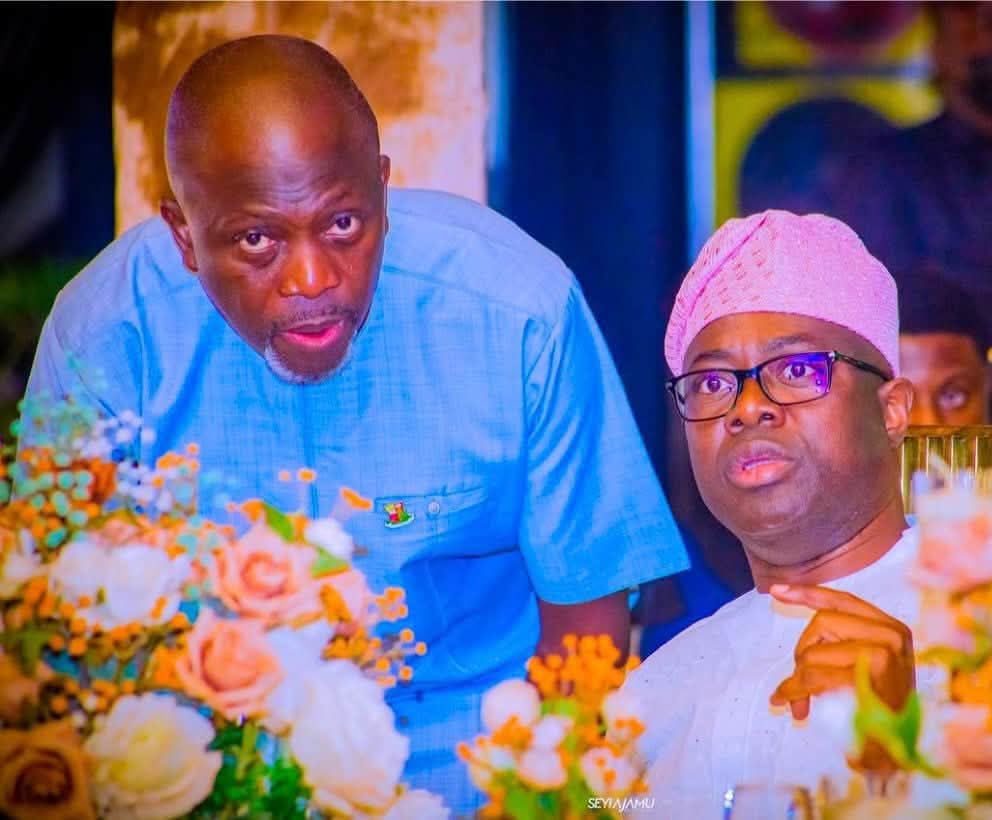
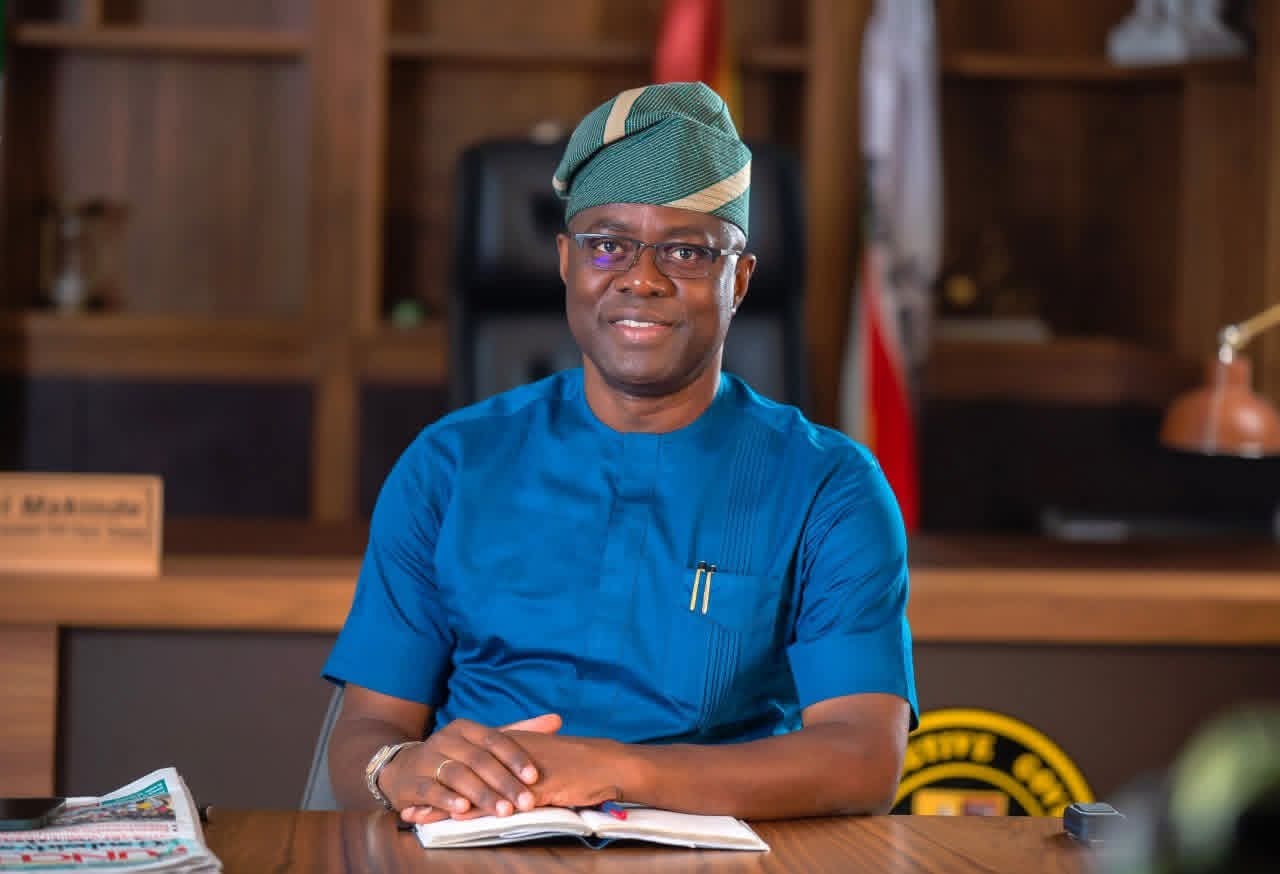
Oyo State Governor, Seyi Makinde, has appointed Akinwale Akinwole, popularly known as Wolekanle, as his new Chief of Staff following the resignation of his predecessor, Segun Ogunwuyi.
The appointment marks a change in the leadership of the governor’s office, with Akinwole taking over the role previously held by Ogunwuyi, a former member of the Oyo State House of Assembly and the House of Representatives.
Ogunwuyi’s resignation and Akinwole’s appointment come amid a change in the composition of the governor’s immediate administrative team.
Further details regarding the circumstances surrounding Ogunwuyi’s resignation, the effective date of the appointment and any official statement from the Oyo State Government were not immediately available.
The development is expected to attract attention within Oyo State’s political circles as stakeholders await further clarification from the government.
Says Use of Foreign technology must strengthen not replace local capacity
The Foundation for Peace Professionals (PeacePro) has welcomed the Central Bank of Nigeria’s directive requiring financial institutions and payment service providers to store and manage payment transaction data generated in Nigeria within the country, describing the policy as an important step towards strengthening Nigeria’s digital sovereignty and economic security.
The CBN circular, issued on June 15, 2026, sets January 1, 2027, as the deadline for full compliance. The Bank reaffirmed on October 9 that the deadline remains unchanged.
PeacePro Executive Director, Abdulrazaq Hamzat, said Nigeria must move beyond being a major consumer of foreign digital services and begin building the infrastructure, technical expertise and domestic industries needed to control and benefit from its growing digital economy.
“A country that generates critical financial data but depends on infrastructure outside its borders to store and manage that data must ask serious questions about its digital sovereignty. Nigeria cannot afford to remain merely a market for other countries’ technology while its own digital economy continues to expand.”
Hamzat said the policy could create opportunities for investment in Nigerian data centres, cloud infrastructure, cybersecurity, software development and specialised technical services, provided implementation is accompanied by deliberate policies to develop local capacity.
He stressed, however, that keeping data physically within Nigeria would not, by itself, guarantee digital sovereignty if critical infrastructure, intellectual property, technical expertise and strategic decision making remained excessively dependent on foreign providers.
“Data localisation must be more than a change of address for servers. It must become part of a national strategy to build Nigerian capacity, develop our technology workforce, strengthen local enterprises and retain more economic value within the country.”
PeacePro also urged the Federal Government and relevant regulators to ensure that Nigerian owned technology companies and qualified professionals have a fair opportunity to participate in the emerging market, rather than allowing the transition to become an exclusive commercial opportunity for a small number of established foreign technology providers.
PeacePro acknowledged concerns from banks and payment companies that migrating complex systems within the available timeframe could create operational and cybersecurity risks.
Hamzat said these concerns should be addressed through constructive engagement and clear technical standards, without abandoning the strategic objective of keeping Nigerian payment transaction data under appropriate domestic control.
Hamzat concluded that Nigeria’s digital sovereignty should be measured not only by where its data is stored, but also by its ability to secure that data, understand the systems managing it, develop domestic alternatives and ensure that Nigerians share meaningfully in the economic value created.
“Nigeria must own its digital future not necessarily by excluding foreign technology, but by ensuring that foreign participation strengthens rather than replaces our domestic capacity.”
A Senior Special Adviser on Economic Matters to Accord Presidential candidate, Dr. Gbenga Olawepo-Hashim, Mr. Olika Odika, has challenged Finance Minister Taiwo Oyedele’s position on the Federal Government’s crude oil entitlements, insisting that Nigeria’s petroleum revenues must be assessed beyond the government’s direct share of crude production.
Olika described the minister’s argument that the Federal Government does not own all crude produced in Nigeria as only half the truth, saying it overlooks the government’s multiple revenue streams from the petroleum industry and its responsibility to ensure that the country’s oil wealth benefits Nigerians.
“The fact the minister’s argument obscures is that the Federal Government collects petroleum profit tax, royalties and sundry charges, in addition to NNPC’s share under joint-venture arrangements.
These revenue streams must be considered together when assessing the total value accruing to the Nigerian State,” Olika said.
He argued that Nigeria’s effective Government take could exceed 70 per cent under some petroleum fiscal arrangements, while calling for a transparent breakdown of production costs, contractual entitlements, royalties, taxes and other charges to establish the actual Government share across the Country’s petroleum projects.
According to him, the debate should not end with arguments about crude ownership while Nigerians continue to bear the burden of high energy costs.
“The truth is that there is too much rent paid to the Federal Government compared with other oil and gas jurisdictions.
There is too much money being shared among a few people while the majority cannot afford the energy required for transportation, agriculture and manufacturing,” he said.
Olika maintained that Nigeria’s central problem is not a lack of petroleum resources but the failure to organise the sector around affordable energy, domestic production and the wider economic interests of citizens.
Reaffirming Hashim’s Energy First policy, Olika said the Accord Presidential candidate had proposed an initial petrol price benchmark of ₦605 per litre, with a gradual reduction to ₦200–₦300 per litre through a deliberate restructuring of the domestic petroleum value chain.
He said the proposal is based on reducing the underlying costs of production and supply rather than relying on temporary price interventions that fail to address the structural causes of expensive petrol.
Under the Energy First approach, Nigeria would prioritise domestic refining, ensure reliable crude supply to local refineries, reduce avoidable production and distribution costs, and improve the efficiency of the entire petroleum value chain.
“The position of Dr. Gbenga Hashim is clear, Nigeria must put its energy resources to work for Nigerians. We cannot continue to produce crude oil while our people struggle to afford the energy required to transport goods, grow food and operate industries,” Olika said.
Olika also said Nigeria could learn from other OPEC members that have structured their energy policies around domestic economic priorities, while adapting relevant lessons to Nigeria’s own production costs, fiscal arrangements and refining capacity.
Olika said the Energy First policy reflects Hashim’s broader position that National resources should improve citizens’ economic capacity rather than remain disconnected from their daily realities.
He maintained that a Country’s petroleum wealth should be measured not only by the revenue Government collects but also by the economic opportunities, affordable energy and productive capacity that the resources create for its people.
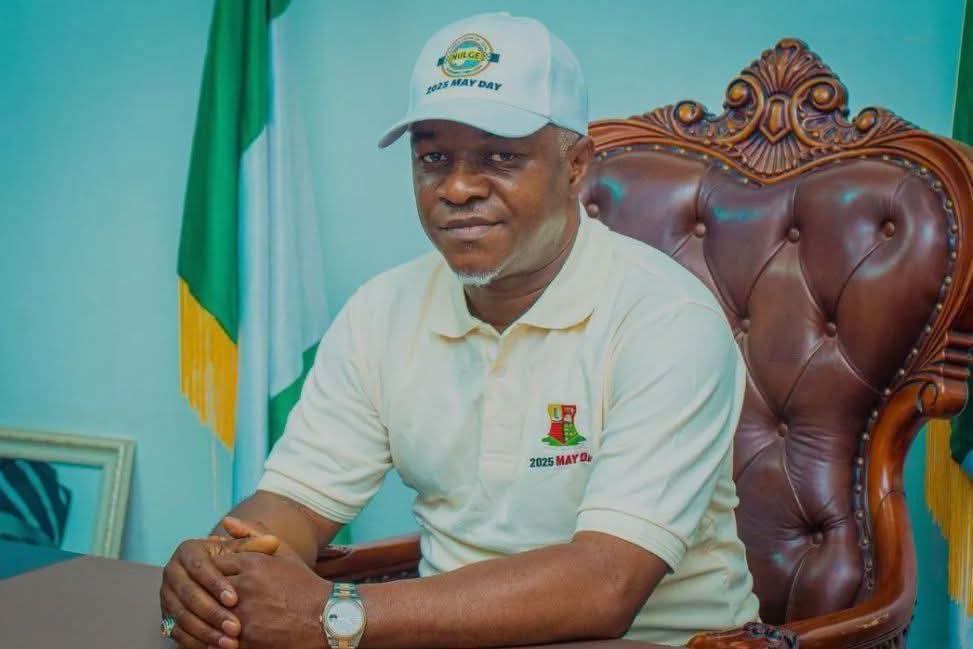
Otunba Segun Ogunwuyi, Chief of Staff to Oyo State Governor Seyi Makinde, has reportedly resigned from his position.
Ogunwuyi, a former member of the Oyo State House of Assembly and the House of Representatives, reportedly announced his decision in a statement, although further details surrounding the resignation were not immediately available.
He was appointed Chief of Staff in July 2021 after previously serving in roles connected with investment promotion and public-private partnership initiatives in the state.
As of the time of this report, the reason for his reported resignation and any possible successor had not been independently confirmed.
Oyo State Governor, Seyi Makinde, has announced plans to adopt a 75-metre setback for built-up areas along the Ibadan Circular Road corridor, promising that disbursement of the N6.7 billion compensation earmarked for affected property owners will commence following approval this week.
The governor made the disclosure on Sunday during a media chat on Crossfire Exclusive, a radio programme hosted by Mayor Isaac Brown on Fresh FM.
Makinde said the decision to adopt the 75-metre setback in built-up areas was in response to the concerns raised by residents and property owners affected by the road project.
“For the built-up area along the Circular Road corridor, I know what they want and I will do it. For the built-up area, we will make it 75m setback and it will be gazetted,” the governor said.
He added that the compensation fund of N6.7 billion would be signed for approval during the week, paving the way for payment to commence immediately.
According to him, the disbursement is expected to be completed before the end of October.
The announcement marks a significant development in the ongoing discussions surrounding the Ibadan Circular Road project, particularly the concerns of residents over the extent of the setback and its implications for existing buildings and properties along the corridor.
By pledging to gazette the 75-metre setback in built-up areas, the governor indicated his administration’s readiness to address the concerns of affected property owners while pursuing the infrastructure project.
However, the proposed gazetting and commencement of payments are expected to provide further clarity on the implementation of the revised setback arrangement and the compensation process.
Makinde speaks on Adekanmbi, Adelabu ministerial appointment In another disclosure during the interview, Makinde said he had recommended former Oyo State Commissioner for Finance, Bimbo Adekanmbi, for a ministerial appointment under President Bola Tinubu’s administration.
The governor, however, said Tinubu eventually appointed Adebayo Adelabu instead.
Makinde explained that he had approached the President with Adekanmbi as his preferred candidate, expressing confidence in his capacity to serve effectively as a minister.
The disclosure offered an insight into the governor’s involvement in discussions surrounding ministerial appointments and his preference for Adekanmbi, a former member of his administration’s political opposition before his emergence as the governorship candidate of the Allied Peoples Movement (APM) in Oyo State.
The governor also revisited the political alliance involving the five aggrieved Peoples Democratic Party (PDP) governors, popularly known as the G5, which emerged amid the crisis within the party ahead of the 2023 general elections.
Makinde argued that the Minister of the Federal Capital Territory, Nyesom Wike, emerged as the major beneficiary of the political arrangement.
Makinde’s latest comments revisited the political calculations behind the alliance and the benefits its members may have derived from their decisions during the period.
He maintained that President Tinubu made most of the ministerial appointments in his administration, suggesting that other members of the G5 did not secure comparable benefits from the alliance.
The G5 bloc, which included Makinde and Wike, played a prominent role in the political realignments that preceded the 2023 presidential election, with the group opposing the PDP’s presidential candidate, Atiku Abubakar, over disagreements surrounding the party’s leadership and power-sharing arrangements.
The Nigerian Air Force (NAF) has begun efforts to recover the flight data recorder and cockpit voice recorder from its ATR-42 aircraft that crashed in Igbokoda, Ondo State, killing all 25 people aboard.
The Air Force said the recorders could provide crucial evidence to help investigators reconstruct the aircraft’s final moments and determine the circumstances surrounding the crash.
Recovery efforts have been hampered by difficult swamp terrain, with the main body of the aircraft submerged in mud and water.
Specialised equipment, including sonar technology, has been deployed to support the operation.
The Chief of the Air Staff, Sunday Aneke, said a team of military and civilian aviation safety experts would investigate the incident. He urged the public to avoid speculation while the investigation continued.