By Oluwabimisayo Omoremi
Residents of Ofiki community in Oke-Ogun, Oyo State, are beginning to explore new economic opportunities from cashew production following a community-based intervention led by Slow Food Network Nigeria, with support from Slow Food International Headquarters (HQ) and the International Fund for Agricultural Development (IFAD). The initiative has empowered more than 30 women with starter seed kits for household gardens, trained over 40 farmers and community members in agroecological farming, and equipped more than 20 women and men with post-harvest processing and agricultural valorisation skills focused on cashew apples.
Although Oke-Ogun is one of Oyo State’s leading cashew-producing regions, the economic value of the crop has traditionally focused largely on cashew nuts, leaving large quantities of cashew apples to rot during harvest seasons. The project seeks to address this challenge by raising awareness about the nutritional and commercial potential of cashew apples and helping residents convert what was previously considered agricultural waste into opportunities for food security, entrepreneurship and sustainable livelihoods.
The initiative also challenged residents to rethink their understanding of agricultural waste. One of the collaborators, Mrs. Adejumoke Olowookere, founder of OlowoWaste (Waste Museum), urged the community to recognise the potential value of resources available on its land, stressing that what is commonly regarded as waste can become a valuable resource through knowledge, innovation and local enterprise. Her message reinforced the project’s central theme of encouraging residents to identify opportunities in resources they have long overlooked and explore innovative ways of putting them to productive use.
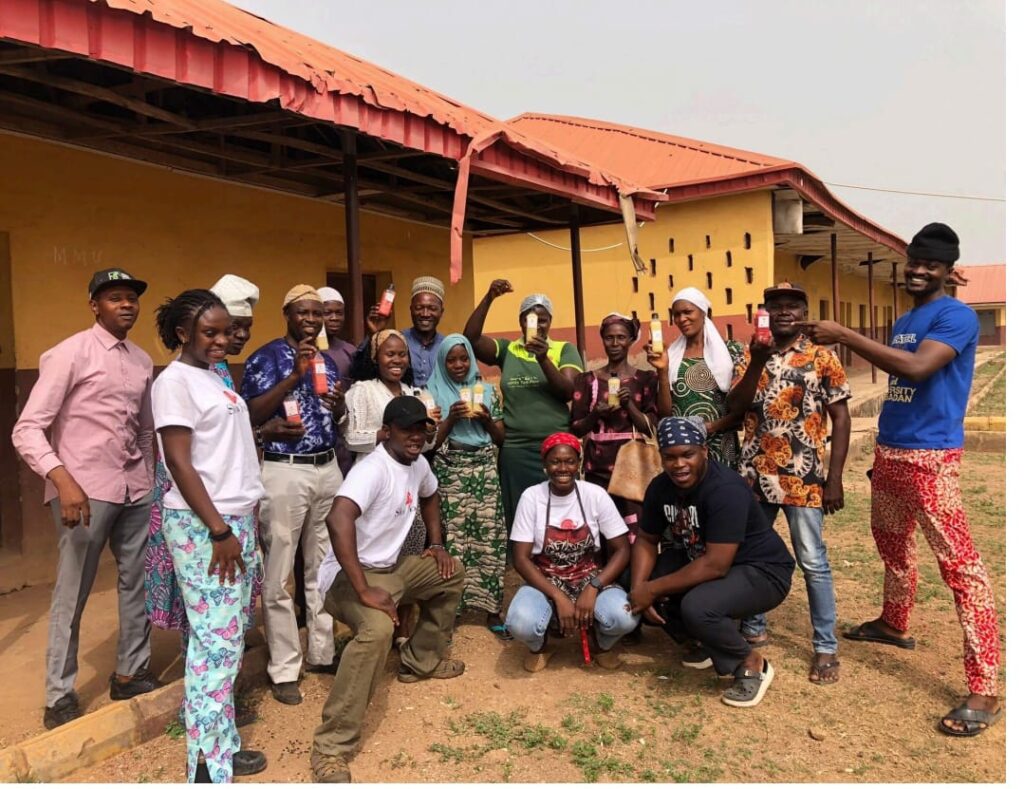
As part of the intervention, community members were trained to process cashew apples into fresh cashew juice, cashew chutney, cashew cooking sauce, dehydrated cashew apple snacks resembling raisins or dates, and nutrient-rich animal feed. The practical demonstrations reportedly changed participants’ perceptions of the fruit, while the slogan “Ofiki Gold, Kari Aye,” meaning “Ofiki Gold, to the World,” was adopted as the brand identity for the newly developed cashew products.
The project also exposed community representatives to modern food processing technologies through a visit to the National Stored Products Research Institute (NSPRI), where participants received hands-on training in the use of commercial food dehydrators and drying equipment. The exposure is intended to prepare the community for the establishment of similar processing facilities in Ofiki ahead of the next cashew harvest season, while strengthening links between research institutions and rural communities.
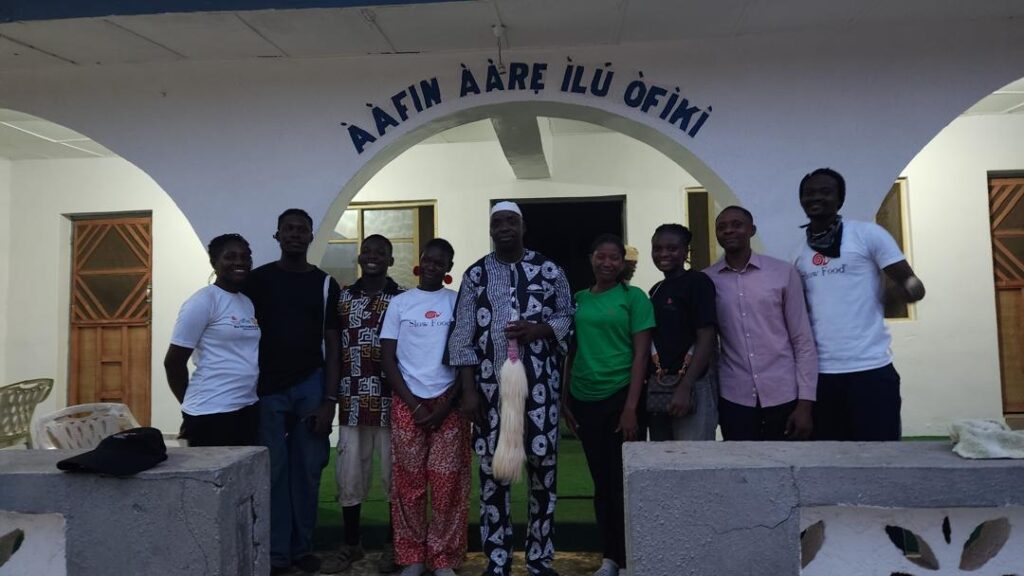
Beyond cashew processing, more than 40 participants received training in agroecological practices, including soil health improvement, composting, biodiversity conservation, sustainable agriculture and the production of natural farm inputs using locally available resources. Agroecology expert Mr. Opeolu Oluseesi (Agbelere) of Green Growers Nigeria encouraged residents to see the community’s abundant neem trees as valuable agricultural assets that could support the production of natural crop protection products and bio-inputs. The agroecology component has now entered its implementation phase, with soil analysis underway on a demonstration farm, while the Aare Alawoekun of Ofiki, His Royal Majesty Oba Gbenga Adeoye, donated three acres of land for the community’s agroecology demonstration farm.
The initiative also distributed starter seed kits to more than 30 women to establish household gardens aimed at improving family nutrition and reducing household food expenditure. With home gardens taking root, the demonstration farm underway and preparations beginning for community-scale cashew processing, the initiative is positioning Ofiki as a potential model for agricultural resource utilisation, food loss reduction and rural enterprise development. Through the combination of agroecology, value addition and community knowledge, residents are being encouraged to transform overlooked local resources into sustainable opportunities for improved food security, income generation and community development.