
By Oduduwa News
The Ekiti State Government has commenced moves to harness the cultural festivals of communities across the state as a major driver of tourism, economic growth and wealth creation.
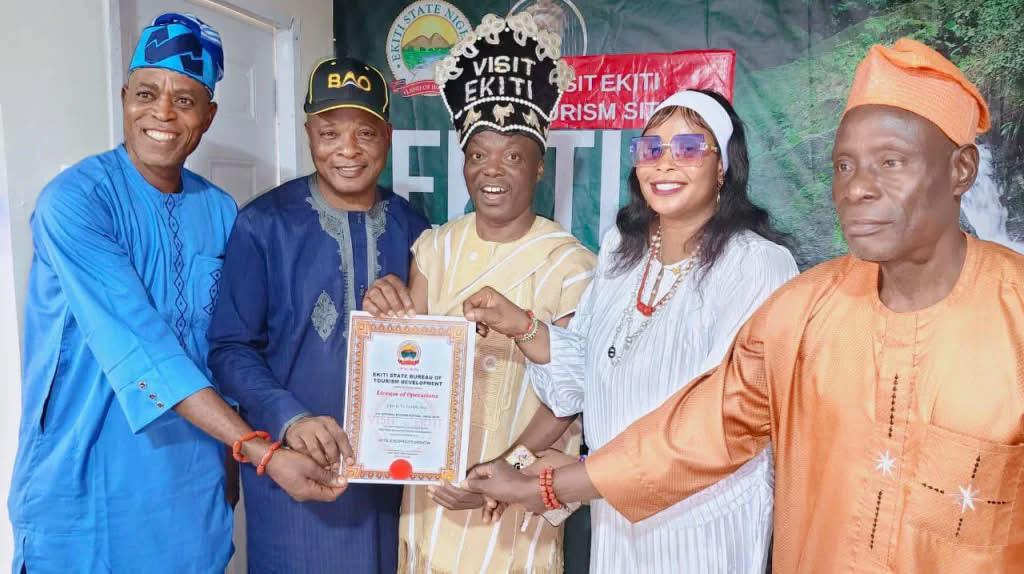
The Director-General of the Ekiti State Bureau of Tourism Development, Wale Ojo-Lanre, disclosed this in Ado-Ekiti while receiving organisers of the Epa Festival in Omuo-Ekiti, who formally registered the festival with the state government. He urged communities across Ekiti to register their cultural festivals with the Bureau to enhance their visibility, preserve cultural heritage and unlock their economic potential.
Ojo-Lanre explained that formal registration would provide festivals with better coordination, branding, publicity, consultancy and legal recognition, while also enabling the government to work with communities to develop the celebrations into well-organised events capable of attracting tourists from within and outside Nigeria. He stressed that proper planning and adherence to peace and security measures would be essential to making Ekiti’s festivals world-class attractions.
According to him, the economic benefits of increased tourist traffic would extend beyond the immediate festival organisers to hotels, transport operators, filling stations, event centres, food vendors, fashion designers, artisans and other businesses. He cited a recent cultural event in Ado-Ekiti which attracted more than 3,000 visitors, describing it as an indication of the economic opportunities that well-promoted cultural events could generate.
The DG also highlighted some of the Oyebanji administration’s interventions aimed at strengthening tourism, including the development of tourism policies and a tourism development master plan, improved infrastructure and security, and the establishment of the Ekiti State Bureau of Tourism Development. The state government says the International Cargo Airport has also improved accessibility to Ekiti and could help attract more visitors and investors.
Ojo-Lanre further called for greater private-sector participation, noting that while government could provide the necessary legislation, infrastructure, security and policy direction, private investors remained critical to transforming tourism opportunities into sustainable commercial ventures.
Meanwhile, the Chairman of Ekiti East Local Government, Oluwasegun Ojo, said the revival of the Epa Festival was driven by the desire of residents, particularly young people, to reconnect with their cultural heritage. The festival, which was last celebrated in 1982, was revived in 2022 and has since continued to attract interest among residents and indigenes of Omuo-Ekiti in the diaspora.
Ojo said organisers were now working to transform the seven-day Epa Festival from a traditional community celebration into a major tourism attraction capable of driving economic activities in Omuo-Ekiti. He disclosed that hotels were fully booked during the previous edition and that plans were underway to attract more indigenes living abroad, with a committee already established in the Americas to coordinate diaspora participation.
Traditional rulers from Omuo-Ekiti, including the Saruku of Omuo-Ekiti, Chief Sunday Adepoju; Eye Olori-Eru of Omuo-Ekiti, Chief (Mrs) Titilayo Aladesanmi; and the Oloka of Omuo-Ekiti, Chief Akinlolu Adedoyin, welcomed the formal registration of the festival.
They expressed optimism that official recognition and institutional support from the state government would give the festival greater visibility and help position it beyond a local celebration into a recognised cultural tourism attraction.
The initiative is consistent with the state government’s broader tourism strategy, which includes promoting cultural festivals alongside natural and historical attractions. The Ekiti State Bureau of Tourism Development lists cultural festivals among the tourism offerings it seeks to develop while promoting sustainable tourism and supporting local economies.
With the renewed focus on festivals such as Epa and Udiroko, Ekiti is positioning its rich cultural heritage not only as something to preserve, but as an economic asset capable of attracting visitors, creating jobs, supporting businesses and generating revenue for communities across the state. Governor Biodun Oyebanji had similarly said recently that cultural festivals should be transformed into platforms for tourism promotion, wealth creation and economic development.