
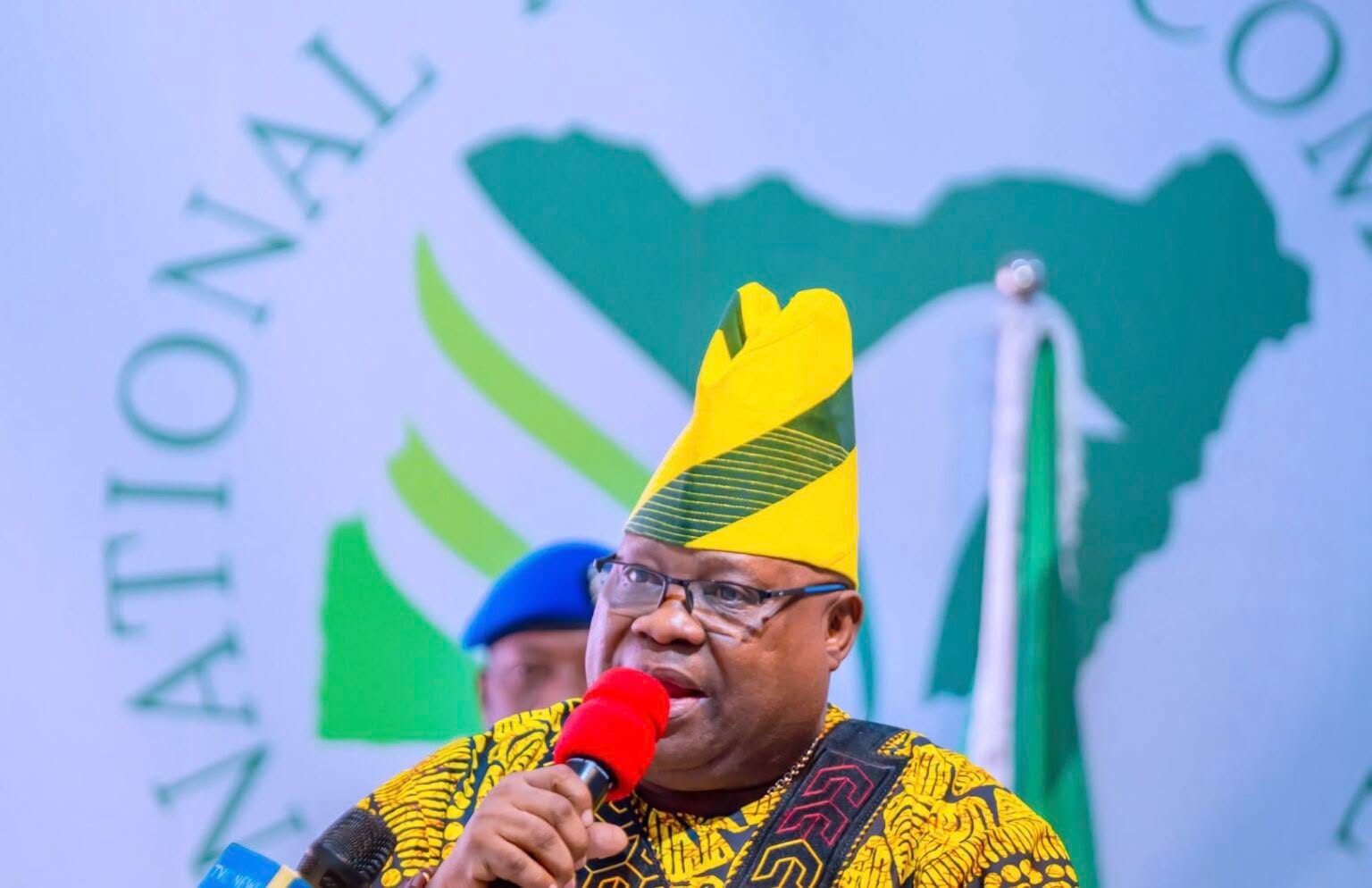
Osun State Governor, Ademola Adeleke, has challenged the Chairman of the Economic and Financial Crimes Commission (EFCC), Ola Olukoyede, to publicly explain the rationale behind the freezing of the state government’s bank account.
Speaking during a press briefing on Wednesday, Adeleke questioned the basis for the anti-graft agency’s action, insisting that the commission should provide credible evidence to justify its claims against the state government.
The governor said the allegations cited by the EFCC were unfounded and urged the commission to make public any proof supporting its assertion that suspicious financial transactions prompted the freezing of the state’s account.
Adeleke maintained that his administration has remained committed to transparency and accountability in the management of public funds, stressing that all financial transactions carried out by the state government followed due process.

He also expressed concern over the timing of the EFCC’s action, coming days before the Osun governorship election, warning that such a move could create unnecessary tension and disrupt government activities.
The governor called on EFCC Chairman, Ola Olukoyede, to explain to Nigerians why the state’s account was frozen and to present verifiable evidence if the commission believes any wrongdoing has occurred.
The challenge comes after the EFCC disclosed that it froze the Osun State Government’s account as part of an ongoing investigation into the alleged fraudulent handling of about ₦11 billion in Ecology Funds, Intervention Funds and Federal Account Allocation Committee (FAAC) allocations. The commission said it detected suspicious movements of funds into several corporate accounts and acted to prevent further transfers while investigations continue.
The development has further heightened the standoff between the Osun State Government and the EFCC, with both sides maintaining opposing positions over the legality and justification of the commission’s action.